Q:
A:
More than €100 million for SMEs from Serbian Development Fund
Belgrade,
12 October 2006
State Secretary at the Serbian Ministry of Economy Zora Simovic said today that a sum of more than €100 million has been set aside for the development of small and medium-sized enterprises (SMEs) from the Serbian Development Fund.
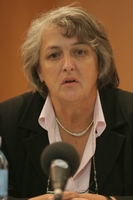
Zora Simovic
Author:
Tanjug
Simovic attended a bilateral meeting held with representatives of the European Commission and the Organisation for Economic Co-operation and Development (OECD), for the presentation of the National Report on the implementation of the European Charter on Small Enterprises. She said that the funds will be distributed according to various criteria under favourable conditions for creating more than 16,000 new jobs in Serbia, as well as for the general development of entrepreneurship.
According to Simovic, significant funds are intended for the further development of business incubators, clusters and industrial zones in the country and thus far millions of euros have been invested in the development of these new types of businesses by Serbian firms.
Simovic said that SMEs are the most vital and effective part of the economy, and added that the state will continue work on measures to provide incentives for the development of this sector.
Assistant Minister of Economy and national coordinator of the European Charter on Small Enterprises Petar Pavlovic said that funds worth €165 million have been allocated from the National Investment Plan to grant incentives for entrepreneurship, employment and economic development for 2006 and the upcoming year.
Pavlovic recalled that the Serbian Development Fund provided €50 million during the previous two years for financing investment projects in SMEs leading to mordenisation, better use of potential, entry into new markets and the creation of more than 14,000 new jobs annually.
He specified that the government’s plan is to initiate a broader school education programme from 2007 for encouraging entrepreneurship skills, and to continue encouraging the development of small businesses in Serbia.
According to latest data, it is possible that the number of new businesses this year will exceed the figure of 10,500 from last year, because in the first ten months of the current year some 8,000 new companies and more than 35,000 new entrepreneurs were registered, said Pavlovic.
He said that last year the number of people employed in that sector was 810,000, which means more than 50,000 new jobs were created, 99.7% of those jobs were in SMEs, a sector in which 60% of the total number of employed people in Serbia work.
Pavlovic said that 65.5% of total trade was realised in that sector, while the SMEs have a 55% share in the overall gross value added (GVA) of Serbian economy.
He also said that the government has prepared a number of measures for 2007 to facilitate the founding of SMEs by simplifying the procedure for obtaining necessary documents.
Pavlovic said that Serbia's economic system has been significantly reformed in the past two and a half years, positively assessed by the World Bank, the European Bank for Reconstruction and Development and the European Commission. He said that significant changes are underway in the SMEs sector and that a lot has yet to be done in that area.
Director of the EU Directorate-General for Enterprise and Industry Philippe Jean said that Serbia is making progress in the SMEs sector, which is the core of the Serbian economy.
Jean advised Serbian government experts to work on harmonising local legislation with the European equivalent.
The European Charter on Small Enterprises, which underlines the importance of small enterprises for economic growth and of increasing competitiveness and employment, was adopted by heads of governments of EU countries at a summit in Portugal in 2000.
The Charter, signed by 35 countries, contains ten main principles supporting the development of small enterprises, including the education and training of entrepreneurs, cheaper and quicker foundation of companies, a more favourable legislation, easer access to finances and a fair tax system.
The activities on the Charter's implementation, which Serbia signed in 2003, are coordinated by the Ministry of Economy, and technical support is provided by the European Agency for Reconstruction.
According to Simovic, significant funds are intended for the further development of business incubators, clusters and industrial zones in the country and thus far millions of euros have been invested in the development of these new types of businesses by Serbian firms.
Simovic said that SMEs are the most vital and effective part of the economy, and added that the state will continue work on measures to provide incentives for the development of this sector.
Assistant Minister of Economy and national coordinator of the European Charter on Small Enterprises Petar Pavlovic said that funds worth €165 million have been allocated from the National Investment Plan to grant incentives for entrepreneurship, employment and economic development for 2006 and the upcoming year.
Pavlovic recalled that the Serbian Development Fund provided €50 million during the previous two years for financing investment projects in SMEs leading to mordenisation, better use of potential, entry into new markets and the creation of more than 14,000 new jobs annually.
He specified that the government’s plan is to initiate a broader school education programme from 2007 for encouraging entrepreneurship skills, and to continue encouraging the development of small businesses in Serbia.
According to latest data, it is possible that the number of new businesses this year will exceed the figure of 10,500 from last year, because in the first ten months of the current year some 8,000 new companies and more than 35,000 new entrepreneurs were registered, said Pavlovic.
He said that last year the number of people employed in that sector was 810,000, which means more than 50,000 new jobs were created, 99.7% of those jobs were in SMEs, a sector in which 60% of the total number of employed people in Serbia work.
Pavlovic said that 65.5% of total trade was realised in that sector, while the SMEs have a 55% share in the overall gross value added (GVA) of Serbian economy.
He also said that the government has prepared a number of measures for 2007 to facilitate the founding of SMEs by simplifying the procedure for obtaining necessary documents.
Pavlovic said that Serbia's economic system has been significantly reformed in the past two and a half years, positively assessed by the World Bank, the European Bank for Reconstruction and Development and the European Commission. He said that significant changes are underway in the SMEs sector and that a lot has yet to be done in that area.
Director of the EU Directorate-General for Enterprise and Industry Philippe Jean said that Serbia is making progress in the SMEs sector, which is the core of the Serbian economy.
Jean advised Serbian government experts to work on harmonising local legislation with the European equivalent.
The European Charter on Small Enterprises, which underlines the importance of small enterprises for economic growth and of increasing competitiveness and employment, was adopted by heads of governments of EU countries at a summit in Portugal in 2000.
The Charter, signed by 35 countries, contains ten main principles supporting the development of small enterprises, including the education and training of entrepreneurs, cheaper and quicker foundation of companies, a more favourable legislation, easer access to finances and a fair tax system.
The activities on the Charter's implementation, which Serbia signed in 2003, are coordinated by the Ministry of Economy, and technical support is provided by the European Agency for Reconstruction.
-
 Belgrade/Brussels, 3 July 2026
Belgrade committed to continuing constructive dialogue with Priština
-
 Belgrade/Brussels, 3 July 2026
Serbia’s European integration guarantees regional stability
-
.webp) Belgrade, 3 July 2026
Belgrade, 3 July 2026Continued strengthening of Serbia-Spain defence cooperation
-
 Belgrade, 2 July 2026
Great potential for strengthening cooperation with Slovenia in agriculture
-
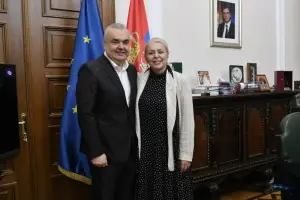 Belgrade, 1 July 2026
Joint infrastructure projects of strategic importance for Serbia, Republika Srpska
-
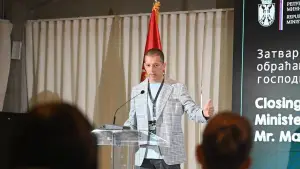 Belgrade, 30 June 2026
Scientific diplomacy one of strategic instruments of Serbian foreign policy
-
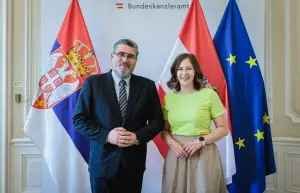 Belgrade/Vienna, 30 June 2026
Continuous Austrian support for Serbia’s European integration
-
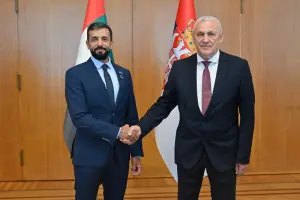 Belgrade, 30 June 2026
Deepening scientific, technological cooperation between Serbia, UAE
-
 Pasuljanske Livade, 28 June 2026
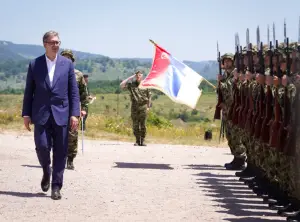
Successful live-fire exercise conducted using SAF combat equipment, weapons systems