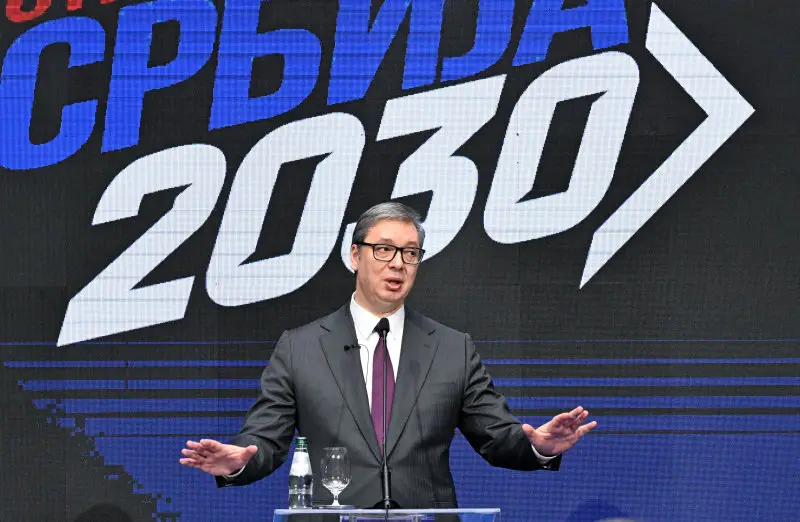
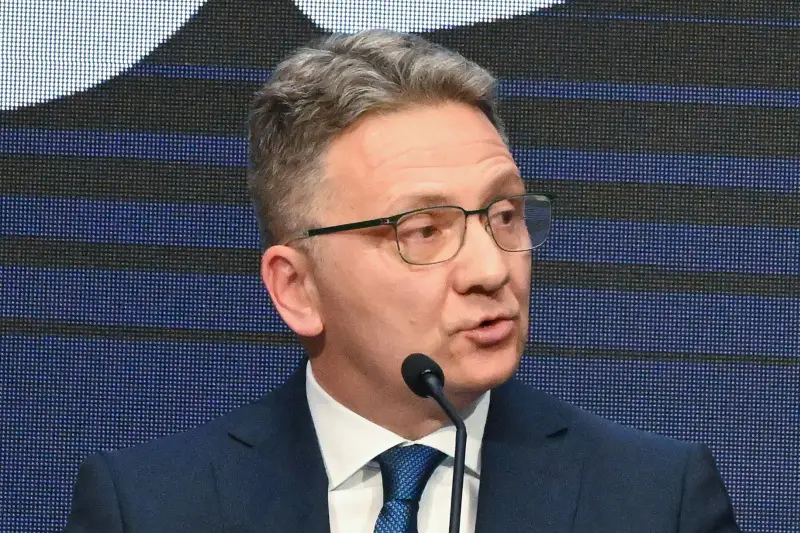
President of the Republic of Serbia Aleksandar Vučić stated today at the presentation of the national strategy “Serbia 2030” that we are living in a time of the greatest and fastest changes in humanity and that the most important goal for Serbia in the coming period is to preserve peace and stability.

Q:
A:
Serbia’s key goal in coming period to preserve peace, stability
Belgrade,
7 March 2026
At the presentation of this strategy at the Palace of Serbia, Vučić stressed that this is the first and most important point for the future of Serbia, adding that we must make strategic decisions, think and learn quickly, and change, or otherwise we will have no chance.
He announced that Serbia will continue to maintain its position of military neutrality, which it has not changed under great pressure and which it will not change in the next ten years.
The President of the Republic stressed that it is necessary to strengthen the Serbian Armed Forces and build trust and cooperation with all countries and partners.
Vučić specified that Serbia allocates more than 2.5% of GDP for the country’s security, emphasising that we are not preparing for war, but that we are doing everything to preserve peace and stability.
He also announced the opening of the first drone factory in Serbia together with a foreign partner, pointing out the importance of digitalisation and the application of artificial intelligence in the army and police.
Vučić said that Serbia is on the path of progress, but that it is not fast enough, adding that in the future it will be ahead of countries in the region, especially in terms of the application of artificial intelligence.
I see Serbia in 2035 as a member of the European Union. I do not know if we will have the right to vote or a commissioner, but for that we must accelerate our reforms, emphasised the President of the Republic.
Speaking about Kosovo and Metohija, he reiterated that talks are the only way to solve problems, but that unfortunately, today in Priština we do not have a partner for dialogue and that their only desire is to expel Serbs from their centuries-old homelands.
According to him, Serbia must strengthen education, healthcare and infrastructure, including housing as the foundation of survival in Kosovo and Metohija.
He stated that financial support for our compatriots in Kosovo and Metohija will be increased, and work will continue to be done to preserve the pillars of spirituality and identity and to assist the Serbian Orthodox Church.
Vučić also presented projections of the standard of living in Serbia until 2035, stating that the average salary in 2030 will be €1,320, and in 2035 €1,700, while in December 2030 the average pension will be €750.
He also announced investments in hospitals and clinical centres, specifying that from 2028 to 2035 €2.5 billion will be invested in infrastructure, and that the state will allocate €229 million for pro-natality measures.
The President of the Republic also said that a total of approximately €220 million will be allocated for 75 projects in the field of education, adding that dual education is of crucial importance in this area.
Vučić also told the citizens of Serbia that there would be no shortage of oil and oil derivatives regardless of the conflict in the Middle East, stating that we currently have diesel reserves of 418,000 tonnes and 94,860 tonnes of gasoline.
Speaking about gas reserves, he emphasised that Banatski Dvor, with 400 million cubic metres of gas, is absolutely full, while Serbia has another 155 million cubic metres in Hungarian storage facilities.
The President of the Republic pointed out that Serbia had achieved significant results in the construction of road infrastructure in the previous period, but that it must be even more successful in the coming years.
He noted that the state plans to build another 578 km of motorways by 2035, as well as the construction and modernisation of 1,019 km of railways.
According to him, the state will invest at least €14.4 billion in the energy sector between 2028 and 2035, of which €6.5 billion will be invested in production capacities.
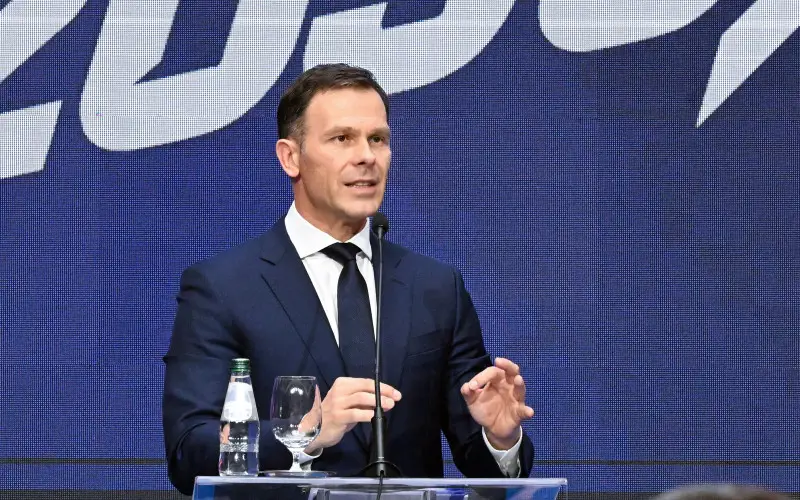
First Deputy Prime Minister and Minister of Finance Siniša Mali stated that the aforementioned national strategy envisages an investment of €48 billion by 2035, emphasising that it is the most ambitious and extensive programme aimed at accelerating the growth and development of our economy and country.
The goal is for GDP to reach €133 billion by 2030, and for per capita GDP to exceed €20,000, he said.
Mali said that it is also important to maintain macroeconomic stability and improve the credit rating, because this also means cheaper funds so that we can manage to finance everything that has been planned.
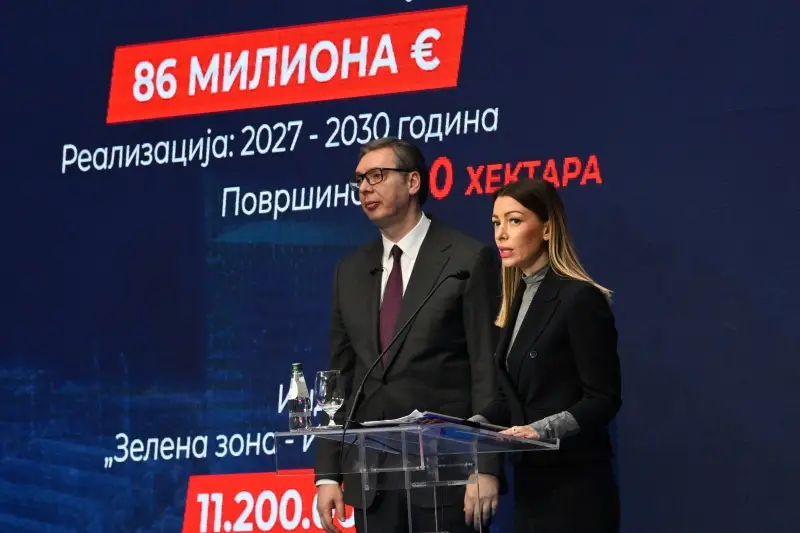
Deputy Prime Minister and Minister of Economy Adrijana Mesarović announced that, in order to attract new investors and create a more competitive business environment, Serbia will invest in the construction of two industrial parks and four industrial zones by 2035, with a total value of €314.3 million.
The Mihailo Pupin Industrial Park in Belgrade will, she pointed out, cover an area of 320 hectares, the industrial park in Inđija will cover 740 hectares, and the construction of industrial zones in Ćuprija, Leskovac, Vranje and Kosjerić, as well as an agro-industrial centre in Čajetina, is also planned.
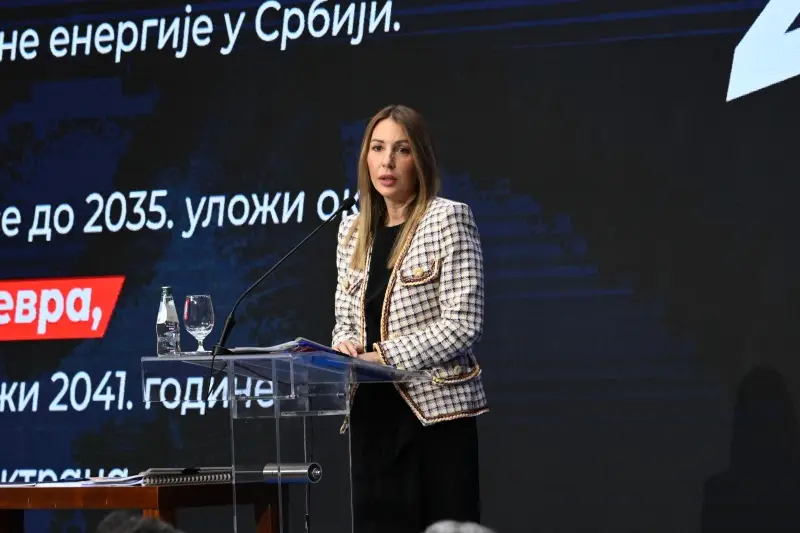
Minister of Mining and Energy Dubravka Đedović Handanović said that 30% of all planned investments by 2035 are planned to go to the energy sector and that it is necessary to launch a new cycle of investments in energy infrastructure.
She explained that these include investments in pumped-storage hydroelectric power plants and gas power plants in Niš, Novi Sad and Kragujevac, and that we must start the construction of the first nuclear power plant in Serbia before 2035.
Director of the Office for Information Technology and eGovernment Mihailo Jovanović announced that Serbia will build two new state data centres in Niš and Novi Sad by 2030, as well as expand the capacities of data centres in Belgrade and Kragujevac.
Jovanović said that the plan is to increase the total power of data centres to 1 GW by 2035, significantly expand national supercomputers, and build a National Centre for Information Security in Kragujevac.
The Director of the Office also noted that a large language model for the Serbian language is being developed, so that our language, script and dialects are equal in the digital age.
According to him, the goal is for Serbia to become a global leader in the field of digitalisation and the application of artificial intelligence and an innovative and creative knowledge-based economy by 2030.
-
 Author: Tanjug
 -
 Author: Tanjug
 -
 Author: Tanjug
 -
 Author: Tanjug
 -
 Author: Tanjug
-
 Belgrade, 7 October 2026
Agricultural cooperation with Slovakia to be raised to higher level
-
 Belgrade, 6 October 2026
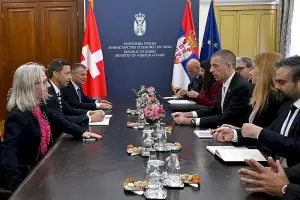
Regular political, economic dialogue solid foundation for strengthening cooperation with Switzerland
-
 Belgrade/Washington, 5 October 2026
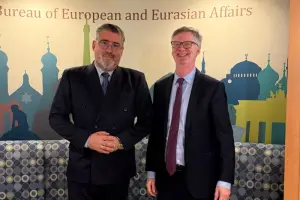
Great importance of further advancing bilateral cooperation between Serbia, US
-
 Belgrade, 5 October 2026
Cooperation with Armenia in field of human rights protection, enforcement of criminal sanctions
-
 Belgrade, 5 October 2026
Serbia, UAE continue to strengthen strategic partnership
-
 Belgrade, 2 October 2026
Cooperation with OSCE on advancing national minority rights
-
 Belgrade, 2 October 2026
Exchange of experiences with Angola in field of justice, alternative sanctions
-
 Belgrade/Astana, 1 October 2026
Further strengthening of economic, technological cooperation with Kazakhstan
-
 Belgrade, 1 October 2026
New international partnerships, projects for modernised agriculture
-
 Belgrade/Pržno, 1 October 2026
Stability, forward-looking approach key for Serbia, region