
Q:
A:
New law envisages more funds for less prosperous municipalities
Belgrade,
18 May 2006
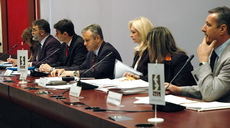
Serbian Minister of Finance Mladjan Dinkic stated today that the new draft law on financing local self-governments will enable a reallocation of funds from more to less prosperous municipalities in Serbia, based on the Council of Europe's model.
Author:
Fonet
At a discussion themed "A Dialogue between Local Self-Governments and Finance Ministry", Dinkic said that the draft law aims to reallocate around 2.1 billion dinars to Serbian municipalities in the first year of its implementation, starting from next January. The Ministry of Finance organised the discussion together with the Standing Conference of Towns and Municipalities.
According to Dinkic, the draft law should enter parliamentary procedure in June and it envisages greater autonomy of municipalities, who will prescribe property taxes themselves from the legal maximum down to lower tax rates.
He stressed that the current system of financing local self-governments has doubled the income rate since 2000, increasing the participation in GDP by 3.8% to 6.6% in 2004.
If the Bill on reducing income tax is adopted before this draft law, the finance ministry will officially propose that the transfer to municipalities be carried out at the rate of 1.7% of GDP, said Dinkic.
He announced that as of 2007, a local tax administration will be set up on voluntary and gradual bases, to which the central Tax Administration will provide advisory services until they form their own administrative units.
Dinkic also said that the Tax Administration will remain in charge of collecting republic taxes, such as VAT and income tax, thus enhancing the efficiency of all administration units on both levels.
He pointed out that according to the draft law, Belgrade and Novi Sad will be most affected by reallocation, whereas 99 municipalities will benefit from it, adding that the model has been successfully applied in Sweden, Norway and Switzerland.
According to his assessments, the current financing system has been insufficiently predictable and it was impossible to know in advance how much each municipality will get.
Dinkic also presented the National Investment Plan (NIP), which envisages that around €1 billion from privatisation revenues be invested in prioritised public investment. Tax Administration Director Vladimir Ilic said the draft law will give municipalities greater jurisdiction over tax levying, thus increasing their efficiency and fiscal policy management and eventually resulting in the formation of a local tax administration.
Ilic also said that the main revenue of municipalities will come from income tax, inheritance and gift taxes, property transfer tax, property tax, occupancy tax and various other local taxes, whereas the Tax Administration would collect key taxes at republic level.
The Tax Administration today lacks the capacity to properly administrate tax reforms which are the basic source of income of local budgets, said Ilic.
He added that the Administration rarely resorts to debt enforcement, which means that tax collection is at a low, unsatisfactory level. The project is aimed at improving the process of collecting taxes, he concluded.
According to Dinkic, the draft law should enter parliamentary procedure in June and it envisages greater autonomy of municipalities, who will prescribe property taxes themselves from the legal maximum down to lower tax rates.
He stressed that the current system of financing local self-governments has doubled the income rate since 2000, increasing the participation in GDP by 3.8% to 6.6% in 2004.
If the Bill on reducing income tax is adopted before this draft law, the finance ministry will officially propose that the transfer to municipalities be carried out at the rate of 1.7% of GDP, said Dinkic.
He announced that as of 2007, a local tax administration will be set up on voluntary and gradual bases, to which the central Tax Administration will provide advisory services until they form their own administrative units.
Dinkic also said that the Tax Administration will remain in charge of collecting republic taxes, such as VAT and income tax, thus enhancing the efficiency of all administration units on both levels.
He pointed out that according to the draft law, Belgrade and Novi Sad will be most affected by reallocation, whereas 99 municipalities will benefit from it, adding that the model has been successfully applied in Sweden, Norway and Switzerland.
According to his assessments, the current financing system has been insufficiently predictable and it was impossible to know in advance how much each municipality will get.
Dinkic also presented the National Investment Plan (NIP), which envisages that around €1 billion from privatisation revenues be invested in prioritised public investment. Tax Administration Director Vladimir Ilic said the draft law will give municipalities greater jurisdiction over tax levying, thus increasing their efficiency and fiscal policy management and eventually resulting in the formation of a local tax administration.
Ilic also said that the main revenue of municipalities will come from income tax, inheritance and gift taxes, property transfer tax, property tax, occupancy tax and various other local taxes, whereas the Tax Administration would collect key taxes at republic level.
The Tax Administration today lacks the capacity to properly administrate tax reforms which are the basic source of income of local budgets, said Ilic.
He added that the Administration rarely resorts to debt enforcement, which means that tax collection is at a low, unsatisfactory level. The project is aimed at improving the process of collecting taxes, he concluded.
-
 Belgrade/Brussels, 9 July 2026
Continuing activities to meet European Commission’s recommendations
-
 Belgrade, 9 July 2026
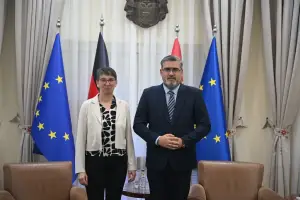
German development support important pillar for Serbia’s reforms, European path
-
 Belgrade, 8 July 2026
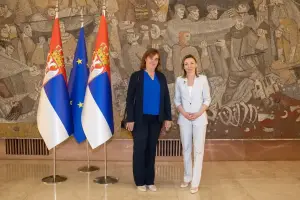
Continued cooperation with GIZ on improving position of women in Serbia
-
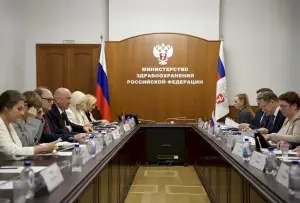 Belgrade/Moscow, 8 July 2026
Cooperation between Serbia, Russia in field of modern oncology therapies
-
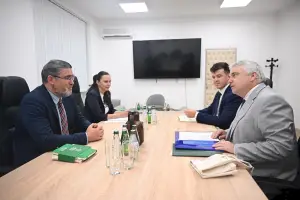 Belgrade, 8 July 2026
Ireland’s support for reform processes in Serbia on path to EU
-
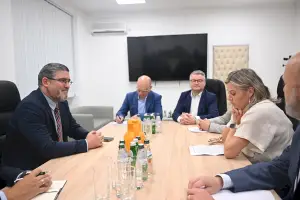 Belgrade, 8 July 2026
Continued strengthening of cooperation with Belgium in European integration process
-
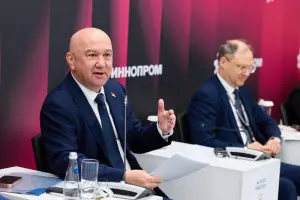 Belgrade, 7 July 2026
Possibilities for improving cooperation with Russia in several areas
-
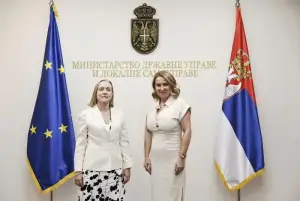 Belgrade, 7 July 2026
UN support for building equal opportunities society continues
-
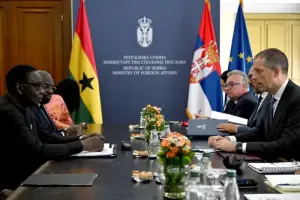 Belgrade, 6 July 2026
Serbia committed to strengthening economic, political ties with Ghana
-
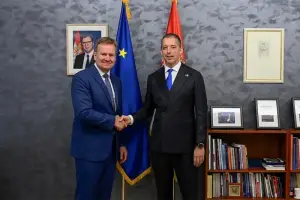 Belgrade/Brussels, 3 July 2026
Belgrade committed to continuing constructive dialogue with Priština