Minister for European Integration Tanja Miscevic and Head of the EU Delegation to Serbia Emanuele Giaufret signed today, at the beginning of the EU Opportunity Week, a financial package of EU assistance to Serbia in the amount of €200 million, of which €162 million is an EU grant.

Q:
A:
EU gives €162m grant to Serbia for implementation of Green Agenda
Belgrade,
21 June 2023
Miscevic explained that the largest part of these funds will be used for the implementation of the Green Agenda in the part that primarily concerns the construction of sewerage and wastewater treatment.
We started with institutional reforms, and now we are talking about specific local projects, she said, citing as an example the project in the Zlatibor and Moravica administrative districts, which will provide sewerage to around 100,000 citizens.
She assessed that this is a significant progress in the development of the Green Agenda and nature protection, adding that the entire fund for that project will amount to €74 million.
After that, there are two large and important segments of internal reforms that relate to the reform of public administration and the rule of law. It is about sectoral budget support and €30 million will be set aside for each of these areas, which will go to projects for the implementation of the Judiciary Development Strategy and the continuation of the Public Administration Reform Strategy, Miscevic said.
According to her, projects from the social sphere have not been forgotten either, primarily related to internally displaced persons, but also to deinstitutionalisation.
Welcoming the start of the EU Opportunity Week in a video message, EU Commissioner for Neighbourhood and Enlargement Olivér Várhelyi said that the European Union is already Serbia's largest investor and trading partner and that it creates a strong bond that benefits both sides.
Giaufret pointed out that Serbia has something to offer the EU, and the goal of European funds is progressive, positive developments in the region while the adjustment of laws and systems in the enlargement process continues.
Our mission is to make Serbia an even bigger part of the EU economy and society as it progresses on its path of integration, he said.
-
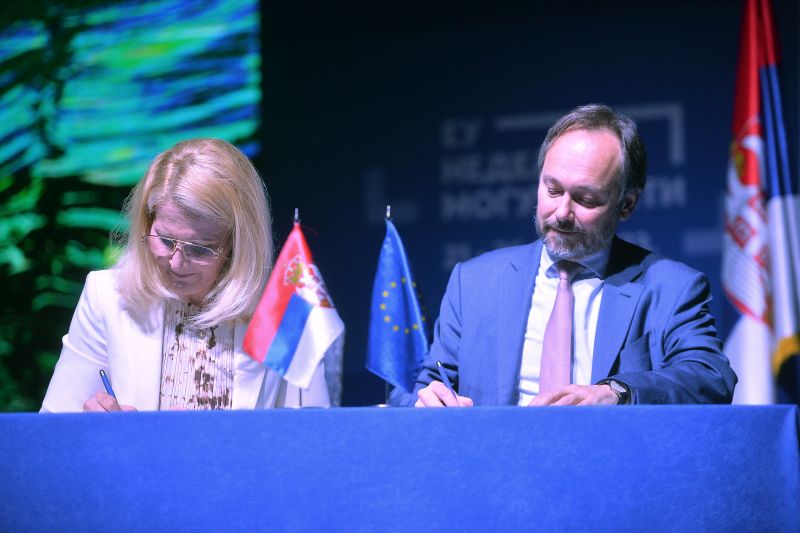 Author: Tanjug
-
 Belgrade, 14 July 2026
Room for enhancing cooperation with Germany in numerous areas
-
 Belgrade, 14 July 2026
New gas programme to improve supply for southern, eastern parts of Serbia
-
 Belgrade, 13 July 2026
Serbia remains strongly committed to partnership with UN system
-
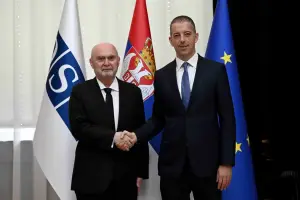 Belgrade, 13 July 2026
Good cooperation, intensive dialogue with OSCE
-
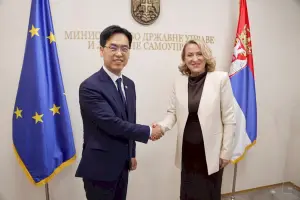 Belgrade, 10 July 2026
Advancing cooperation with Republic of Korea in digital governance
-
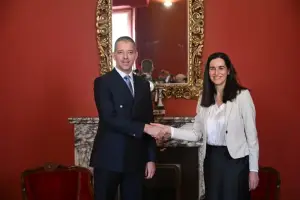 Belgrade/Rome, 10 July 2026
Continued strengthening of overall cooperation between Serbia, Hungary
-
 Belgrade/Brussels, 9 July 2026
Continuing activities to meet European Commission’s recommendations
-
 Belgrade, 9 July 2026
German development support important pillar for Serbia’s reforms, European path
-
 Belgrade, 8 July 2026
Continued cooperation with GIZ on improving position of women in Serbia
-
 Belgrade/Moscow, 8 July 2026
Cooperation between Serbia, Russia in field of modern oncology therapies