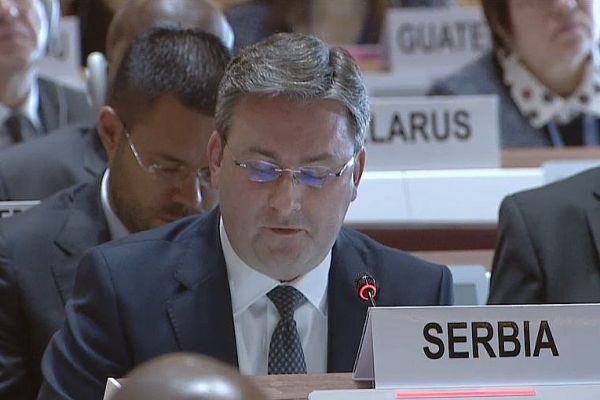
Minister of Foreign Affairs Nikola Selakovic stated today that Serbia is still one of the countries with the largest number of internally displaced persons in Europe and one of the five countries in the world with a long-term displacement crisis.

Q:
A:
Serbia still a country with long-term displacement crisis
Belgrade,
10 October 2022
Addressing the 73rd session of the Executive Committee of the UNHCR programme, Selakovic said that Serbia is grateful to this organisation on cooperation in overcoming the consequences of the conflicts in the Balkans in the 1990s and in providing accommodation and care for the persons that found themselves in Serbia’s territory due to the current conflicts in the world.
The wars of the 1990s forced more than half a million Serbs to flee or be expelled from Croatia and Bosnia and Herzegovina, he recalled and pointed out that Serbia has been making efforts for decades to provide them with accommodation and care, but also to create conditions for their sustainable return to their homeland.
However, we do not always come across understanding and readiness of the parties involved to work together and find a lasting solution.
According to Selakovic, a special problem Serbia is facing is that more than 200,000 people were forced to leave their homes in Kosovo and Metohija, seeking security and protection from the systemic persecution to which non-Albanians in Kosovo and Metohija are constantly exposed.
The Serbian Minister of Foreign Affairs expressed gratitude to UNHCR on the realisation of the Regional Housing Programme of providing durable and sustainable housing solutions for refugees and displaced persons as a consequence of conflicts in the territory of the former Yugoslavia.
Selakovic underlined that it is a devastating fact that less than two percent of the internally displaced persons have managed to achieve a sustainable return to their homes in Kosovo and Metohija.
-
 Belgrade, 25 July 2026
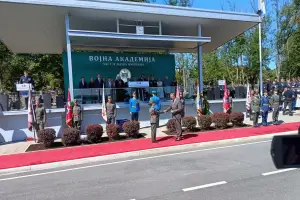
Youngest officers of Serbian Armed Forces promoted
-
 Belgrade, 24 July 2026
Upcoming activities in reform of judiciary presented
-
 Belgrade/Manila, 24 July 2026
Serbia committed to building partnerships with Southeast Asian countries
-
 Belgrade/Manila, 24 July 2026
Improving cooperation between Serbia, Philippines in areas of mutual interest
-
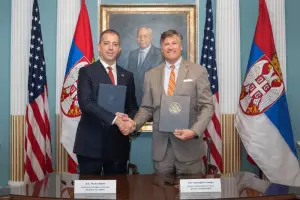 Belgrade/Washington, 18 July 2026
Serbia attaches great importance to cooperation with United States
-
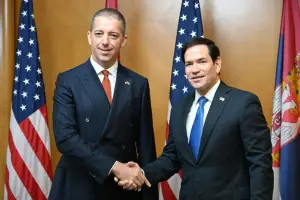 Belgrade/Washington, 17 July 2026
First round of Serbia-US strategic dialogue opens
-
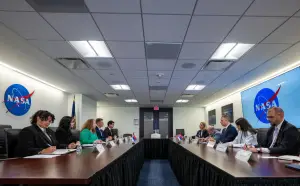 Belgrade/Washington, 17 July 2026
Accession to Artemis agreements opens new opportunities for Serbian science
-
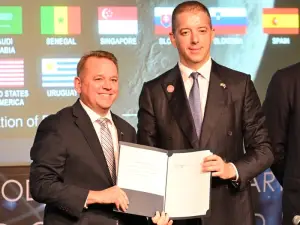 Belgrade/Washington, 17 July 2026
Serbia joins Artemis space programme
-
 Belgrade/Washington, 16 July 2026
International cooperation necessary to curb political terrorism
-
 Belgrade, 16 July 2026
Cooperation modalities discussed with Prince Aviation, Textron Aviation Defense