President Aleksandar Vucic and Prime Minister Ana Brnabic attended tonight the ceremonial academy on the occasion of marking the Day of Remembrance of the victims of the NATO aggression in 1999.

Q:
A:
Academy on occasion of the Day of Remembrance of victims of NATO aggression
Belgrade,
24 March 2021
Due to the coronavirus epidemic, the marking in the "Kombank Hall" took place without the audience, and in the presence of National Assembly Chair Ivica Dacic, the Chairman of the Presidency of BiH Milorad Dodik, Serbian Patriarch Porfirije and members of the Serbian government.
On that occasion, Vucic said that during the spring of 1999, crime, aggression, attack on a sovereign country took place, without a decision of the United Nations, for which no one was ever responsible, and that is impossible to explain today, 22 years later.
He reiterated that no one had ever been held accountable for the 2,500 civilians killed, but also for the soldiers and police officers, who were guilty only of guarding themselves and their homes, for more than 6,000 wounded.
According to him, those deaths were not tragic for those who sowed them, much less a mistake, but an excuse, an intention, a clear decision, through a court over a country, over its people and children.
On this day, on 24 March 1999, the NATO aggression on the then FR Yugoslavia began, in which between 1,500 and 3,500 people were killed and more than 12,000 were injured during the uninterrupted 78 days of air attacks.
In 11 weeks of daily air strikes, NATO carried out 2,300 strikes and dropped 22,000 tons of missiles, including 37,000 banned cluster bombs and bombs filled with enriched uranium.
During the intervention, the infrastructure, business facilities, schools, health institutions, media houses, cultural monuments, churches and monasteries were severely damaged.
-
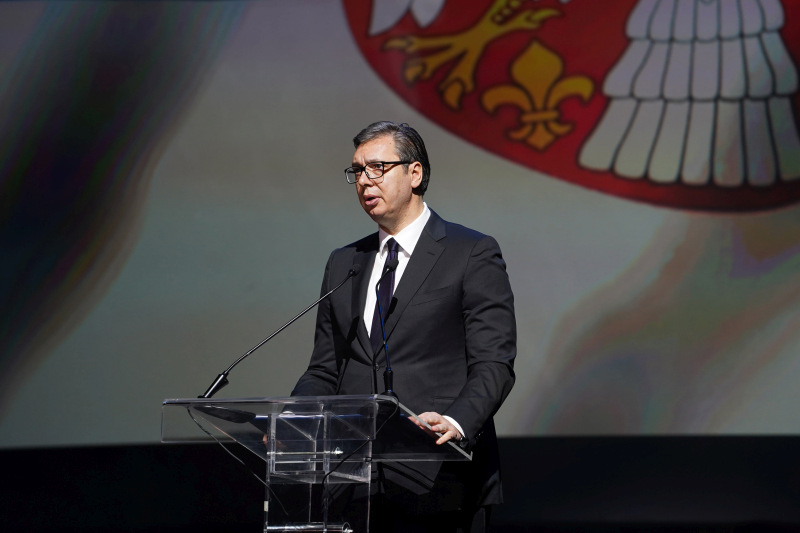 Author: Tanjug
-
 Belgrade, 15 February 2026
Serbia, Azerbaijan sign seven cooperation documents
-
 Belgrade/Munich, 15 February 2026
Great importance of Germany’s continued development assistance to Serbia
-
 Belgrade/Munich, 14 February 2026
Strategic partnership with US one of Serbia’s priority goals
-
 Belgrade/Munich, 14 February 2026
Serbia NATO’s reliable, predictable partner
-
 Belgrade/Munich, 14 February 2026
Regional cooperation among Serbia’s key foreign policy priorities
-
 Belgrade/Munich, 14 February 2026
Further strengthening of bilateral relations with Philippines
-
 Belgrade/Munich, 13 February 2026
Serbia’s consistent commitment to principles of sovereignty, territorial integrity
-
 Belgrade/Munich, 13 February 2026
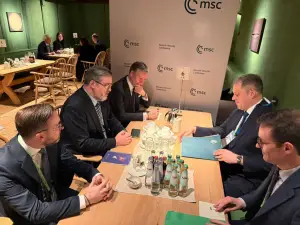
Government fully committed to meeting obligations in EU accession process
-
 Belgrade, 11 February 2026
Ample space for advancing cooperation with Ukraine in field of education
-
 Belgrade, 11 February 2026
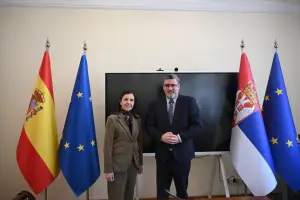
Spain’s support for Serbia’s European path