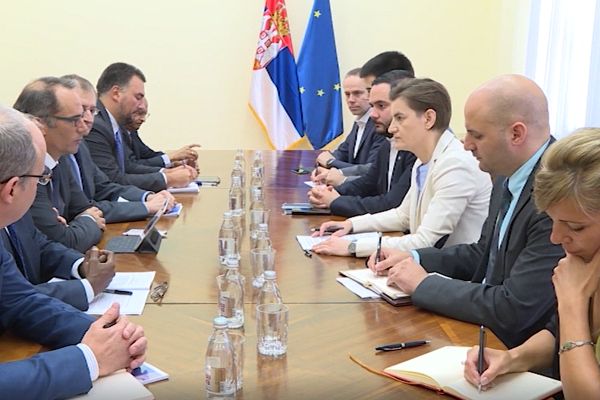
Prime Minister Ana Brnabic spoke today with World Bank Director for Finance, Competitiveness and Innovation Alfonso Garcia Mora about structural reforms and economic results of Serbia.

Q:
A:
Investment in science safest way of investing in country’s future
Belgrade,
17 July 2019
During the meeting, they also discussed the implementation of ongoing projects in cooperation with the World Bank and plans for future cooperation during this year and in the years to come.
The Prime Minister pointed out that Serbia will continue to maintain stable GDP growth this year, as well as the expected projected growth of 3.5 percent.
According to her, Serbia recognised investment in education and development of the modern economy through digitisation as key areas of sustainable development, which will be the focus of this government in the coming period.
She informed the World Bank representative that the Serbian government is working intensively on the modernisation of the Tax Administration and noted that the adoption of a set of laws is expected in the coming days, which will spur the further growth of e-trade, whereas several laws in the field of intellectual property and investment funds are expected to be adopted in autumn.
Brnabic also said that the Science Fund has been launched, which enables the competitive financing of science, and she announced greater investments in this fund in the coming years.
The World Bank Director for Finance, Competitiveness and Innovation, citing the reasons for his visit, pointed out that this financial institution wants to provide support to the capacities that Serbia has in order to successfully stabilise its economy and accelerate its current growth.
He underlined that Serbia needs to continue with macroeconomic reforms and create a more dominant private sector, and that further progress requires increased competitiveness, first of all, in the field of technology and innovation, as well as agriculture.
Praising the results achieved by Serbia in the framework of e-government, he emphasised once more its role in creating a stimulating business environment and a transparent and efficient public administration.
The two interlocutors agreed that further investment in science and scientific projects is also the safest way to invest in the future of the country.
-
 Belgrade, 2 August 2026
Energy sector facing serious, challenging situation
-
 Belgrade, 2 August 2026
Preserving ties with Serbian people worldwide among government’s priorities
-
 Belgrade, 1 August 2026
More affordable, accessible medicines demonstrate state’s systemic care for citizens’ health
-
 Belgrade/Ohrid, 31 July 2026
Strengthening good-neighbourly relations, cooperation with North Macedonia
-
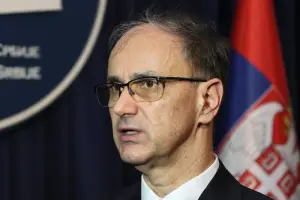 Belgrade, 31 July 2026
Appeal to citizens to use electricity rationally
-
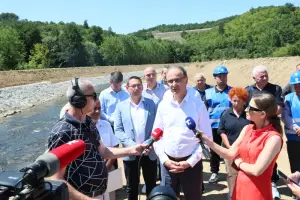 Vladičin Han, 31 July 2026
State continues to invest in water management infrastructure throughout Serbia
-
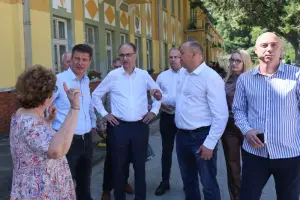 Vranjska Banja, 31 July 2026
Capacities of Vranjska Banja for further development of spa tourism to be improved
-
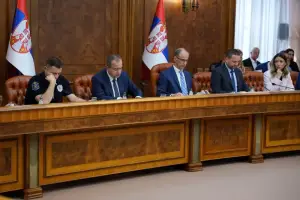 Belgrade, 30 July 2026
Coordinated state response to adverse weather conditions
-
 Vranje, 30 July 2026
Continuing investment in protection of cultural heritage
-
 Vranje, 30 July 2026
State responds quickly to citizens’ needs