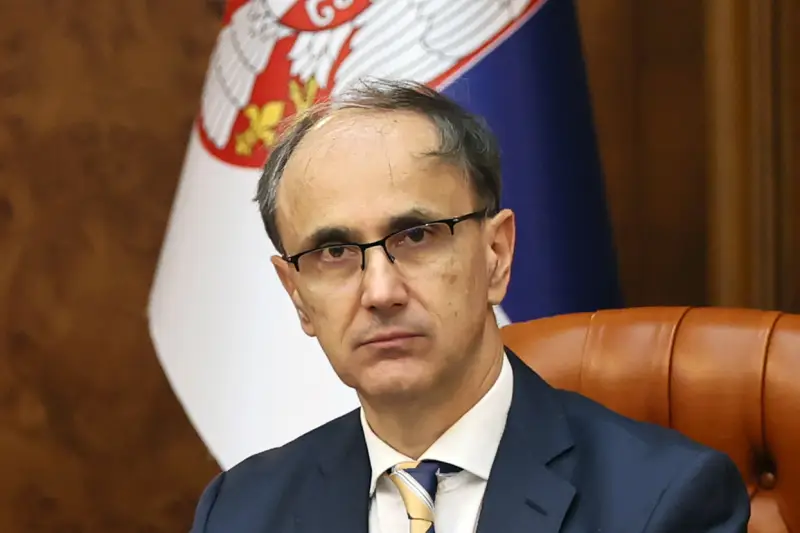
Prime Minister Professor Đuro Macut, MD, DSc, stated that a comprehensive package of measures aimed at making medicines more affordable and accessible to citizens, while simultaneously improving the quality of healthcare, enters into force today.

Q:
A:
More affordable, accessible medicines demonstrate state’s systemic care for citizens’ health
Belgrade,
1 August 2026
Macut explained that the first measure, which takes effect today, provides for a significant reduction in copays for medicines on List A1 and covers a total of 769 medicines. The second important measure – the expansion of the medicines list – will enter into force on 17 August, when insured persons will gain access to new therapies that they previously had to pay for in full.
This serves as further proof that the state systemically cares for citizens’ health and is reducing treatment costs through concrete measures, the Prime Minister said, adding that the government will continue investing in the healthcare system and adopting decisions that directly improve the quality of life in Serbia.
He noted that the changes apply to medicines from 12 major therapeutic groups, thereby reducing costs for a large number of patients who rely on various therapies on a daily basis.
For medicines that previously required copays ranging from 15% to 45%, citizens will now pay a uniform copay of 10%. For medicines with previous copays of between 50% and 90%, the new copay will be reduced by 40 percentage points. In practice, this means that copays will range from 10% to 50%, instead of the previous range of 10% to as much as 90%, Macut explained.
The Prime Minister pointed out that this measure, which will remain in force for at least 12 months and benefit approximately three million citizens, will ease the burden on household budgets.
Regarding the expansion of the medicines list, 18 new prescription medicines are being introduced, including 16 modern oral anticoagulants for the prevention of stroke and the treatment of thrombosis, as well as two new medicines for the treatment of heart failure, Macut said.
According to him, the state will cover 70% of the cost of anticoagulant therapy, with citizens paying the remaining 30%, while for medicines used to treat heart failure, patients will pay approximately 50% of the price.
The Prime Minister emphasised that this measure is permanent and that these medicines will become part of the standard range of therapies available on prescription in all pharmacies.
-
 Belgrade/Budapest, 23 October 2026
Good relations with Hungary help Serbia on its European path
-
 Belgrade, 23 October 2026
Prime Minister Macut at commemoration of 70th anniversary of Hungarian Revolution
-
 Belgrade/Budva, 22 October 2026
Serbia one of key factors in regional integration
-
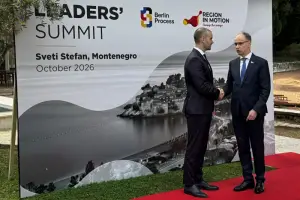 Belgrade/Sveti Stefan, 22 October 2026
Serbia committed to continuing reforms on path to full EU membership
-
 Belgrade, 21 October 2026
Prime Minister Macut to attend Berlin Process Leaders’ Summit in Sveti Stefan
-
 Kragujevac, 21 October 2026
Macut pays tribute to civilians executed during World War II
-
 Belgrade, 21 October 2026
Importance of maintaining public order, peace on election day
-
 Belgrade, 20 October 2026
Macut congratulates Luca Niculescu on his election as new Prime Minister of Romania
-
 Petrovac na Mlavi/Žagubica, 19 October 2026
Strengthening healthcare institutions among government priorities
-
 Belgrade/Dalj, 17 October 2026
Serbia to continue supporting its people, Serbian Orthodox Church in Croatia