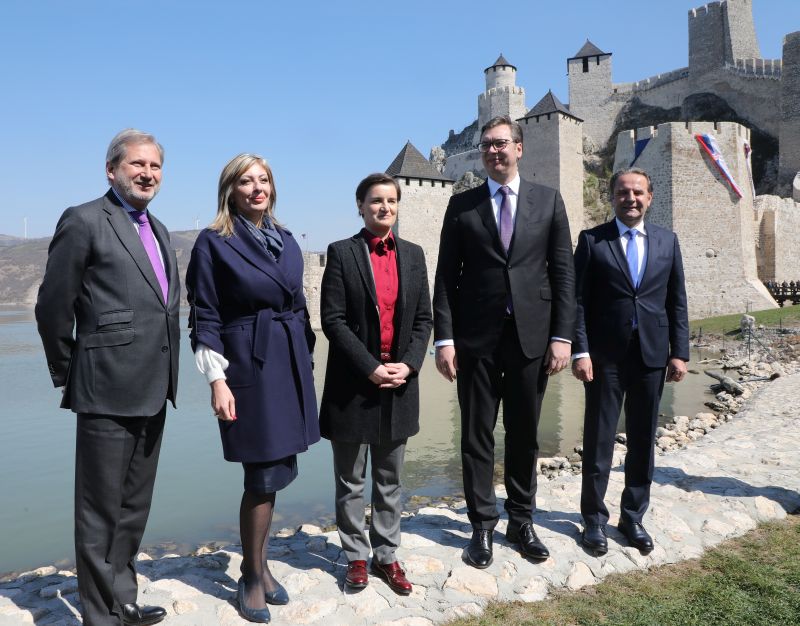
The restored Golubac Fortress was officially opened today in the presence of Serbian President Aleksandar Vucic, Serbian Prime Minister Ana Brnabic, European Commissioner for European Neighbourhood Policy and Enlargement Negotiations Johannes Hahn and a large number of citizens.

Q:
A:
Restored Golubac Fortress opened
Golubac,
29 March 2019
The Golubac Fortress, a 14th century medieval fortress built at the very entrance to the Djerdap Gorge, has been restored with the financial support of the European Union.
During the tour of the Golubac Fortress, Vucic and Hahn visited the Palace and an exhibition about knights in Tower 8.
Those present at the opening were greeted by Director of the Tourism Development Society “Golubac Fortress” Iskra Maksimovic, Head of the EU Delegation to Serbia Sem Fabrizi and Austrian Ambassador to Serbia Nikolaus Lutterotti.
When I look at the restored Golubac Fortress and its fantastic towers, a beautiful medieval monument, I see not only history, but also the strength of this country and our people that guarantee the future, the Serbian President said at the opening of the fortress.
I see how much we can do, especially with our European friends, and how sometimes it is only necessary to get moving, to try everything we did not dare for years and then to see Serbia as it is - one of the most beautiful countries in the world, a country of history, but first of all, a country of future, Vucic underlined.
That is the future that we can build on our own, just like those who had been doing it before us for centuries, believing that we will not forget and we will be able to carry on.
Vucic expressed his gratitude to all those who made the Golubac Fortress come alive again, including the European Union and Austria.
Golubac is a proof of beauty in which it is necessary to invest, he said and called on everyone to continue discovering the beauty of this part of the country in places like Kladovo, Negotin, Bor, Zajecar, Felix Romuliana and others.
All this is one of the largest natural resources of Serbia. There is a lot of potential, and no excuse not to use it, Vucic concluded.
The restoration of the Golubac Fortress started in September 2014.
Director of the Tourism Development Society “Golubac Fortress” Iskra Maksimovic said that €8.5 million was invested in the restoration, of which €8.36 million in reconstruction.
These funds were set aside from the IPA Fund (2011 and 2016), while one part of the funds was given by the Austrian Development Agency.
The state invested €400,000 in the equipment of the Visitors’ Centre and the development of infrastructure at the bottom of the fort.
-
 Belgrade, 17 June 2026
Serbia continues reforms in line with European standards
-
 Belgrade, 17 June 2026
Serbia appreciates Slovenia's continued support in European integration process
-
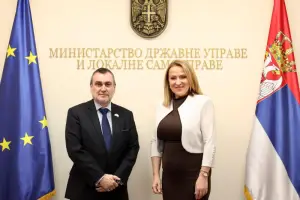 Belgrade, 17 June 2026
Deepening cooperation with Spain in field of modernising public administration
-
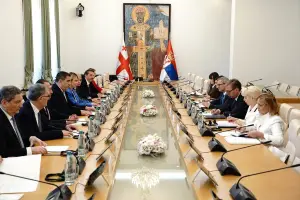 Belgrade/Tbilisi, 16 June 2026
Boosting Serbia-Georgia links in field of agriculture
-
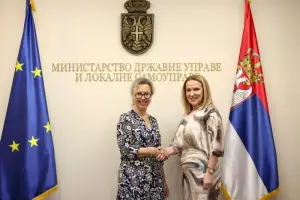 Belgrade, 16 June 2026
Enhancing partnership between Serbia, France in modernising public administration
-
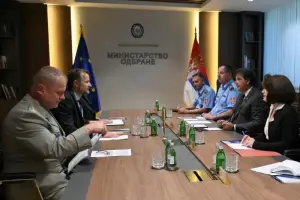 Belgrade, 16 June 2026
Strengthening regional, global security Serbia’s strategic commitment
-
 Belgrade/Luxembourg, 16 June 2026
Serbia’s evident momentum in reform processes on road to EU
-
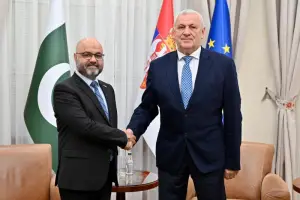 Belgrade, 16 June 2026
Great room for deepening cooperation with Pakistan in field of science
-
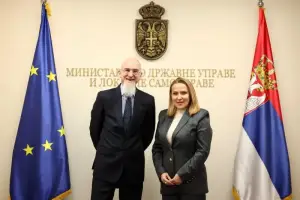 Belgrade, 15 June 2026
Exchange of experiences with Italy to further improve public administration