Q:
A:
Western Balkan Education Platform extremely important for cooperation of countries
Belgrade,
28 September 2017
Minister of Education, Science and Technological Development Mladen Sarcevic, European Commissioner for Education, Culture, Youth and Sports Tibor Navracic and Head of the EU Delegation to Serbia Ambassador Sam Fabrizi opened today a regional ministerial meeting on education in Belgrade , training, science and research, marking the 30th anniversary of the EU Erasmus programme.
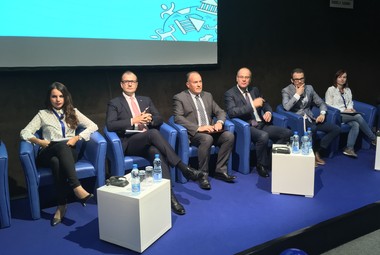
On that occasion, Sarcevic said that the existence of the Western Balkans education and training platform is extremely important for the cooperation of our countries, the exchange of experience and knowledge in the field of education and research, and for our future accession to the European Union.
The future of the European Union and our countries is based on a strong economy, based on knowledge and innovation. Therefore, the focus of our cooperation should be to strengthen our economies by investing in innovation and using all our research potential, said Sarcevic.
He added that in the previous period the most intensive cooperation was achieved in the field of higher education and that many regional projects have been developed within Tempus and Erazmus + programme.
The Minister of Education reminded that since 2014, more than €26 million has been approved as part of Erasmus + higher education institutions in Serbia.
Navracic said that since the beginning of 2012, the Western Balkans ministerial platform has become a precious tradition because it provides a unique opportunity to exchange views on education systems in the region and their main priorities and challenges.
Today, when we celebrate the 30th anniversary of the Erasmus program, I would say that 33 countries participate in the Erasmus + programme that enables cooperation with hundreds of countries around the world, including all Western Balkan countries, said Navracic.
Fabrizi emphasised that the European Union is helping countries in the region to implement reforms in order to create a better educational environment that can respond to the challenges of social and economic growth and foster social development, social inclusion and prospects for joining the EU.
Only in Serbia, the EU has since 2003donated €80 million in support of educational reforms and more than €100 million for the promotion of innovation, competitiveness, research and development.
For projects under this programme, more than €26 million has been approved to higher education institutions in Serbia since 2014, more than any other country in the Western Balkans region.
In addition, more than 5,000 professors and students from higher education institutions in Serbia participated in short-term exchange programs at universities throughout Europe and beyond.
The future of the European Union and our countries is based on a strong economy, based on knowledge and innovation. Therefore, the focus of our cooperation should be to strengthen our economies by investing in innovation and using all our research potential, said Sarcevic.
He added that in the previous period the most intensive cooperation was achieved in the field of higher education and that many regional projects have been developed within Tempus and Erazmus + programme.
The Minister of Education reminded that since 2014, more than €26 million has been approved as part of Erasmus + higher education institutions in Serbia.
Navracic said that since the beginning of 2012, the Western Balkans ministerial platform has become a precious tradition because it provides a unique opportunity to exchange views on education systems in the region and their main priorities and challenges.
Today, when we celebrate the 30th anniversary of the Erasmus program, I would say that 33 countries participate in the Erasmus + programme that enables cooperation with hundreds of countries around the world, including all Western Balkan countries, said Navracic.
Fabrizi emphasised that the European Union is helping countries in the region to implement reforms in order to create a better educational environment that can respond to the challenges of social and economic growth and foster social development, social inclusion and prospects for joining the EU.
Only in Serbia, the EU has since 2003donated €80 million in support of educational reforms and more than €100 million for the promotion of innovation, competitiveness, research and development.
For projects under this programme, more than €26 million has been approved to higher education institutions in Serbia since 2014, more than any other country in the Western Balkans region.
In addition, more than 5,000 professors and students from higher education institutions in Serbia participated in short-term exchange programs at universities throughout Europe and beyond.
-
 Belgrade, 15 February 2026
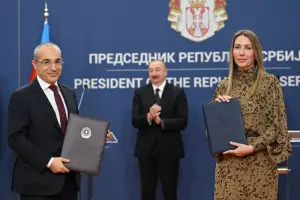
Serbia, Azerbaijan sign seven cooperation documents
-
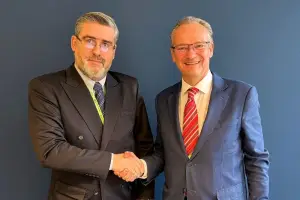 Belgrade/Munich, 15 February 2026
Great importance of Germany’s continued development assistance to Serbia
-
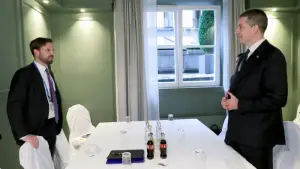 Belgrade/Munich, 14 February 2026
Strategic partnership with US one of Serbia’s priority goals
-
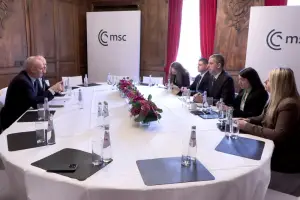 Belgrade/Munich, 14 February 2026
Serbia NATO’s reliable, predictable partner
-
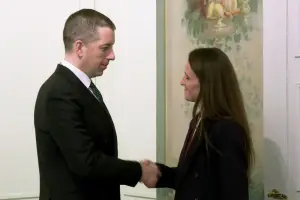 Belgrade/Munich, 14 February 2026
Regional cooperation among Serbia’s key foreign policy priorities
-
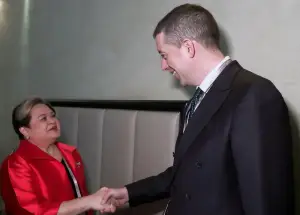 Belgrade/Munich, 14 February 2026
Further strengthening of bilateral relations with Philippines
-
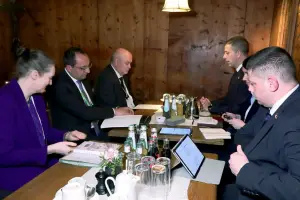 Belgrade/Munich, 13 February 2026
Serbia’s consistent commitment to principles of sovereignty, territorial integrity
-
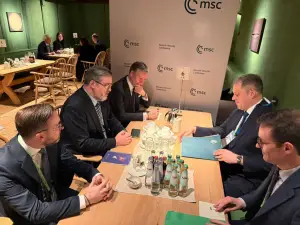 Belgrade/Munich, 13 February 2026
Government fully committed to meeting obligations in EU accession process
-
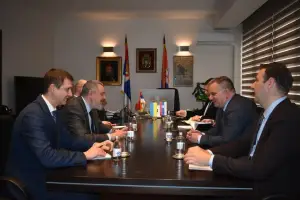 Belgrade, 11 February 2026
Ample space for advancing cooperation with Ukraine in field of education
-
 Belgrade, 11 February 2026
Spain’s support for Serbia’s European path