
Q:
A:
EU still best place to live, work
Belgrade/Bratislava,
25 July 2016
Minister without portfolio responsible for European integration Jadranka Joksimovic stated today that the EU accession policy will remain a priority even after the formation of a new government, noting that it is an integral part of internal development policy of Serbia.
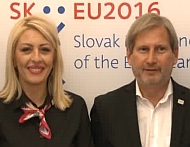
Jadranka Joksimovic and Johannes Hahn
Joksimovic attended today in Bratislava an informal meeting of ministers and secretaries of state in charge of European affairs, and discussed issues in the field of continuing enlargement policy, migrant crisis and communications strategy.
The progress which Serbia has achieved in the reform process has been commended at the debate, and this progress has been manifested through concrete steps made in the accession process.
The meeting was also attended by EU Commissioner for Enlargement and Neighbourhood Policy Johannes Hahn, representatives of the candidate countries and representatives of Slovakia, which in early July took over the six-month presidency of the EU Council.
Joksimovic stressed on this occasion that the Serbian government will not feed citizens’ expectations based on unrealistic grounds, but the steps in the negotiations will be based on the concrete results.
According to her, this can be seen on the case of economic reforms which have yielded its first results, because Serbia has one of the highest economic growth rates in Europe in the first six months.
For the government, the accession process is an inseparable part of the reform policy and is seen as an investment in the foundations of building a functional and efficient state, as well as higher standard of citizens, she explained.
Joksimovic thanked Hahn for supporting the enlargement policy based on the achieved criteria and respect for fair rules of membership.
Speaking about the migrant crisis, the Minister without portfolio reiterated that it is necessary to make further efforts for an effective European solution.
According to her, there is no unilateral solution, but it requires a coordinated common policy, in which Serbia will participate responsibly as it has done to date.
Hahn underlined that the EU must evaluate and recognise the result which the country has achieved on the basis of adopted standards, whereby this evaluation is important so that the state and its citizens could feel concrete progress in European integration.
Speaking about the communications strategy in the field of European integration, the participants in the meeting agreed that it is important to present to citizens concrete benefits from that process, and that despite all the challenges it is facing, the EU it remains the best place to live and work.
The progress which Serbia has achieved in the reform process has been commended at the debate, and this progress has been manifested through concrete steps made in the accession process.
The meeting was also attended by EU Commissioner for Enlargement and Neighbourhood Policy Johannes Hahn, representatives of the candidate countries and representatives of Slovakia, which in early July took over the six-month presidency of the EU Council.
Joksimovic stressed on this occasion that the Serbian government will not feed citizens’ expectations based on unrealistic grounds, but the steps in the negotiations will be based on the concrete results.
According to her, this can be seen on the case of economic reforms which have yielded its first results, because Serbia has one of the highest economic growth rates in Europe in the first six months.
For the government, the accession process is an inseparable part of the reform policy and is seen as an investment in the foundations of building a functional and efficient state, as well as higher standard of citizens, she explained.
Joksimovic thanked Hahn for supporting the enlargement policy based on the achieved criteria and respect for fair rules of membership.
Speaking about the migrant crisis, the Minister without portfolio reiterated that it is necessary to make further efforts for an effective European solution.
According to her, there is no unilateral solution, but it requires a coordinated common policy, in which Serbia will participate responsibly as it has done to date.
Hahn underlined that the EU must evaluate and recognise the result which the country has achieved on the basis of adopted standards, whereby this evaluation is important so that the state and its citizens could feel concrete progress in European integration.
Speaking about the communications strategy in the field of European integration, the participants in the meeting agreed that it is important to present to citizens concrete benefits from that process, and that despite all the challenges it is facing, the EU it remains the best place to live and work.
-
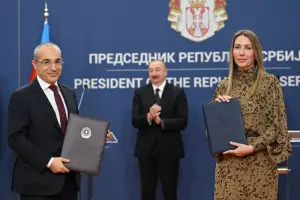 Belgrade, 15 February 2026
Serbia, Azerbaijan sign seven cooperation documents
-
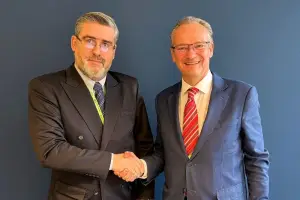 Belgrade/Munich, 15 February 2026
Great importance of Germany’s continued development assistance to Serbia
-
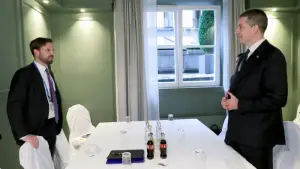 Belgrade/Munich, 14 February 2026
Strategic partnership with US one of Serbia’s priority goals
-
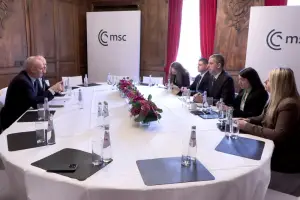 Belgrade/Munich, 14 February 2026
Serbia NATO’s reliable, predictable partner
-
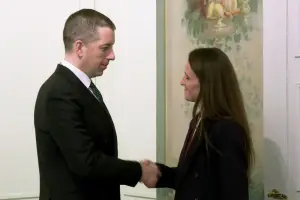 Belgrade/Munich, 14 February 2026
Regional cooperation among Serbia’s key foreign policy priorities
-
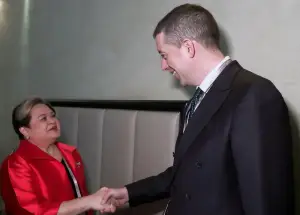 Belgrade/Munich, 14 February 2026
Further strengthening of bilateral relations with Philippines
-
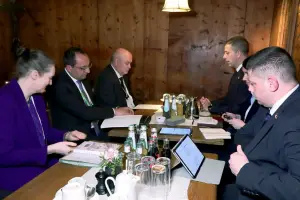 Belgrade/Munich, 13 February 2026
Serbia’s consistent commitment to principles of sovereignty, territorial integrity
-
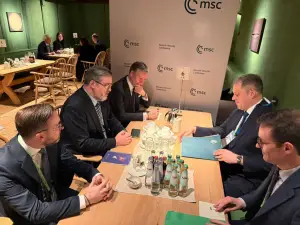 Belgrade/Munich, 13 February 2026
Government fully committed to meeting obligations in EU accession process
-
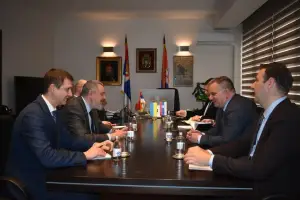 Belgrade, 11 February 2026
Ample space for advancing cooperation with Ukraine in field of education
-
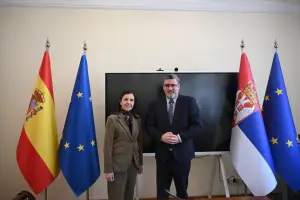 Belgrade, 11 February 2026
Spain’s support for Serbia’s European path