
Q:
A:
Western Balkan route crossed by 102,000 people this year
Belgrade,
21 July 2016
State Secretary of the Ministry of Labour, Employment, Veteran and Social Affairs Nenad Ivanisevic stated today that the Western Balkan migrant route is not closed because it has been passed by 102, 000 people since the beginning of this year.

Author:
fonet.rs
Speaking at a workshop on legal migration and integration of returnees, organised by the German Agency for International Cooperation (GIZ) within the framework of the global development of migration, Ivanisevic said that Serbia expects continued financial assistance of the EU.
He said that Minister for Labour, Employment, Veteran and Social Affairs Aleksandar Vulin talked about this topic with Head of the EU Delegation to Serbia Michael Davenport, and that the talks were also held with representatives of the Development Bank of the Council of Europe, which is a major donor in the migrant crisis.
According to him, at this moment, there are 800 people at the Horgos border crossing, between 250 to 300 migrants at Kelebija and around 450 people in the reception centre in Subotica.
The State Secretary added that migrants are transferred with quite a lot of success from Horgos to the reception centres, and added that he spoke with a large group from Afghanistan, who sought guarantees, if possible, that upon their arrival to the reception centre they will not lose their place in the queue for entry in Hungary.
Of course, the big problem is that we do not know what Hungary’s criteria for approving asylum to someone are, Ivanisevic said and announced that he expects that an agreement will be soon made with representatives of Hungary.
He stressed that it should be agreed that these requests are submitted at the reception centres and not at transit gates at Horgos and Kelebija, which would make it easier to transfer migrants from border crossings to reception centres, because there they are given proper care.
The readmission agreement with the EU has been in effect for a long time and we want to prepare ourselves for everyone that might come back because the integration of people who are readmitted is a specific challenge, primarily because most of them do not come voluntarily, Ivanisevic concluded.
He said that Minister for Labour, Employment, Veteran and Social Affairs Aleksandar Vulin talked about this topic with Head of the EU Delegation to Serbia Michael Davenport, and that the talks were also held with representatives of the Development Bank of the Council of Europe, which is a major donor in the migrant crisis.
According to him, at this moment, there are 800 people at the Horgos border crossing, between 250 to 300 migrants at Kelebija and around 450 people in the reception centre in Subotica.
The State Secretary added that migrants are transferred with quite a lot of success from Horgos to the reception centres, and added that he spoke with a large group from Afghanistan, who sought guarantees, if possible, that upon their arrival to the reception centre they will not lose their place in the queue for entry in Hungary.
Of course, the big problem is that we do not know what Hungary’s criteria for approving asylum to someone are, Ivanisevic said and announced that he expects that an agreement will be soon made with representatives of Hungary.
He stressed that it should be agreed that these requests are submitted at the reception centres and not at transit gates at Horgos and Kelebija, which would make it easier to transfer migrants from border crossings to reception centres, because there they are given proper care.
The readmission agreement with the EU has been in effect for a long time and we want to prepare ourselves for everyone that might come back because the integration of people who are readmitted is a specific challenge, primarily because most of them do not come voluntarily, Ivanisevic concluded.

-
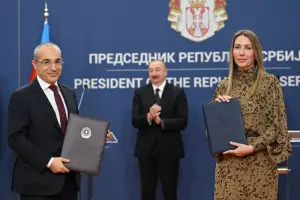 Belgrade, 15 February 2026
Serbia, Azerbaijan sign seven cooperation documents
-
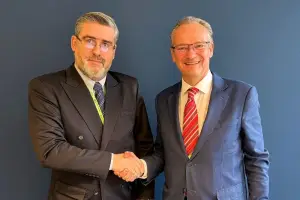 Belgrade/Munich, 15 February 2026
Great importance of Germany’s continued development assistance to Serbia
-
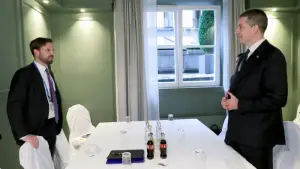 Belgrade/Munich, 14 February 2026
Strategic partnership with US one of Serbia’s priority goals
-
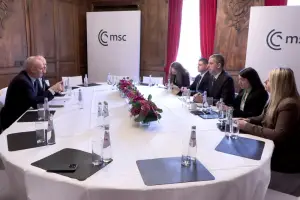 Belgrade/Munich, 14 February 2026
Serbia NATO’s reliable, predictable partner
-
 Belgrade/Munich, 14 February 2026
Regional cooperation among Serbia’s key foreign policy priorities
-
 Belgrade/Munich, 14 February 2026
Further strengthening of bilateral relations with Philippines
-
 Belgrade/Munich, 13 February 2026
Serbia’s consistent commitment to principles of sovereignty, territorial integrity
-
 Belgrade/Munich, 13 February 2026
Government fully committed to meeting obligations in EU accession process
-
 Belgrade, 11 February 2026
Ample space for advancing cooperation with Ukraine in field of education
-
 Belgrade, 11 February 2026
Spain’s support for Serbia’s European path