
Q:
A:
Economic growth rate to be higher than expected
Belgrade,
4 February 2010
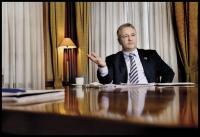
Deputy Prime Minister and Minister of Economy and Regional Development Mladjan Dinkic said that public sector salary and pension increases could be unfrozen from September this year as the Serbian economy was expected to exit recession.
Author:
www.emportal.rs
In an interview with the Ekonomist Magazine, Dinkic said that he hoped that the Serbian economy would grow more than planned and that a growing GDP would lead to pay increases.
Responding to a question about the basis for estimates predicting a higher than expected GDP growth rate, Dinkic said that after a continuous fall for the most part of 2009, the GDP had increased in December compared to the first quarter and that it was expected that the first quarter of 2010 would be better than the same period last year.
If this happens, Serbia would formally come out of recession. This does not mean that the economy has already recovered rather that it is in the process of recovery, said Dinkic.
Speaking about how pay increases in the public sector could influence the private sector, Dinkic said that the state would subsidise investment loans to ensure higher pay in the private sector.
Balanced and realistic pay increases could be useful for the Serbian economy and we will discuss this with the IMF, said the Minister.
If revenues turn out to be larger than planned after a period of six months, Serbia will propose to the IMF that the surplus should be used to increase salaries rather than for deficit reduction, he said.
Dinkic said that unfreezing pay increases would be followed with unfreezing pension increases, remarking that it was important to determine the dynamics of the process.
He said that the Serbian government would soon adopt a new model for reviving production and increasing employment in the most undeveloped municipalities.
Responding to a question about the basis for estimates predicting a higher than expected GDP growth rate, Dinkic said that after a continuous fall for the most part of 2009, the GDP had increased in December compared to the first quarter and that it was expected that the first quarter of 2010 would be better than the same period last year.
If this happens, Serbia would formally come out of recession. This does not mean that the economy has already recovered rather that it is in the process of recovery, said Dinkic.
Speaking about how pay increases in the public sector could influence the private sector, Dinkic said that the state would subsidise investment loans to ensure higher pay in the private sector.
Balanced and realistic pay increases could be useful for the Serbian economy and we will discuss this with the IMF, said the Minister.
If revenues turn out to be larger than planned after a period of six months, Serbia will propose to the IMF that the surplus should be used to increase salaries rather than for deficit reduction, he said.
Dinkic said that unfreezing pay increases would be followed with unfreezing pension increases, remarking that it was important to determine the dynamics of the process.
He said that the Serbian government would soon adopt a new model for reviving production and increasing employment in the most undeveloped municipalities.
-
 Belgrade/Saint Petersburg, 5 June 2026
Serbia, Russia remain reliable partners in energy sector
-
 Belgrade/Saint Petersburg, 4 June 2026
Building long-term energy security through cooperation with Russia
-
 Belgrade/Saint Petersburg, 3 June 2026
Commitment to ensuring supply of oil derivatives to domestic market
-
 Belgrade, 29 May 2026
Diversification of gas supply routes priority for Serbia
-
 Belgrade, 23 May 2026
Direct Belgrade-Toronto flight important step for economy, diaspora
-
 Belgrade, 7 May 2026
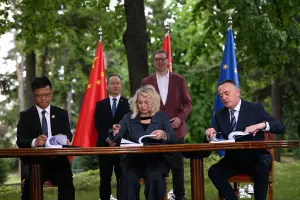
Contract signed for construction of Vožd Karađorđe expressway
-
 Belgrade, 6 May 2026
Serbia receives support from IMF to continue reforms
-
 Kragujevac, 30 April 2026
State Data Centre in Kragujevac receives new supercomputer
-
 Belgrade, 24 April 2026
Stability of oil derivatives supply maintained
-
 Belgrade, 21 April 2026
Construction key driver of Serbia’s development