Q:
A:
Feith’s statements have no affect on Serbia, Kosovo Serbs
Belgrade,
3 March 2008
Serbian Minister for Kosovo-Metohija Slobodan Samardzic said yesterday that statements made by EU special representative in Kosovo-Metohija Peter Feith have no binding effect on authorities in Serbia or on Serbs living in the southern Serbian province.
In a statement to the Tanjug news agency, Samardzic said that Peter Feith’s mission has no legal basis in international law.
His statements are of a private nature and have no binding affect whatsoever on Serbia or Serbs living in Kosovo-Metohija, said Samardzic.
That was Samardzic’s response to Peter Feith’s statement to Pristina’s Koha Ditore that the Serb community in northern Kosovo-Metohija will have no special status in relation to the major part of the province and that financial assistance from Belgrade, if it is deemed necessary, will be allowed with full respect for the Kosovo government and Kosovo’s territorial integrity.
Samardzic stressed that Feith’s statements are utterly unfounded and cannot be taken seriously.
That is the way things are and will remain until Mr. Feith and his mission withdraw from Kosovo-Metohija, said the Minister.
He added that regardless of the unilateral proclamation of independence by Kosovo and the support of some countries, Serbia will keep strengthening and expanding its functions in the province, and at the same time defend its citizens.
Two weeks after the unilateral declaration of independence, Samardzic said that some states endorsed this violation of international and interior law and thus, to their own embarrassment, acknowledged the independence of Kosovo.
In such a situation, there is no other way for Serbia but to defend its national interests. With its state documents and its state policy, Serbia definitively chose to go in that direction, he said.
The Minister emphasised that the basic standpoint of Serbia’s policy is to defend its citizens in Kosovo-Metohija.
According to him, that is why Serbia will keep strengthening and expanding its functions in the province, wherever its loyal citizens reside.
He added that in carrying out such a policy in Kosovo-Metohija, Serbia expects understanding and help from states and international organisations which advocate the salvation and preservation of international law.
Samardzic noted that this will remain Serbia’s basic criterion in its relations towards states and international organisations in the European and international order.
His statements are of a private nature and have no binding affect whatsoever on Serbia or Serbs living in Kosovo-Metohija, said Samardzic.
That was Samardzic’s response to Peter Feith’s statement to Pristina’s Koha Ditore that the Serb community in northern Kosovo-Metohija will have no special status in relation to the major part of the province and that financial assistance from Belgrade, if it is deemed necessary, will be allowed with full respect for the Kosovo government and Kosovo’s territorial integrity.
Samardzic stressed that Feith’s statements are utterly unfounded and cannot be taken seriously.
That is the way things are and will remain until Mr. Feith and his mission withdraw from Kosovo-Metohija, said the Minister.
He added that regardless of the unilateral proclamation of independence by Kosovo and the support of some countries, Serbia will keep strengthening and expanding its functions in the province, and at the same time defend its citizens.
Two weeks after the unilateral declaration of independence, Samardzic said that some states endorsed this violation of international and interior law and thus, to their own embarrassment, acknowledged the independence of Kosovo.
In such a situation, there is no other way for Serbia but to defend its national interests. With its state documents and its state policy, Serbia definitively chose to go in that direction, he said.
The Minister emphasised that the basic standpoint of Serbia’s policy is to defend its citizens in Kosovo-Metohija.
According to him, that is why Serbia will keep strengthening and expanding its functions in the province, wherever its loyal citizens reside.
He added that in carrying out such a policy in Kosovo-Metohija, Serbia expects understanding and help from states and international organisations which advocate the salvation and preservation of international law.
Samardzic noted that this will remain Serbia’s basic criterion in its relations towards states and international organisations in the European and international order.
-
 Belgrade, 28 August 2026
Church broken into, ransacked in Bušince village in Kosovska Kamenica
-
 Belgrade, 27 August 2026
Remembrance of suffering of Serb civilians in village of Klečka
-
 Belgrade, 30 July 2026
Continued illegal demolition of Serb-owned buildings near Lake Gazivode
-
 Belgrade, 29 July 2026
Works in Special Protective Zone of Visoki Dečani Monastery must be halted
-
 Belgrade, 23 July 2026
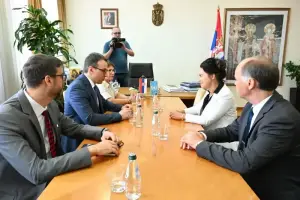
Priština continues with unilateral, illegal moves
-
 Belgrade/Zurich, 4 June 2026
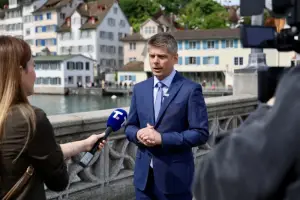
Exhibition in Zurich on position of Serbs in Kosovo and Metohija
-
 Belgrade/Brussels, 12 May 2026
Belgrade seeking concrete steps towards establishment of Community of Serb Municipalities
-
 Belgrade/Brussels, 11 May 2026
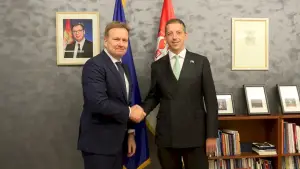
Belgrade-Priština dialogue not dialogue on mutual recognition
-
 Belgrade, 10 April 2026
Serbian health centres closed in villages of Suvo Grlo, Banje