Director of the Serbian government’s Office for Kosovo and Metohija Petar Petković stated today that a solution has been found that will enable the uninterrupted and normal operation and functioning of Serbian educational and healthcare institutions in Kosovo and Metohija.

Q:
A:
Closure of Serbian institutions in Kosovo and Metohija halted
Belgrade,
14 March 2026
At an extraordinary news conference at the Serbian government building, Petković stressed that the worst possible scenario – the closure and shutdown of Serbian institutions in the southern Serbian province – had been avoided, noting that this had been the main goal of Priština and the implementation of the so-called law on foreigners.
He conveyed that work on resolving this issue had been carried out around the clock with the European Union and, in that context, praised the engagement of the Union’s Special Representative for the Belgrade-Priština Dialogue Peter Sørensen.
According to him, talks were held daily with Serbs on the ground and with employees of institutions, as well as with the rector, deans and hospital directors, and with representatives of the Serbian Orthodox Church, because this issue is neither administrative nor technical, but above all a matter of the survival of Serbs in Kosovo and Metohija.
The closure of Serbian institutions has been halted, and that is the most important thing. Our people will therefore be able to continue studying, learning, receiving medical treatment and going to their workplaces. We have preserved the Clinical Hospital Centre in Kosovska Mitrovica, healthcare centres in Gračanica and Pasjane, as well as all health centres and outpatient clinics, along with preschool institutions, he stated.
Petković emphasised that this solution does not involve any integration of Serbian educational and healthcare institutions into the so-called Kosovo system and that Serbian staff will continue to work in Serbian institutions in Kosovo and Metohija.
The mayors of ten Serbian municipalities will compile a list of all employees in Serbian educational and healthcare institutions, including students, on the basis of which employees of those institutions will be granted the right to work and reside.
No one will be able to disrupt work or conduct raids, and the Serbian people will be able to work freely in our institutions, Petković said, adding that the list, which will contain only personal data, will be updated every 12 months.
According to him, there is no security risk because the so-called Kosovo Police already possess all that data at the administrative crossing.
This solution does not involve any integration into the Priština system, but rather finding a way to preserve the status of our institutions and enable their uninterrupted functioning. The employer remains the Republic of Serbia, and our people will continue to work in Serbian institutions, Petković explained.
He also emphasised that this solution does not imply any recognition of the independence of the so-called Kosovo, noting that the solution is not ideal, but that it cannot be, given the situation in Priština, where elections may be held again in a month’s time.
-
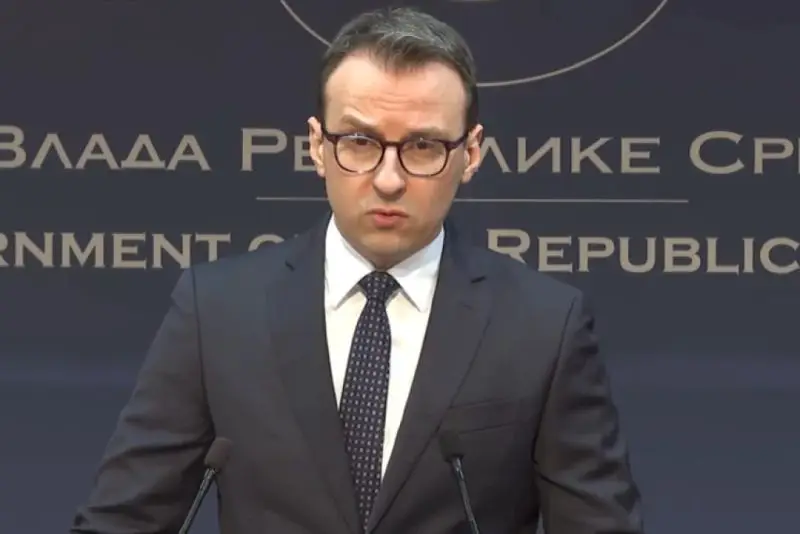 Author: Tanjug
-
 Belgrade, 2 October 2026
KFOR’s obligation to protect Serbs in Kosovo and Metohija
-
 Belgrade, 29 September 2026
UNMIK’s responsible response to violations of Serb rights in Kosovo and Metohija necessary
-
 Belgrade, 27 September 2026
Continuation of unfounded arrests of Serbs in municipality of Zubin Potok
-
 Belgrade, 16 September 2026
Serbia continues fight for justice, truth about suffering of Serbian people in Kosovo and Metohija
-
 Belgrade, 10 September 2026
Belgrade committed to dialogue despite obstructions from Priština
-
 Belgrade, 4 September 2026
Priština continues demolition of Serb properties at Gazivode
-
 Belgrade, 28 August 2026
Church broken into, ransacked in Bušince village in Kosovska Kamenica
-
 Belgrade, 27 August 2026
Remembrance of suffering of Serb civilians in village of Klečka
-
 Belgrade, 30 July 2026
Continued illegal demolition of Serb-owned buildings near Lake Gazivode
-
 Belgrade, 29 July 2026
Works in Special Protective Zone of Visoki Dečani Monastery must be halted