Q:
A:
Mediating troika expected to take unbiased approach in drafting and finishing its report on Kosovo negotiations
Belgrade,
29 November 2007
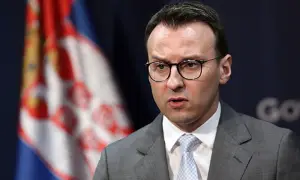
The Serbian Ministry for Kosovo-Metohija expressed surprise and disapproval following a statement made by a member of the Contact Group’s mediating troika Wolfgang Ischinger, the EU representative, at the press conference held in Vienna after the three-day talks in Baden.
Ischinger’s statement that “several proposals” were offered and that “all shades of gray” were examined but that they were “not acceptable for the Serbian side” is simply not true.
Of all proposals presented by the troika, only the 14-item document came as common document of all three members.
Ischinger did come up with several proposals which disrespected UN SC Resolution 1244 and were not in the jurisdiction of the troika as they focused on non-status or post-status aspects.
The model proposal based on substantial autonomy of Kosovo as part of Serbia was not considered.
The Ministry warns about possible consequences of such statements just before the final report of the troika to the Contact Group. The troika is expected to take objective, unbiased and factual approach in drafting and finishing of this report.
Furthermore the troika’s report should act as a guarantee of further actions and proceedings before the UN Security Council, as well as of the necessary ensuing discussions under the auspices of the UN SC.
At the Vienna press conference all members of the troika stressed as their achievement the fact that Pristina and Belgrade started a constructive face-to-face dialogue.
It is true that during 120 days progress has been made in that the two sides started talking directly. The Ministry greets this progress as well since it repeatedly stresses that only a direct negotiation can result in a compromised and sustainable solution for the status of the province.
Contrary to the Ambassador Ischinger’s claim, the Serbian side has been distinctly active in negotiations all the time. It took active part in the meetings, it pushed for more frequent sessions and finally it not only presented a detailed and well-prepared proposal of substantial autonomy, but also continued to compare and contrast this model to similar autonomies in the world like Hong Kong, the Oland Islands, etc.
Additionally, Belgrade’s constructive approach has been recognised in international public, professional and diplomatic circles, the Ministry stated.
The Ministry expressed hope that the troika’s report will objectively present the behaviour and contribution of both Belgrade and Pristina. In doing so they would positively affect the forthcoming talks in the UN SC on Kosovo’s status.
Additionally, this would help in finding a compromised and just solution, for the well-being of all citizens of the province, the peace, prosperity and European future of the whole region.
Of all proposals presented by the troika, only the 14-item document came as common document of all three members.
Ischinger did come up with several proposals which disrespected UN SC Resolution 1244 and were not in the jurisdiction of the troika as they focused on non-status or post-status aspects.
The model proposal based on substantial autonomy of Kosovo as part of Serbia was not considered.
The Ministry warns about possible consequences of such statements just before the final report of the troika to the Contact Group. The troika is expected to take objective, unbiased and factual approach in drafting and finishing of this report.
Furthermore the troika’s report should act as a guarantee of further actions and proceedings before the UN Security Council, as well as of the necessary ensuing discussions under the auspices of the UN SC.
At the Vienna press conference all members of the troika stressed as their achievement the fact that Pristina and Belgrade started a constructive face-to-face dialogue.
It is true that during 120 days progress has been made in that the two sides started talking directly. The Ministry greets this progress as well since it repeatedly stresses that only a direct negotiation can result in a compromised and sustainable solution for the status of the province.
Contrary to the Ambassador Ischinger’s claim, the Serbian side has been distinctly active in negotiations all the time. It took active part in the meetings, it pushed for more frequent sessions and finally it not only presented a detailed and well-prepared proposal of substantial autonomy, but also continued to compare and contrast this model to similar autonomies in the world like Hong Kong, the Oland Islands, etc.
Additionally, Belgrade’s constructive approach has been recognised in international public, professional and diplomatic circles, the Ministry stated.
The Ministry expressed hope that the troika’s report will objectively present the behaviour and contribution of both Belgrade and Pristina. In doing so they would positively affect the forthcoming talks in the UN SC on Kosovo’s status.
Additionally, this would help in finding a compromised and just solution, for the well-being of all citizens of the province, the peace, prosperity and European future of the whole region.
-
 Belgrade, 28 August 2026
Church broken into, ransacked in Bušince village in Kosovska Kamenica
-
 Belgrade, 27 August 2026
Remembrance of suffering of Serb civilians in village of Klečka
-
 Belgrade, 30 July 2026
Continued illegal demolition of Serb-owned buildings near Lake Gazivode
-
 Belgrade, 29 July 2026
Works in Special Protective Zone of Visoki Dečani Monastery must be halted
-
 Belgrade, 23 July 2026
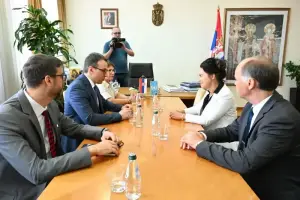
Priština continues with unilateral, illegal moves
-
 Belgrade/Zurich, 4 June 2026
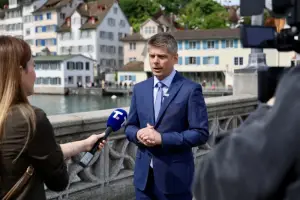
Exhibition in Zurich on position of Serbs in Kosovo and Metohija
-
 Belgrade/Brussels, 12 May 2026
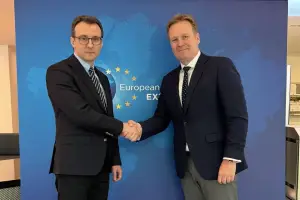
Belgrade seeking concrete steps towards establishment of Community of Serb Municipalities
-
 Belgrade/Brussels, 11 May 2026
Belgrade-Priština dialogue not dialogue on mutual recognition
-
 Belgrade, 10 April 2026
Serbian health centres closed in villages of Suvo Grlo, Banje