Q:
A:
Decision regarding Kosovo issue cannot be imposed on Serbia
Belgrade/Baden,
26 November 2007
Serbian Prime Minister Vojislav Kostunica said today at the negotiations on the issue of the future status of Kosovo-Metohija in Baden near Vienna that no good can come out of harbouring illusions that a solution may be imposed on Serbia, and no one should doubt that Serbia will annul any unilateral act.
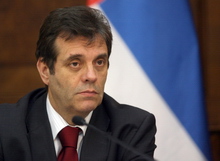
Vojislav Kostunica
Author:
Tanjug
The Serbian government’s official website presents excerpts of the Prime Minister’s speech.
“The conclusion of this round of talks in the process of negotiations on the future status of the province of Kosovo-Metohija is an opportunity to sum up and examine all important elements of the talks held until now, and then on that basis to establish a joint proposal for a solution based on compromise. If it is proved that this is not yet possible, it would be our duty to agree upon continuing talks in a new process of negotiations.
It is important that today we remind ourselves of the path we have travelled and conclude that the issue above all issues was the implementation of standards in the province. When it became clear that there was a problem in fulfilling even elementary standards, a fundamental mistake was made in attempting to resolve that issue by moving to a new phase of negotiations called “both standards and status”. Since it was not realistic that this wrong approach should lead to progress, instead of correcting the initial mistake, the same faulty logic was followed and a new mistake made. Standards were forgotten and removed from the agenda and the resolution of the status was immediately made the subject of talks. And finally, during negotiations led by the troika, we have come to an absurd situation where it is recommended that we forget both the status and standards and turn to post-status questions, or good neighbourly relations and partnership between Serbia and Kosovo as if they were two separate states.
With its constructive approach Serbia showed full readiness to take over responsibility and contribute to resolving the question of fulfilling necessary standards in the province. In the same measure, Serbia is qualified and willing to play its role in finding a solution based on compromise for the issue of the future status of Kosovo-Metohija, which must be in accordance with the UN Charter, Resolution 1244, Helsinki Final Act, and the Serbian Constitution.
On the other hand, I believe that you know more than well the reasons for which Serbia, as a sovereign, democratic and internationally recognised state, cannot discuss the issue of good neighbourly and partnership relations with its own province of Kosovo-Metohija.
Examining the situation in which we are today and taking into consideration the indisputable and evident fact that the entire negotiating standpoint of the Albanian side is built around only one word – independence, due to which no real progress has been made in negotiations, we find ourselves in a deadlock from which we have to find a way out and a way forward. That way out is certainly not negotiations on post-status questions, and the troika should consider the concrete suggestion to recommend to the Security Council in its report that in the continuation of negotiations it should be established what has been achieved in implementation of standards in the province during the previous two years, during which the negotiations have been going on. This is important since every step forward in fulfilling most basic standards is at the same time a step towards finding a compromise solution for the status of the province.
The conclusion of this round is also an opportunity to take a look at the role of the mediating troika. The troika began their mission with a visit to Belgrade at the beginning of August, and far more was done during these last four months of negotiations than during the entire previous process which lasted almost a year and half, owing undoubtedly to dedication and hard work.
Owing to this far more intensive mediation and frequent meetings, Serbia was given the chance to develop its arguments and with indisputable examples prove that the proposed concept of substantial autonomy can function, is viable and is based on a universal model for resolving similar questions worldwide.
Even though all positive steps made, no doubt due to the efforts made by the troika, have not yet led to a compromise, they must be appreciated and properly valued. It is useful to remember that not a single complicated issue like this was resolved overnight, despite all the good will and effort invested. International experience says that patience, even more good will and adequate time is needed to reach lasting and just solutions to serious problems.
I would also like to say something about what Serbia expects from the troika. We think that, according to the merit, the troika should praise highly the responsible and constructive role of Serbia in the negotiating process. The reasons for that are solid, justified and manifold. Therefore, we expect the troika to take into account with recognition the fact that Serbia fully respects the UN Charter, the Security Council Resolution 1244, the Helsinki Final Act, the fact that it sticks to all fundamental principles of international law and to its own Constitution as guarantee of the legal system.
Besides, Serbia has not threatened anyone nor is it doing it now; it only strongly insists on finding a compromise solution in line with international law. Also, as you already know, Serbia is not threatening with unilateral political moves, on the contrary, it constantly calls on all three sides involved, i.e. the international community, Serbia and representatives of the interim institutions, to firmly pledge themselves that no one will make any unilateral moves.
I am also reminding you that in course of the negotiations Serbia has offered to Kosovo Albanians the status of the most privileged national minority that exists nowadays in the world. We offered to discuss and examine all examples of substantial autonomy that are existent or imaginable, and on basis of that to reach a compromise over such a model of substantial autonomy that would enable Kosovo Albanians to manage their lives and future on their own.
It is an undeniable truth – and all of us who are here today must face it - that Italy has South Tyrol, that China has Hong Kong and Macao, that Finland has Onland Islands, that Denmark has Greenland, that Spain has Catalonia and Basque Country, that Serbia has Kosovo-Metohija and that there are many more similar examples worldwide that were solved by a universal model of the right level of autonomy.
We expect the troika to take into account Serbia's more than strong arguments. Responding to all those arguments with a statement that Serbia is an exception, a unique and unrepeatable case, and that of all the countries in the world Serbia is the only one that can be dismembered, is neither a political, logical, moral, nor historical argument. In short, ladies and gentlemen, that is not an argument at all.
On this occasion I also want to address the Albanian side. Both you and we know very well that the history of our co-existence has not lasted a year, ten or hundred years, but many centuries and that we will continue to live together. That is why it is of crucial importance both for us and for you to find a historic compromise solution that will satisfy interests of both sides. There is enough space in Kosovo for Serbia to preserve its statehood, people and sacred sites, and for you to have your own system of autonomous government. Serbia cannot impose on you her own institutions, but neither can you impose on her the independence of Kosovo-Metohija, because the UN Charter and the Serbian Constitution say otherwise.
A formula based on compromise must contain and express equilibrium of interests of both sides that can be achieved by letting Serbia preserve its statehood and sovereignty and territorial integrity, and giving Kosovo Albanians their own system of autonomous government so that they could manage their lives and future on their own.
Serbia is fully committed to finding a compromise solution which would equally and at the same time meet Serbia's state and national interests and vital interests of Kosovo Albanians. We are deeply convinced that a compromise solution can be found if our truly minimal demand is fulfilled, and that is to respect the UN Charter and Resolution 1244 which guarantee Serbia's sovereignty and territorial integrity. If the Albanian side is willing to show responsibility and constructiveness at least approximately as Serbia is doing it incessantly, and if, as a sign of good will, is ready to make at least one step towards Serbia's constant efforts, that will be a clear sign that we are finally starting to move towards a solution based on agreement.
On the other hand, it is not good for anyone to harbour illusions that it is possible to impose a solution on Serbia. No one should doubt that we will declare null and void every unilateral act, and treat the unilateral independence as non-existent, invalid and unobligatory occurrence.
Finally, Serbia as an old European state calls on all of us to respect international law and behave strictly in line with the Security Council's imperative mandate, aware of the fact that only this top UN body can bring decisions that everyone must respect. On its part, Serbia as a reliable and responsible partner will respect decisions of the UN Security Council, and expects the same from all participants in the process of resolution of the future status of the province of Kosovo-Metohija," the Serbian Prime Minister underlined.
“The conclusion of this round of talks in the process of negotiations on the future status of the province of Kosovo-Metohija is an opportunity to sum up and examine all important elements of the talks held until now, and then on that basis to establish a joint proposal for a solution based on compromise. If it is proved that this is not yet possible, it would be our duty to agree upon continuing talks in a new process of negotiations.
It is important that today we remind ourselves of the path we have travelled and conclude that the issue above all issues was the implementation of standards in the province. When it became clear that there was a problem in fulfilling even elementary standards, a fundamental mistake was made in attempting to resolve that issue by moving to a new phase of negotiations called “both standards and status”. Since it was not realistic that this wrong approach should lead to progress, instead of correcting the initial mistake, the same faulty logic was followed and a new mistake made. Standards were forgotten and removed from the agenda and the resolution of the status was immediately made the subject of talks. And finally, during negotiations led by the troika, we have come to an absurd situation where it is recommended that we forget both the status and standards and turn to post-status questions, or good neighbourly relations and partnership between Serbia and Kosovo as if they were two separate states.
With its constructive approach Serbia showed full readiness to take over responsibility and contribute to resolving the question of fulfilling necessary standards in the province. In the same measure, Serbia is qualified and willing to play its role in finding a solution based on compromise for the issue of the future status of Kosovo-Metohija, which must be in accordance with the UN Charter, Resolution 1244, Helsinki Final Act, and the Serbian Constitution.
On the other hand, I believe that you know more than well the reasons for which Serbia, as a sovereign, democratic and internationally recognised state, cannot discuss the issue of good neighbourly and partnership relations with its own province of Kosovo-Metohija.
Examining the situation in which we are today and taking into consideration the indisputable and evident fact that the entire negotiating standpoint of the Albanian side is built around only one word – independence, due to which no real progress has been made in negotiations, we find ourselves in a deadlock from which we have to find a way out and a way forward. That way out is certainly not negotiations on post-status questions, and the troika should consider the concrete suggestion to recommend to the Security Council in its report that in the continuation of negotiations it should be established what has been achieved in implementation of standards in the province during the previous two years, during which the negotiations have been going on. This is important since every step forward in fulfilling most basic standards is at the same time a step towards finding a compromise solution for the status of the province.
The conclusion of this round is also an opportunity to take a look at the role of the mediating troika. The troika began their mission with a visit to Belgrade at the beginning of August, and far more was done during these last four months of negotiations than during the entire previous process which lasted almost a year and half, owing undoubtedly to dedication and hard work.
Owing to this far more intensive mediation and frequent meetings, Serbia was given the chance to develop its arguments and with indisputable examples prove that the proposed concept of substantial autonomy can function, is viable and is based on a universal model for resolving similar questions worldwide.
Even though all positive steps made, no doubt due to the efforts made by the troika, have not yet led to a compromise, they must be appreciated and properly valued. It is useful to remember that not a single complicated issue like this was resolved overnight, despite all the good will and effort invested. International experience says that patience, even more good will and adequate time is needed to reach lasting and just solutions to serious problems.
I would also like to say something about what Serbia expects from the troika. We think that, according to the merit, the troika should praise highly the responsible and constructive role of Serbia in the negotiating process. The reasons for that are solid, justified and manifold. Therefore, we expect the troika to take into account with recognition the fact that Serbia fully respects the UN Charter, the Security Council Resolution 1244, the Helsinki Final Act, the fact that it sticks to all fundamental principles of international law and to its own Constitution as guarantee of the legal system.
Besides, Serbia has not threatened anyone nor is it doing it now; it only strongly insists on finding a compromise solution in line with international law. Also, as you already know, Serbia is not threatening with unilateral political moves, on the contrary, it constantly calls on all three sides involved, i.e. the international community, Serbia and representatives of the interim institutions, to firmly pledge themselves that no one will make any unilateral moves.
I am also reminding you that in course of the negotiations Serbia has offered to Kosovo Albanians the status of the most privileged national minority that exists nowadays in the world. We offered to discuss and examine all examples of substantial autonomy that are existent or imaginable, and on basis of that to reach a compromise over such a model of substantial autonomy that would enable Kosovo Albanians to manage their lives and future on their own.
It is an undeniable truth – and all of us who are here today must face it - that Italy has South Tyrol, that China has Hong Kong and Macao, that Finland has Onland Islands, that Denmark has Greenland, that Spain has Catalonia and Basque Country, that Serbia has Kosovo-Metohija and that there are many more similar examples worldwide that were solved by a universal model of the right level of autonomy.
We expect the troika to take into account Serbia's more than strong arguments. Responding to all those arguments with a statement that Serbia is an exception, a unique and unrepeatable case, and that of all the countries in the world Serbia is the only one that can be dismembered, is neither a political, logical, moral, nor historical argument. In short, ladies and gentlemen, that is not an argument at all.
On this occasion I also want to address the Albanian side. Both you and we know very well that the history of our co-existence has not lasted a year, ten or hundred years, but many centuries and that we will continue to live together. That is why it is of crucial importance both for us and for you to find a historic compromise solution that will satisfy interests of both sides. There is enough space in Kosovo for Serbia to preserve its statehood, people and sacred sites, and for you to have your own system of autonomous government. Serbia cannot impose on you her own institutions, but neither can you impose on her the independence of Kosovo-Metohija, because the UN Charter and the Serbian Constitution say otherwise.
A formula based on compromise must contain and express equilibrium of interests of both sides that can be achieved by letting Serbia preserve its statehood and sovereignty and territorial integrity, and giving Kosovo Albanians their own system of autonomous government so that they could manage their lives and future on their own.
Serbia is fully committed to finding a compromise solution which would equally and at the same time meet Serbia's state and national interests and vital interests of Kosovo Albanians. We are deeply convinced that a compromise solution can be found if our truly minimal demand is fulfilled, and that is to respect the UN Charter and Resolution 1244 which guarantee Serbia's sovereignty and territorial integrity. If the Albanian side is willing to show responsibility and constructiveness at least approximately as Serbia is doing it incessantly, and if, as a sign of good will, is ready to make at least one step towards Serbia's constant efforts, that will be a clear sign that we are finally starting to move towards a solution based on agreement.
On the other hand, it is not good for anyone to harbour illusions that it is possible to impose a solution on Serbia. No one should doubt that we will declare null and void every unilateral act, and treat the unilateral independence as non-existent, invalid and unobligatory occurrence.
Finally, Serbia as an old European state calls on all of us to respect international law and behave strictly in line with the Security Council's imperative mandate, aware of the fact that only this top UN body can bring decisions that everyone must respect. On its part, Serbia as a reliable and responsible partner will respect decisions of the UN Security Council, and expects the same from all participants in the process of resolution of the future status of the province of Kosovo-Metohija," the Serbian Prime Minister underlined.
-
 Belgrade, 28 August 2026
Church broken into, ransacked in Bušince village in Kosovska Kamenica
-
 Belgrade, 27 August 2026
Remembrance of suffering of Serb civilians in village of Klečka
-
 Belgrade, 30 July 2026
Continued illegal demolition of Serb-owned buildings near Lake Gazivode
-
 Belgrade, 29 July 2026
Works in Special Protective Zone of Visoki Dečani Monastery must be halted
-
 Belgrade, 23 July 2026
Priština continues with unilateral, illegal moves
-
 Belgrade/Zurich, 4 June 2026
Exhibition in Zurich on position of Serbs in Kosovo and Metohija
-
 Belgrade/Brussels, 12 May 2026
Belgrade seeking concrete steps towards establishment of Community of Serb Municipalities
-
 Belgrade/Brussels, 11 May 2026
Belgrade-Priština dialogue not dialogue on mutual recognition
-
 Belgrade, 10 April 2026
Serbian health centres closed in villages of Suvo Grlo, Banje