Q:
A:
Infrastructure and better living standards set as priorities for National Investment Plan in 2008
Jagodina,
19 September 2007
Serbian Minister without Portfolio in charge of Coordinating the National Investment Plan Dragan Djilas said today that infrastructure and better living standards are set as priorities for National Investment Plan in 2008.
Other priorities will include projects for reduction of dependence on climate changes and environmental protection, increasing employment rate and education, which is especially important for upgrading competitiveness of the national economy for technological and rural development.
He said that projects from the National Investment Plan in 2008 will be financed from the budget but also from privatisation revenues, international loans and funds of the EU.
Djilas said that the Office for National Investment Plan published a call for application of projects for 2008 and added that the contest will close on October 1.
The next three years will be the foundation of Serbia’s development and all investments will be coordinated through this office, the Minister said.
The government plans to provide economic growth of 7%, Djilas said and explained that the money that goes for infrastructure will attract investors and provide balanced development of Serbia.
He announced that €3 billion can be invested in Corridor 10, part of Nis-Sofia highway, in the next three years.
Djilas said that local authorities will have to co-finance projects with 30%, which will not apply to underdeveloped municipalities.
Such concept will get support of experts, the World Bank and the International Monetary Fund (IMF).
In 2006, from planned €388.61 million, €110 million was spent, whereas of the € 547 million planned for this year, € 200 million was spent.
He listed most important projects supported from the National Investment Plan this year, including Corridor 10 with ring-road around Belgrade, section Dobanovci - Bubanj Potok worth RSD 721,592,697, gasification worth RSD 503,495,000, investment in education worth RSD 690,535,182 and reform of social care system amounting to RSD 653,519,.521.
He said that projects from the National Investment Plan in 2008 will be financed from the budget but also from privatisation revenues, international loans and funds of the EU.
Djilas said that the Office for National Investment Plan published a call for application of projects for 2008 and added that the contest will close on October 1.
The next three years will be the foundation of Serbia’s development and all investments will be coordinated through this office, the Minister said.
The government plans to provide economic growth of 7%, Djilas said and explained that the money that goes for infrastructure will attract investors and provide balanced development of Serbia.
He announced that €3 billion can be invested in Corridor 10, part of Nis-Sofia highway, in the next three years.
Djilas said that local authorities will have to co-finance projects with 30%, which will not apply to underdeveloped municipalities.
Such concept will get support of experts, the World Bank and the International Monetary Fund (IMF).
In 2006, from planned €388.61 million, €110 million was spent, whereas of the € 547 million planned for this year, € 200 million was spent.
He listed most important projects supported from the National Investment Plan this year, including Corridor 10 with ring-road around Belgrade, section Dobanovci - Bubanj Potok worth RSD 721,592,697, gasification worth RSD 503,495,000, investment in education worth RSD 690,535,182 and reform of social care system amounting to RSD 653,519,.521.
-
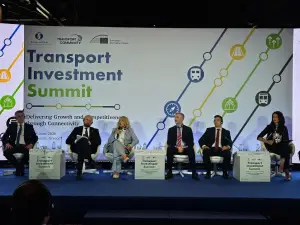 Belgrade/Thessaloniki, 18 June 2026
Regional cooperation key to development of transport infrastructure
-
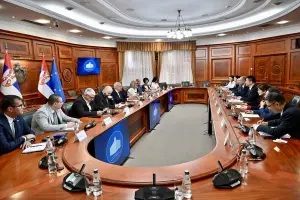 Belgrade, 18 June 2026
Establishing cooperation with Chinese technology giant CETC
-
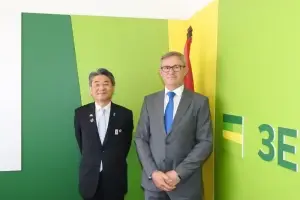 Belgrade, 18 June 2026
New opportunities for strengthening economic cooperation with Japan
-
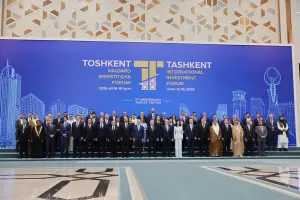 Belgrade/Tashkent, 18 June 2026
Serbia reliable partner in joint infrastructure projects
-
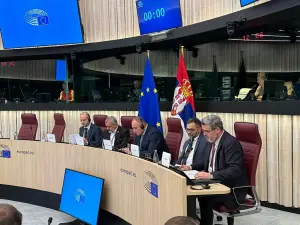 Belgrade/Strasbourg, 17 June 2026
Serbia continues reforms in line with European standards
-
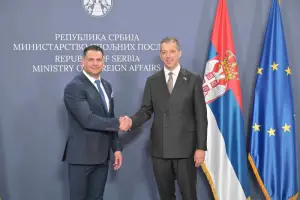 Belgrade, 17 June 2026
Serbia appreciates Slovenia's continued support in European integration process
-
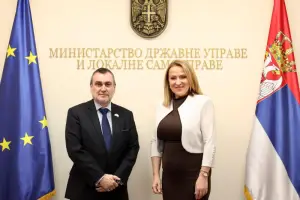 Belgrade, 17 June 2026
Deepening cooperation with Spain in field of modernising public administration
-
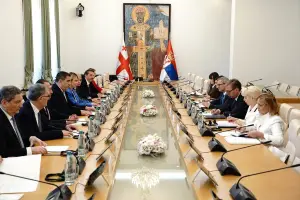 Belgrade/Tbilisi, 16 June 2026
Boosting Serbia-Georgia links in field of agriculture
-
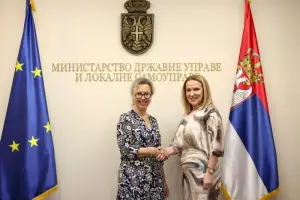 Belgrade, 16 June 2026
Enhancing partnership between Serbia, France in modernising public administration