Q:
A:
Serbia will not consider options beyond substantial monitored autonomy for Kosovo-Metohija
Belgrade,
21 May 2007
Serbian Minister for Kosovo-Metohija Slobodan Samardzic said that regarding the future status of Kosovo-Metohija, Serbia will not consider anything beyond the general concept of substantial and monitored autonomy for the southern province, but is open to talks on the manner of implementing that plan.
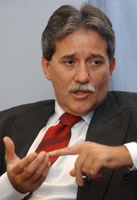
Slobodan Samardzic
Author:
Tanjug
In an interview for the news agency Tanjug, Samardzic said that as far as the manner of implementation of substantial and monitored autonomy for the southern province is concerned, Serbia will be open to possibilities in a fair negotiations process, and ready to accept some solutions which are perhaps better than the submitted proposal by the Serbian negotiation team.
Therefore, I will not negate that in advance and the negotiation process could perhaps even contribute to improved regulation in many areas on which the lives of people in Kosovo-Metohija depend, than what we have proposed, said Samardzic.
He said that thus far the Serbian negotiating team has not been presented with any good arguments by the Albanian side, particularly Ahtisaari’s team, which could negate the Serbian proposal, but that does not mean that it might not happen in the future, said Samardzic.
Shedding light on the position of the newly formed Ministry for Kosovo-Metohija according to the solution offered for the southern province, Samardzic reiterated that those solutions will be advocated for the future status of the province which will safeguard the interests of Kosovo Albanians, so that they are able to regulate their lives with the highest degree of autonomy, while the interests of Serbs are protected, and they too have the freedom to realise their aims in Kosovo-Metohija within Serbia.
That is the solution offered in the plan of substantial and monitored autonomy, said Samardzic, adding that the state platform has contained this solution since May 2006 and presented it through more than 500 amendments proposed on the plan by UN Special Envoy Marti Ahtisaari.
The solution presented by Belgrade for the Kosovo issue was also submitted in a summary form to representatives of the UN mission in Kosovo-Metohija, recalled Samardzic.
In that platform the interests of all sides are satisfied; interests of Serbs, ethnic-Albanians, regional peace and European integration and the preservation of international law. So when I talk about priorities, it is important that we should appear at international forums as frequently as possible on the basis of this platform, to make as many contacts as possible and explain and present our stand in the best possible manner, said Samardzic.
Samardzic believes that the process of determining the future status of Kosovo-Metohija must unfold through negotiations, and negotiations should be entered with the good will of any eventual mediator so that, as he put it, “this catastrophic situation which Marti Ahtisaari with his team forced upon everyone does not arise again”.
Samardzic does not see any possibility as yet of the formation of a joint US and Russian council on the future status of Kosovo-Metohija.
As yet I don’t see a common language, their positions differ hugely, and that is not because of Russia, which in fact, is acting according to international law, rather because of the US and a few of their western allies, who had the intention of drastically violating international law and seize practically 15% of the territory of a UN member country, said Samardzic.
The Minister for Kosovo-Metohija said that two different positions are in question here, extremist and reasonable, adding that the extremist position gradually must move closer to a normal solution, one which respects international law, the UN Charter and several resolutions, concluded with the UN SC Resolution 1244 adopted in June 1999, since it could not gain its final goal, because it is not possible to adopt a new resolution in the UN Security Council to support it, said Samardzic.
Of course, this process cannot be easy and quick, but those who wanted us to settle the matter with a few months of negotiations with the Albanians and recognise the independence of Kosovo-Metohija on the basis of concessions in denetralisation, are now negotiating with Russia on joint stands for a new resolution, said Samardzic.
According to Samardzic the Russian position is clear, a new resolution in the UN Security Council can only confirm the basic elements of Resolution 1244, and they include the sovereignty and territorial integrity of Serbia, and it must incorporate those elements of the Resolution 1244 which have not been realised, and that is the entire issue of human rights, and above all, the issue of return of Serbs, insisted upon by Russia.
Samardzic said that the process is going on gradually and it will force, above all the US, and then the EU to form a new framework or a new Security Council resolution, in accordance with international law and especially the European tradition in resolving the minority rights issue.
It will take a long time to reach such a consensus at the highest level, which will lead to a negotiation process and a consensus at the level of the sides involved in the issue, concluded Samardzic.
Therefore, I will not negate that in advance and the negotiation process could perhaps even contribute to improved regulation in many areas on which the lives of people in Kosovo-Metohija depend, than what we have proposed, said Samardzic.
He said that thus far the Serbian negotiating team has not been presented with any good arguments by the Albanian side, particularly Ahtisaari’s team, which could negate the Serbian proposal, but that does not mean that it might not happen in the future, said Samardzic.
Shedding light on the position of the newly formed Ministry for Kosovo-Metohija according to the solution offered for the southern province, Samardzic reiterated that those solutions will be advocated for the future status of the province which will safeguard the interests of Kosovo Albanians, so that they are able to regulate their lives with the highest degree of autonomy, while the interests of Serbs are protected, and they too have the freedom to realise their aims in Kosovo-Metohija within Serbia.
That is the solution offered in the plan of substantial and monitored autonomy, said Samardzic, adding that the state platform has contained this solution since May 2006 and presented it through more than 500 amendments proposed on the plan by UN Special Envoy Marti Ahtisaari.
The solution presented by Belgrade for the Kosovo issue was also submitted in a summary form to representatives of the UN mission in Kosovo-Metohija, recalled Samardzic.
In that platform the interests of all sides are satisfied; interests of Serbs, ethnic-Albanians, regional peace and European integration and the preservation of international law. So when I talk about priorities, it is important that we should appear at international forums as frequently as possible on the basis of this platform, to make as many contacts as possible and explain and present our stand in the best possible manner, said Samardzic.
Samardzic believes that the process of determining the future status of Kosovo-Metohija must unfold through negotiations, and negotiations should be entered with the good will of any eventual mediator so that, as he put it, “this catastrophic situation which Marti Ahtisaari with his team forced upon everyone does not arise again”.
Samardzic does not see any possibility as yet of the formation of a joint US and Russian council on the future status of Kosovo-Metohija.
As yet I don’t see a common language, their positions differ hugely, and that is not because of Russia, which in fact, is acting according to international law, rather because of the US and a few of their western allies, who had the intention of drastically violating international law and seize practically 15% of the territory of a UN member country, said Samardzic.
The Minister for Kosovo-Metohija said that two different positions are in question here, extremist and reasonable, adding that the extremist position gradually must move closer to a normal solution, one which respects international law, the UN Charter and several resolutions, concluded with the UN SC Resolution 1244 adopted in June 1999, since it could not gain its final goal, because it is not possible to adopt a new resolution in the UN Security Council to support it, said Samardzic.
Of course, this process cannot be easy and quick, but those who wanted us to settle the matter with a few months of negotiations with the Albanians and recognise the independence of Kosovo-Metohija on the basis of concessions in denetralisation, are now negotiating with Russia on joint stands for a new resolution, said Samardzic.
According to Samardzic the Russian position is clear, a new resolution in the UN Security Council can only confirm the basic elements of Resolution 1244, and they include the sovereignty and territorial integrity of Serbia, and it must incorporate those elements of the Resolution 1244 which have not been realised, and that is the entire issue of human rights, and above all, the issue of return of Serbs, insisted upon by Russia.
Samardzic said that the process is going on gradually and it will force, above all the US, and then the EU to form a new framework or a new Security Council resolution, in accordance with international law and especially the European tradition in resolving the minority rights issue.
It will take a long time to reach such a consensus at the highest level, which will lead to a negotiation process and a consensus at the level of the sides involved in the issue, concluded Samardzic.
-
 Belgrade, 28 August 2026
Church broken into, ransacked in Bušince village in Kosovska Kamenica
-
 Belgrade, 27 August 2026
Remembrance of suffering of Serb civilians in village of Klečka
-
 Belgrade, 30 July 2026
Continued illegal demolition of Serb-owned buildings near Lake Gazivode
-
 Belgrade, 29 July 2026
Works in Special Protective Zone of Visoki Dečani Monastery must be halted
-
 Belgrade, 23 July 2026
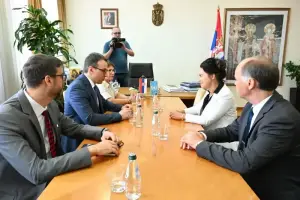
Priština continues with unilateral, illegal moves
-
 Belgrade/Zurich, 4 June 2026
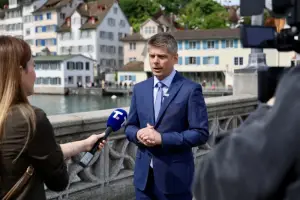
Exhibition in Zurich on position of Serbs in Kosovo and Metohija
-
 Belgrade/Brussels, 12 May 2026
Belgrade seeking concrete steps towards establishment of Community of Serb Municipalities
-
 Belgrade/Brussels, 11 May 2026
Belgrade-Priština dialogue not dialogue on mutual recognition
-
 Belgrade, 10 April 2026
Serbian health centres closed in villages of Suvo Grlo, Banje