Minister of Education Professor Dejan Vuk Stanković, PhD, presented today, at a session of the National Assembly of Serbia’s Committee on Education, Science, Technological Development and the Information Society, the Report on the Work of the Ministry of Education for the Period July-September 2025.

Q:
A:
Serbia needs strong, stable education system
Belgrade,
15 December 2025
At the session, Stanković emphasised that Serbia needs a strong and stable education system that will be continuously improved, ranging from the introduction of technological innovations in teaching to the development of the teaching process.
According to him, this requires a general social consensus, as well as greater activism by all relevant institutions dealing with educational policies.
The Minister of Education expressed hope that there would be enough social and civic responsibility to separate education from day-to-day politics next year and to discuss all topics related to education rationally and tolerantly.
Stanković stated that Serbia is in a good economic position, which is why there were three salary increases for the education sector employees this year – 11% in February, 5% in March and 5% in October, and that from January 2026, salaries for the education sector employees, alongside the rest of the public sector, will be raised by 5.1%.
The Minister assessed that the education system in Serbia has gone through one of the biggest crises in recent Serbian history due to blockades, but that teaching has been normalised at all levels, and that the state has invested an additional RSD 12 billion in higher education.
Stanković pointed out that RSD 965 million has been invested in educational infrastructure, while RSD 250 million is planned for next year for higher education institutions that need renovation.
He also announced that the construction of the Student Dormitory in Niš and the expansion of the Student City in Belgrade will be launched, which will provide approximately 5,000 new places for student accommodation, according to a statement from the Ministry of Education.
-
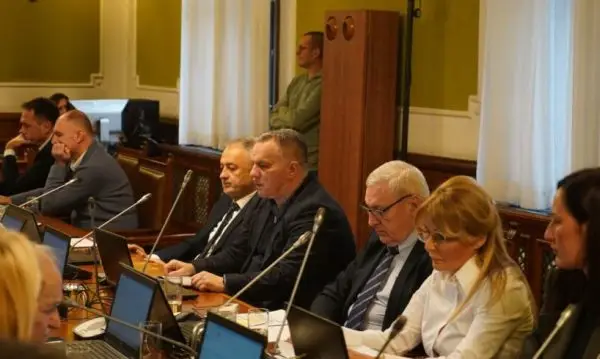 Author: Ministry of Education
-
 Belgrade, 28 September 2026
Vučić hands over duty of President of Republic to National Assembly Speaker
-
 Belgrade, 27 September 2026
President of Republic of Serbia Aleksandar Vučić resigns
-
 Belgrade/New York, 23 September 2026
Reforming UN, strengthening foundations of international order needed
-
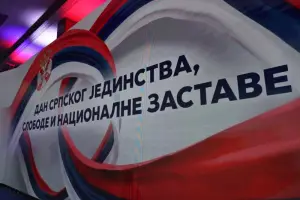 Belgrade, 15 September 2026
Decorations presented on Day of Serbian Unity, Freedom and National Flag
-
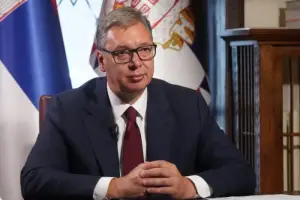 Belgrade, 9 September 2026
President of Republic calls parliamentary elections for 25 October
-
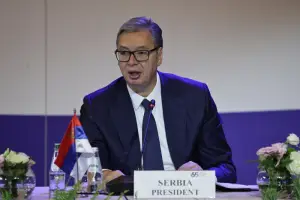 Belgrade, 1 September 2026
Non-Aligned Movement remains strongest pillar of multilateralism
-
 Belgrade, 31 August 2026
Belgrade hosting commemorative meeting marking 65th anniversary of Non-Aligned Movement
-
 Belgrade, 31 August 2026
Parliament adopts 2026 state budget revision
-
 Belgrade, 8 August 2026
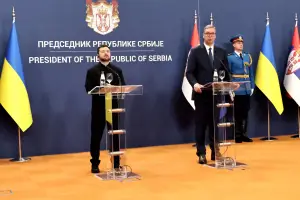
Serbia, Ukraine confirm support for territorial integrity, strengthening of economic cooperation
-
 Belgrade, 8 August 2026
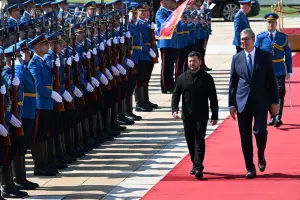
Vučić officially welcomes President of Ukraine in front of Palace of Serbia