
Q:
A:
Law on associations to regulate work of NGOs as in developed countries
Belgrade,
19 June 2006
Serbian Minister of Public Administration and Local Self-Government Zoran Loncar stated today that the government is aware of the importance of Non-Governmental Organisations (NGOs), which is why it has drafted a bill on associations, introducing liberalisation in the sector and thoroughly regulating their functioning and financing.
In a statement to the Tanjug news agency, Loncar said that the bill is one of Serbia's remaining obligations conditioned by its membership in the Council of Europe. Once it is adopted, it will make legal the work of the so-called third sector, that is associations or NGOs, just as in developed countries, he said.
He explained that the bill introduces a thorough liberalisation regarding the set-up of associations. An association can now be registered by at least three citizens, while the existing regulation regarding the registration system has been retained.
The deadline for registration is 30 days from the day of submitting the request, and a new solution envisages the existence of a single register of all citizens' associations.
In addition, the register will no longer be kept by the Serbian Ministry of Interior, that is, its regional unit at whose territory the association is headquartered, but the ministry in charge of public administration. The founding procedure is free of charge, and prohibiting the work of such associations will fall under the jurisdiction of the highest court in the country, and that is the Supreme Court of Serbia, Loncar said.
According to him, this regulation regulates for the first time the work of foreign associations in Serbia, as well as the way of their financing, so from now on all NGOs will have to proceed according to financial regulations that apply to all other legal persons in the country.
Speaking about the public administration reform strategy, Loncar said that in order to carry out full depolitisation and professionalisation of public administration, which is one of the government's priorities in this field, a competition for all assistants of ministers, secretaries of ministers and all other appointed functionaries in public administration will be called as of July 1.
In that way, in the process of appointing top functionaries in the country, knowledge and competence will get a definite priority in relation to partisan membership and loyalty.
The aim is full depolitisation and professionalisation of Serbia's public administration and for that reason, all functionaries in public administration will have to apply to competitions, except for ministers and their deputies, Loncar said.
He added that if civil servants want to advance, they will have to get additional training in a school for civil servants.
He explained that the bill introduces a thorough liberalisation regarding the set-up of associations. An association can now be registered by at least three citizens, while the existing regulation regarding the registration system has been retained.
The deadline for registration is 30 days from the day of submitting the request, and a new solution envisages the existence of a single register of all citizens' associations.
In addition, the register will no longer be kept by the Serbian Ministry of Interior, that is, its regional unit at whose territory the association is headquartered, but the ministry in charge of public administration. The founding procedure is free of charge, and prohibiting the work of such associations will fall under the jurisdiction of the highest court in the country, and that is the Supreme Court of Serbia, Loncar said.
According to him, this regulation regulates for the first time the work of foreign associations in Serbia, as well as the way of their financing, so from now on all NGOs will have to proceed according to financial regulations that apply to all other legal persons in the country.
Speaking about the public administration reform strategy, Loncar said that in order to carry out full depolitisation and professionalisation of public administration, which is one of the government's priorities in this field, a competition for all assistants of ministers, secretaries of ministers and all other appointed functionaries in public administration will be called as of July 1.
In that way, in the process of appointing top functionaries in the country, knowledge and competence will get a definite priority in relation to partisan membership and loyalty.
The aim is full depolitisation and professionalisation of Serbia's public administration and for that reason, all functionaries in public administration will have to apply to competitions, except for ministers and their deputies, Loncar said.
He added that if civil servants want to advance, they will have to get additional training in a school for civil servants.
-
 Belgrade, 8 July 2026
Continued cooperation with GIZ on improving position of women in Serbia
-
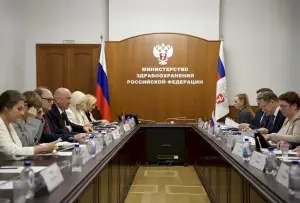 Belgrade/Moscow, 8 July 2026
Cooperation between Serbia, Russia in field of modern oncology therapies
-
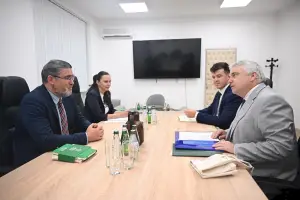 Belgrade, 8 July 2026
Ireland’s support for reform processes in Serbia on path to EU
-
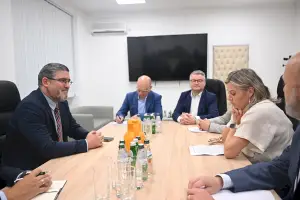 Belgrade, 8 July 2026
Continued strengthening of cooperation with Belgium in European integration process
-
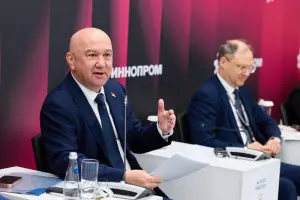 Belgrade, 7 July 2026
Possibilities for improving cooperation with Russia in several areas
-
 Belgrade, 7 July 2026
UN support for building equal opportunities society continues
-
 Belgrade, 6 July 2026
Serbia committed to strengthening economic, political ties with Ghana
-
 Belgrade/Brussels, 3 July 2026
Belgrade committed to continuing constructive dialogue with Priština
-
 Belgrade/Brussels, 3 July 2026
Serbia’s European integration guarantees regional stability
-
.webp) Belgrade, 3 July 2026
Belgrade, 3 July 2026Continued strengthening of Serbia-Spain defence cooperation