
Q:
A:
Serbia enters crucial privatisation phase
Belgrade,
12 June 2006
Serbian Prime Minister Vojislav Kostunica said today at the opening of the Vienna Economic Forum, under the title "Invest in Serbia, Invest in the Region", which is taking place at Belgrade’s Sava Centre, that the largest number of foreign investments came through privatisation of companies and the banking sector, and that Serbia is about to enter the second, crucial privatisation phase.
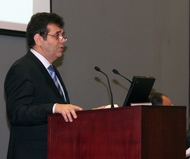
Vojislav Kostunica
Kostunica pointed out that the Serbian government attaches great importance to greenfield investment, which is why the Serbian parliament so far adopted more than 100 laws aimed at creating better conditions for doing business.
He explained that foreign investors in Serbia are offered the opportunity to enter the South Eastern European market with over 55 million consumers as well as to use the benefit of the free trade agreement Serbia has with Russia.
According to Kostunica, Serbia is still facing inherited problems, such as a foreign trade deficit, which amounted to $7.9 billion in 2004 and $5.9 billion in 2005.
Kostunica said that the government is preparing a national plan to remove barriers for foreign investment and recalled that according to last year’s reports from the World Bank and the International Financial Corporation (IFC), Serbia was most active in reform implementation in the competition of 155 countries.
The Serbian government is devoted to European integration so that the people have improved living standards, Kostunica stressed and added that the main goal of negotiations with the EU is mutual respect based on partnership.
He explained that foreign investors in Serbia are offered the opportunity to enter the South Eastern European market with over 55 million consumers as well as to use the benefit of the free trade agreement Serbia has with Russia.
According to Kostunica, Serbia is still facing inherited problems, such as a foreign trade deficit, which amounted to $7.9 billion in 2004 and $5.9 billion in 2005.
Kostunica said that the government is preparing a national plan to remove barriers for foreign investment and recalled that according to last year’s reports from the World Bank and the International Financial Corporation (IFC), Serbia was most active in reform implementation in the competition of 155 countries.
The Serbian government is devoted to European integration so that the people have improved living standards, Kostunica stressed and added that the main goal of negotiations with the EU is mutual respect based on partnership.
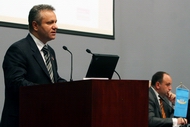
Mladjan Dinkic
Serbian Minister of Finance Mladjan Dinkic announced that the privatisations of Vojvodjanska Banka, Panonska Banka and Kredi Banka will be finished by the end of summer.
Dinkic said that the deadline for submittal of offers for Vojvodjanska Banka expires at the end of this week while final offers for Kragujevac Kredi Banka and Novi Sad’s Panonska Banka should arrive by the end of June.
He said that Srpska Banka and the Postal Savings Bank will merge soon and added that Komercijalna Banka with a capital of €200 million is largest in the Serbian banking market.
According to Dinkic, reform of insurance companies in Serbia will be equally fast and successful as that of the banking sector.
The government’s strategy regarding reforms in the insurance sector is to retain domestic companies which can compete with foreign ones, said Dinkic and added that the call for tender for the sale of 80.12% capital of the insurance company DDOR Novi Sad will be open until July 10.
He said that the banking sector is strongest in the Serbian economy, and savings in Serbia during the previous six years have risen from zero to €2.5 billion, and the credit portfolio in that period was increased six times, to €6 billion.
The session of the Vienna Economic Forum “Invest in Serbia, Invest in the Region” has gathered some 200 participants, who will view investment opportunities in infrastructure projects and health, as well as in banking and insurance, and the development of small and medium-sized enterprises.
The Vienna Economic Forum was founded in 2004 in order to promote investment and business opportunities in the region from the Mediterranean to the Black Sea, and founders are leading Austrian companies, banks and institutions.
Dinkic said that the deadline for submittal of offers for Vojvodjanska Banka expires at the end of this week while final offers for Kragujevac Kredi Banka and Novi Sad’s Panonska Banka should arrive by the end of June.
He said that Srpska Banka and the Postal Savings Bank will merge soon and added that Komercijalna Banka with a capital of €200 million is largest in the Serbian banking market.
According to Dinkic, reform of insurance companies in Serbia will be equally fast and successful as that of the banking sector.
The government’s strategy regarding reforms in the insurance sector is to retain domestic companies which can compete with foreign ones, said Dinkic and added that the call for tender for the sale of 80.12% capital of the insurance company DDOR Novi Sad will be open until July 10.
He said that the banking sector is strongest in the Serbian economy, and savings in Serbia during the previous six years have risen from zero to €2.5 billion, and the credit portfolio in that period was increased six times, to €6 billion.
The session of the Vienna Economic Forum “Invest in Serbia, Invest in the Region” has gathered some 200 participants, who will view investment opportunities in infrastructure projects and health, as well as in banking and insurance, and the development of small and medium-sized enterprises.
The Vienna Economic Forum was founded in 2004 in order to promote investment and business opportunities in the region from the Mediterranean to the Black Sea, and founders are leading Austrian companies, banks and institutions.
-
 Belgrade, 24 July 2026
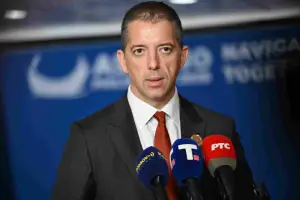
Upcoming activities in reform of judiciary presented
-
 Belgrade/Manila, 24 July 2026
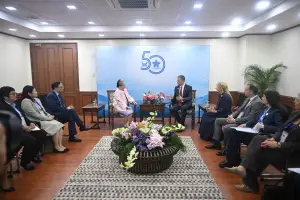
Serbia committed to building partnerships with Southeast Asian countries
-
 Belgrade/Manila, 24 July 2026
Improving cooperation between Serbia, Philippines in areas of mutual interest
-
 Belgrade/Washington, 18 July 2026
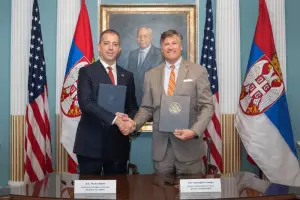
Serbia attaches great importance to cooperation with United States
-
 Belgrade/Washington, 17 July 2026
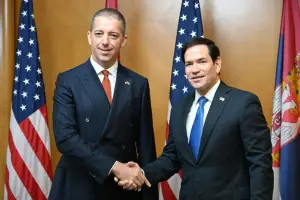
First round of Serbia-US strategic dialogue opens
-
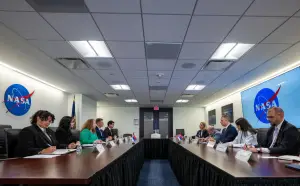 Belgrade/Washington, 17 July 2026
Accession to Artemis agreements opens new opportunities for Serbian science
-
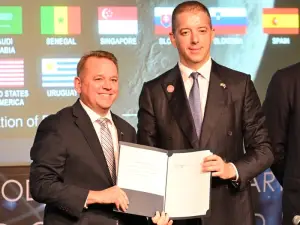 Belgrade/Washington, 17 July 2026
Serbia joins Artemis space programme
-
 Belgrade/Washington, 16 July 2026
International cooperation necessary to curb political terrorism
-
 Belgrade, 16 July 2026
Cooperation modalities discussed with Prince Aviation, Textron Aviation Defense
-
 Belgrade/Washington, 15 July 2026
Serbia, US launching strategic dialogue along with cooperation in space exploration