
Q:
A:
Serbia is doing everything to successfully end cooperation with Hague tribunal
Belgrade/New York,
7 June 2006
Serbian Minister of Public Administration and Local Self-Government Zoran Loncar addressed the UN Security Council today by saying that Serbia is doing everything to successfully bring cooperation with Hague tribunal to an end.
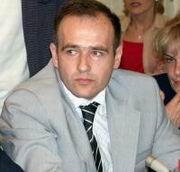
Zoran Loncar
Loncar recalled that the Serbian government stated several times that Serbia’s interest is to end cooperation with The Hague adding that the government officially declared that the hiding of fugitive Ratko Mladic is an dishonorable act which directly hampers Serbia’s national and state interest.
He reiterated that the government of Serbia has done absolutely everything in its power to locate Ratko Mladic and transfer him to The Hague, noting that eleven persons who were suspected of aiding Mladic in hiding have been sentenced to several months in custody.
Despite very intensive and large-scale activities, it was impossible to find out where Ratko Mladic is located, Loncar said noting that “political will is indisputably there, and it is a technical matter to reveal the place of Mladic’s hiding.”
Speaking on the Serbian government’s efforts, Loncar recalled that since the end of 2004, 16 accused persons from Serbia, most of whom were top military and police officers, voluntarily surrendered to the tribunal at The Hague.
The Serbian government is firm in efforts to continue and fulfill all remaining international terms, Loncar said noting that the results accomplished so far confirm that in the best possible way.
Loncar, who is also a member of the National Council for Cooperation with the International Criminal Tribunal for the former Yugoslavia (ICTY), said that all accused officers who served in Serbia, either as members of the Serbia-Montenegrin army or police members, turned themselves in to The Hague. He also added that a large number of accused persons from Republika Srpska turned themselves in as well.
He pointed out Serbia’s readiness to fully cooperate with the ICTY’s Office of the Prosecutor in part that refers to access to documents and archived material.
The state union, i.e., Serbia being its successor, received a total of 1,148 requests from the Office of the Prosecutor. The National Council for Cooperation with the ICTY positively responded to most of those requests and there are currently only a few unsolved requests which are seen as urgent, Loncar said.
He said that demands by the tribunal, directed to Serbia-Montenegro, arrive daily and are dealt with most promptly. He recalled that according to demands by the tribunal 43 witnesses have been released from the obligation to official secrecy, and 39 demands of submitting documentation have been met positively.
According to Loncar, representatives of the tribunal have begun inspecting the archives of the Ministry of the Interior, and recently they were given access to Ministry of Defence archives and archives of the Serbian Presidency.
Speaking on the concrete moves with the aim of cooperating with the tribunal, Loncar said that in May this year the state union parliament adopted the Law on freezing assets of Hague indictees still at large.
He said that when it comes to the issue of cooperating with the Hague, it is necessary to pay attention to the statement by tribunal President Fausto Pocar, who said that the “previous six months of work by the tribunal were the toughest in its history.” He added that it is especially important to take into consideration the deaths of Slobodan Milosevic and Milan Babic that occurred in custody.
While giving due importance to the fact that official reports on these deaths are still not complete, the Serbian government shares the opinion of the independent investigation that was conducted by Swedish state organs that conditions and treatment of those in custody in the detention unit must be significantly improved, and the monitoring of the functioning of the detention unit itself should be more open, said Loncar.
According to Loncar, Serbia regrets such incidents, they have been without precedent in the detention unit of the tribunal, they are in conflict with the defined work of the court, which is efficient the realisation of international law regarding those who are guilty of serious war crimes, and providing justice to victims and creating conditions for reconciliation in the territory of the former Yugoslavia.
Loncar pointed out the importance of transferring trials to domestic courts, adding that trials conducted in domestic courts could contribute to realising those aims for which the Security Council of the UN in 1993 created the ICTY.
He said that the judicial organs of Serbia are willing to accept the processing and trying of the indictees. He recalled that despite the positive evaluation of these organs by the tribunal and the Prosecution Office at the Hague, not a single case from the tribunal has been handed over to Serbia.
“I want once again to express the firm resolve of the Serbian government to continue to do everything within our power to locate all remaining indictees, and in case any one of them is hiding in Serbia, to send them to The Hague. Serbia is determined that all those who have committed war crimes should be tried in a court of law, either by the tribunal or in a domestic court,” concluded Loncar.
He reiterated that the government of Serbia has done absolutely everything in its power to locate Ratko Mladic and transfer him to The Hague, noting that eleven persons who were suspected of aiding Mladic in hiding have been sentenced to several months in custody.
Despite very intensive and large-scale activities, it was impossible to find out where Ratko Mladic is located, Loncar said noting that “political will is indisputably there, and it is a technical matter to reveal the place of Mladic’s hiding.”
Speaking on the Serbian government’s efforts, Loncar recalled that since the end of 2004, 16 accused persons from Serbia, most of whom were top military and police officers, voluntarily surrendered to the tribunal at The Hague.
The Serbian government is firm in efforts to continue and fulfill all remaining international terms, Loncar said noting that the results accomplished so far confirm that in the best possible way.
Loncar, who is also a member of the National Council for Cooperation with the International Criminal Tribunal for the former Yugoslavia (ICTY), said that all accused officers who served in Serbia, either as members of the Serbia-Montenegrin army or police members, turned themselves in to The Hague. He also added that a large number of accused persons from Republika Srpska turned themselves in as well.
He pointed out Serbia’s readiness to fully cooperate with the ICTY’s Office of the Prosecutor in part that refers to access to documents and archived material.
The state union, i.e., Serbia being its successor, received a total of 1,148 requests from the Office of the Prosecutor. The National Council for Cooperation with the ICTY positively responded to most of those requests and there are currently only a few unsolved requests which are seen as urgent, Loncar said.
He said that demands by the tribunal, directed to Serbia-Montenegro, arrive daily and are dealt with most promptly. He recalled that according to demands by the tribunal 43 witnesses have been released from the obligation to official secrecy, and 39 demands of submitting documentation have been met positively.
According to Loncar, representatives of the tribunal have begun inspecting the archives of the Ministry of the Interior, and recently they were given access to Ministry of Defence archives and archives of the Serbian Presidency.
Speaking on the concrete moves with the aim of cooperating with the tribunal, Loncar said that in May this year the state union parliament adopted the Law on freezing assets of Hague indictees still at large.
He said that when it comes to the issue of cooperating with the Hague, it is necessary to pay attention to the statement by tribunal President Fausto Pocar, who said that the “previous six months of work by the tribunal were the toughest in its history.” He added that it is especially important to take into consideration the deaths of Slobodan Milosevic and Milan Babic that occurred in custody.
While giving due importance to the fact that official reports on these deaths are still not complete, the Serbian government shares the opinion of the independent investigation that was conducted by Swedish state organs that conditions and treatment of those in custody in the detention unit must be significantly improved, and the monitoring of the functioning of the detention unit itself should be more open, said Loncar.
According to Loncar, Serbia regrets such incidents, they have been without precedent in the detention unit of the tribunal, they are in conflict with the defined work of the court, which is efficient the realisation of international law regarding those who are guilty of serious war crimes, and providing justice to victims and creating conditions for reconciliation in the territory of the former Yugoslavia.
Loncar pointed out the importance of transferring trials to domestic courts, adding that trials conducted in domestic courts could contribute to realising those aims for which the Security Council of the UN in 1993 created the ICTY.
He said that the judicial organs of Serbia are willing to accept the processing and trying of the indictees. He recalled that despite the positive evaluation of these organs by the tribunal and the Prosecution Office at the Hague, not a single case from the tribunal has been handed over to Serbia.
“I want once again to express the firm resolve of the Serbian government to continue to do everything within our power to locate all remaining indictees, and in case any one of them is hiding in Serbia, to send them to The Hague. Serbia is determined that all those who have committed war crimes should be tried in a court of law, either by the tribunal or in a domestic court,” concluded Loncar.
-
 Belgrade/Brussels, 9 July 2026
Continuing activities to meet European Commission’s recommendations
-
 Belgrade, 9 July 2026
German development support important pillar for Serbia’s reforms, European path
-
 Belgrade, 8 July 2026
Continued cooperation with GIZ on improving position of women in Serbia
-
 Belgrade/Moscow, 8 July 2026
Cooperation between Serbia, Russia in field of modern oncology therapies
-
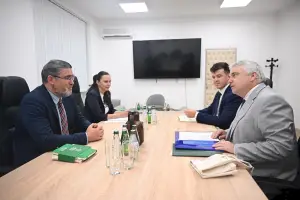 Belgrade, 8 July 2026
Ireland’s support for reform processes in Serbia on path to EU
-
 Belgrade, 8 July 2026
Continued strengthening of cooperation with Belgium in European integration process
-
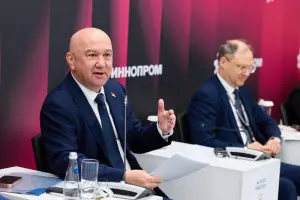 Belgrade, 7 July 2026
Possibilities for improving cooperation with Russia in several areas
-
 Belgrade, 7 July 2026
UN support for building equal opportunities society continues
-
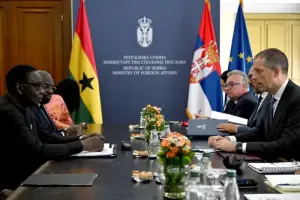 Belgrade, 6 July 2026
Serbia committed to strengthening economic, political ties with Ghana
-
 Belgrade/Brussels, 3 July 2026
Belgrade committed to continuing constructive dialogue with Priština