
Q:
A:
Foreign investment strategy to pave way for doing business in Serbia more efficiently
Belgrade,
12 May 2006
Serbian Minister of International Economic Relations Milan Parivodic presented participants of the sixth Serbia-Montenegrin summit today the foreign investment strategy in Serbia and a number of crucial laws allowing for doing business more efficiently in Serbia.
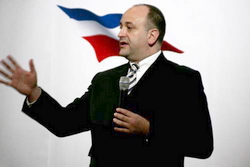
Milan Parivodic
Author:
Tanjug
Parivodic recalled that the Foreign Investors’ Council cooperates with 14 ministries and institutions and pointed out the necessity of improving competitiveness through investment and staff training.
According to Parivodic, the Law on Foreign Trade which was adopted in December 2005 influenced the liberalisation of capital investment, allowed for recapitalisation and introduced anti-dumping regulations.
The adoption of this law paved the way for companies to be able to conduct commerce from Serbia with third companies, Parivodic said noting that the number of licences necessary for this kind of commerce was reduced from twenty to only two.
He stressed that the Law on mortgage introduced many improvements, including the provision regulating that unregistered buildings can be used on a mortgage.
This law also introduces the concept of out-of-court sale, which practically means that the creditor can now sell a real estate in the procedure which does not take more than six months, the Minister added.
Parivodic said that the Law on arbitration is aimed at establishing three out of four regional arbitrations, noting that local arbitrations need to be organised as well.
According to Parivodic, the Ministry of International Economic Relations in cooperation with the Ministry of Capital Investment and the Ministry of Finance launched a city construction land reform project whose aim is either the sale or denationalisation of land. Apart from local economists, experts from Austria, Germany and Sweden are also engaged in this project.
Parivodic pointed to the necessity of partnership between politics and business, adding that the adopted amendments to the Law on foreign investments will make it easier for foreign investors to conclude all their affairs with the assistance of one local administration body.
He said that the Ministry is engaged on creating laws on science parks, returning church property, Stabilisation and Association Agreement (SAA) with the EU, Serbia’s membership in the World Trade Organisation (WTO), and conclusion of a regional free trade agreement.
According to Parivodic, the Law on Foreign Trade which was adopted in December 2005 influenced the liberalisation of capital investment, allowed for recapitalisation and introduced anti-dumping regulations.
The adoption of this law paved the way for companies to be able to conduct commerce from Serbia with third companies, Parivodic said noting that the number of licences necessary for this kind of commerce was reduced from twenty to only two.
He stressed that the Law on mortgage introduced many improvements, including the provision regulating that unregistered buildings can be used on a mortgage.
This law also introduces the concept of out-of-court sale, which practically means that the creditor can now sell a real estate in the procedure which does not take more than six months, the Minister added.
Parivodic said that the Law on arbitration is aimed at establishing three out of four regional arbitrations, noting that local arbitrations need to be organised as well.
According to Parivodic, the Ministry of International Economic Relations in cooperation with the Ministry of Capital Investment and the Ministry of Finance launched a city construction land reform project whose aim is either the sale or denationalisation of land. Apart from local economists, experts from Austria, Germany and Sweden are also engaged in this project.
Parivodic pointed to the necessity of partnership between politics and business, adding that the adopted amendments to the Law on foreign investments will make it easier for foreign investors to conclude all their affairs with the assistance of one local administration body.
He said that the Ministry is engaged on creating laws on science parks, returning church property, Stabilisation and Association Agreement (SAA) with the EU, Serbia’s membership in the World Trade Organisation (WTO), and conclusion of a regional free trade agreement.
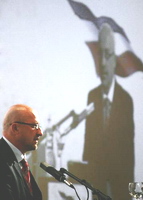
Predrag Bubalo
Author:
Tanjug
Serbian Minister of Economy Predrag Bubalo said that the European integration and the signing of the SAA are strategic goals of the Serbian government.
Bubalo recalled that an economic development strategy is being created, which should allow Serbia by 2012 to have an efficient market economy and an estimated growth of the gross domestic product (GDP) of 6% to 7% per annum.
It is important that in the last five years, Serbia has seen a constant growth of exports and reduction of foreign trade deficit, Bubalo said. He particularly stressed the importance of one universal free trade agreement for countries of Southeast Europe, stressing that only talks on EU membership mean further liberalisation of trade.
Director of the Serbian government’s EU Integration Office Tanja Miscevic explained that this institution will have to get a new mandate for EU negotiations and added that in 2012 Serbia will be capable of taking on all obligations as a full fledged EU member state.
She pointed out that Serbia started to harmonise its judiciary with EU standards and explained that this harmonisation will become obligatory after Serbia and the EU sign the SAA agreement, which will happen by the end of this year.
According to Miscevic, the Declaration on national consensus for EU talks has been adopted. Negotiating teams are being set up, Miscevic said, but added that the situation is more complicated as Serbia and Montenegro need to negotiate with one another and not only with the EU.
Bubalo recalled that an economic development strategy is being created, which should allow Serbia by 2012 to have an efficient market economy and an estimated growth of the gross domestic product (GDP) of 6% to 7% per annum.
It is important that in the last five years, Serbia has seen a constant growth of exports and reduction of foreign trade deficit, Bubalo said. He particularly stressed the importance of one universal free trade agreement for countries of Southeast Europe, stressing that only talks on EU membership mean further liberalisation of trade.
Director of the Serbian government’s EU Integration Office Tanja Miscevic explained that this institution will have to get a new mandate for EU negotiations and added that in 2012 Serbia will be capable of taking on all obligations as a full fledged EU member state.
She pointed out that Serbia started to harmonise its judiciary with EU standards and explained that this harmonisation will become obligatory after Serbia and the EU sign the SAA agreement, which will happen by the end of this year.
According to Miscevic, the Declaration on national consensus for EU talks has been adopted. Negotiating teams are being set up, Miscevic said, but added that the situation is more complicated as Serbia and Montenegro need to negotiate with one another and not only with the EU.

-
 Belgrade, 10 July 2026
Advancing cooperation with Republic of Korea in digital governance
-
 Belgrade/Rome, 10 July 2026
Continued strengthening of overall cooperation between Serbia, Hungary
-
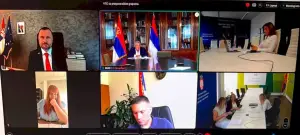 Belgrade/Brussels, 9 July 2026
Continuing activities to meet European Commission’s recommendations
-
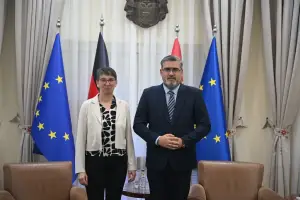 Belgrade, 9 July 2026
German development support important pillar for Serbia’s reforms, European path
-
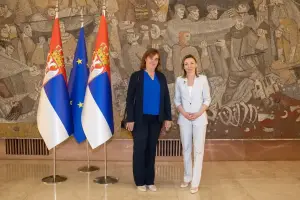 Belgrade, 8 July 2026
Continued cooperation with GIZ on improving position of women in Serbia
-
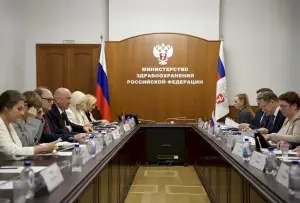 Belgrade/Moscow, 8 July 2026
Cooperation between Serbia, Russia in field of modern oncology therapies
-
 Belgrade, 8 July 2026
Ireland’s support for reform processes in Serbia on path to EU
-
 Belgrade, 8 July 2026
Continued strengthening of cooperation with Belgium in European integration process
-
 Belgrade, 7 July 2026
Possibilities for improving cooperation with Russia in several areas
-
 Belgrade, 7 July 2026
UN support for building equal opportunities society continues