
Q:
A:
National strategy for judiciary reform aims to establish rule of law
Belgrade,
8 May 2006
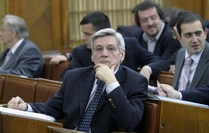
Serbian Minister of Justice Zoran Stojkovic said today that the aim of the proposed national strategy for judiciary reform is to establish the rule of law, protect citizens and restore confidence in courts.
Author:
Fonet
Speaking in the Serbian parliament on the draft decision on adopting the national strategy for judiciary reform, Stojkovic said that it is one of the most important documents that presents solutions to a number of problems in the judiciary which were observed in the previous 60 years.
Stojkovic said that without a good justice system there cannot be a good and effective state. He added that the proposed document rests on four principles – independence, transparency, responsibility and efficiency of the court system.
Stojkovic said that in order to fully implement this strategy it is necessary to adopt a new constitution in which basic principles guaranteeing the independence of the judiciary will be inbuilt, and according to which the High Judiciary Council will be a key organ. He added that an adequate network of courts and a constitutionally defined position of the legal profession and notary public should also be envisaged.
He said that according to this strategy the central place in the future judicial system will be assumed by the High Judiciary Council, which will be composed not only of presidents of courts but also judges from all regions.
He explained that until the council is formed, its work will be done by a committee of 10 members, who will submit a report to the Serbian government and parliament every six months.
According to Stojkovic, the reorganised High Judiciary Council will be an administrative and supervisory organ. It will have a decision-making role in the process of appointing judges and their disciplinary responsibilities, it will administer finances, establish rules and quality of the work of courts and its work will be supported by the Administrative Office. Stojkovic pointed out the importance of transparency, and added that the strategy envisages an open process of appointments, promotions and dismissal of judges by determining precise criteria.
Similarly, the public will be allowed access to information on court procedures while guarding the privacy of clients. This will function in two ways – through the internet and through persons responsible for contact with the public, said the Minister. He added that this way the possibility of corruption in the judiciary will be reduced.
He said that judges who are appointed for the first time will be appointed by the parliament at the proposal of the council for a period of three years, and later they will receive a lifetime tenure.
Stojkovic explained that the idea is to employ as many young people as possible as trainees, but who will receive salaries not significantly less than judges. He added that it is necessary to have an independent budget for courts and ongoing education for the staff.
He said that one part of the law has already been adopted, and added that it is necessary to form an adequate network of courts in order to secure the efficiency of the judicial system.
Following the adoption of the strategy, the government should adopt an action plan which will determine who will be responsible for its implementation.
Stojkovic said that without a good justice system there cannot be a good and effective state. He added that the proposed document rests on four principles – independence, transparency, responsibility and efficiency of the court system.
Stojkovic said that in order to fully implement this strategy it is necessary to adopt a new constitution in which basic principles guaranteeing the independence of the judiciary will be inbuilt, and according to which the High Judiciary Council will be a key organ. He added that an adequate network of courts and a constitutionally defined position of the legal profession and notary public should also be envisaged.
He said that according to this strategy the central place in the future judicial system will be assumed by the High Judiciary Council, which will be composed not only of presidents of courts but also judges from all regions.
He explained that until the council is formed, its work will be done by a committee of 10 members, who will submit a report to the Serbian government and parliament every six months.
According to Stojkovic, the reorganised High Judiciary Council will be an administrative and supervisory organ. It will have a decision-making role in the process of appointing judges and their disciplinary responsibilities, it will administer finances, establish rules and quality of the work of courts and its work will be supported by the Administrative Office. Stojkovic pointed out the importance of transparency, and added that the strategy envisages an open process of appointments, promotions and dismissal of judges by determining precise criteria.
Similarly, the public will be allowed access to information on court procedures while guarding the privacy of clients. This will function in two ways – through the internet and through persons responsible for contact with the public, said the Minister. He added that this way the possibility of corruption in the judiciary will be reduced.
He said that judges who are appointed for the first time will be appointed by the parliament at the proposal of the council for a period of three years, and later they will receive a lifetime tenure.
Stojkovic explained that the idea is to employ as many young people as possible as trainees, but who will receive salaries not significantly less than judges. He added that it is necessary to have an independent budget for courts and ongoing education for the staff.
He said that one part of the law has already been adopted, and added that it is necessary to form an adequate network of courts in order to secure the efficiency of the judicial system.
Following the adoption of the strategy, the government should adopt an action plan which will determine who will be responsible for its implementation.
-
 Belgrade, 10 July 2026
Advancing cooperation with Republic of Korea in digital governance
-
 Belgrade/Rome, 10 July 2026
Continued strengthening of overall cooperation between Serbia, Hungary
-
 Belgrade/Brussels, 9 July 2026
Continuing activities to meet European Commission’s recommendations
-
 Belgrade, 9 July 2026
German development support important pillar for Serbia’s reforms, European path
-
 Belgrade, 8 July 2026
Continued cooperation with GIZ on improving position of women in Serbia
-
 Belgrade/Moscow, 8 July 2026
Cooperation between Serbia, Russia in field of modern oncology therapies
-
 Belgrade, 8 July 2026
Ireland’s support for reform processes in Serbia on path to EU
-
 Belgrade, 8 July 2026
Continued strengthening of cooperation with Belgium in European integration process
-
 Belgrade, 7 July 2026
Possibilities for improving cooperation with Russia in several areas
-
 Belgrade, 7 July 2026
UN support for building equal opportunities society continues