Q:
A:
Jovanka Broz buried at House of Flowers
Belgrade,
26 October 2013
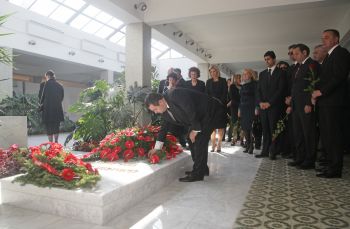
Jovanka Broz, widow of former president of the Socialist Federal Republic of Yugoslavia Josip Broz Tito, was buried today in the mausoleum and memorial House of Flowers with military honours.
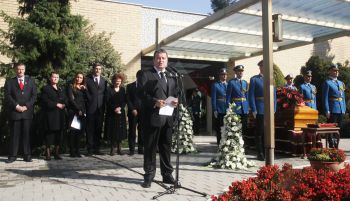
Apart from members of her family, the funeral was attended by top government officials, diplomatic corps, the Federation of Associations of Veterans of the National Liberation War (SUBNOR) and several delegations of anti-Fascist and veteran organisations from former Yugoslav republics.
In a farewell speech, Prime Minister Ivica Dacic said that this event signifies the departure of the last major figure of former Yugoslavia and the first lady of the former country.
In a farewell speech, Prime Minister Ivica Dacic said that this event signifies the departure of the last major figure of former Yugoslavia and the first lady of the former country.
She was the victim of a political showdown and fight for power, Dacic said and recalled that Jovanka Broz was banned, persecuted and erased, and that the injustice done to her began to shift only in the final years of her life.
When I delivered to her the passport and the ID card several years ago, she said that she would not travel anywhere, but that for her, the documents represent a proof of existence, Dacic said.
He underscored that the farewell to Tito's widow is another farewell to Tito's era and a reminder of the fight against Fascism and joint life of the Yugoslav nation which is renounced by many today.
He noted that Jovanka Broz was the pride of the country and that she travelled the world and met many world leaders, and was welcomed everywhere with honours and dignity rare nowadays, while toward the end of her life, she was rarely mentioned at all.
It is time for us today, when we bid farewell to her, to admit that we wronged deeply both Jovanka and our own history through which nations build their identity and dignity, the Prime Minister said.
SUBNOR President Miodrag Zecevic also spoke as well as Goran Aleksic on behalf of the family.
Jovanka Broz was a lieutenant colonel in the Yugoslav People's Army and a holder of the Partisan Memorial (Partizanske Spomenice) in 1941, and she also won two medals for bravery. She died in Belgrade on 20 October at the age of 89.
When I delivered to her the passport and the ID card several years ago, she said that she would not travel anywhere, but that for her, the documents represent a proof of existence, Dacic said.
He underscored that the farewell to Tito's widow is another farewell to Tito's era and a reminder of the fight against Fascism and joint life of the Yugoslav nation which is renounced by many today.
He noted that Jovanka Broz was the pride of the country and that she travelled the world and met many world leaders, and was welcomed everywhere with honours and dignity rare nowadays, while toward the end of her life, she was rarely mentioned at all.
It is time for us today, when we bid farewell to her, to admit that we wronged deeply both Jovanka and our own history through which nations build their identity and dignity, the Prime Minister said.
SUBNOR President Miodrag Zecevic also spoke as well as Goran Aleksic on behalf of the family.
Jovanka Broz was a lieutenant colonel in the Yugoslav People's Army and a holder of the Partisan Memorial (Partizanske Spomenice) in 1941, and she also won two medals for bravery. She died in Belgrade on 20 October at the age of 89.
-
 Belgrade, 5 June 2026
Government dedicated to further improving higher education system
-
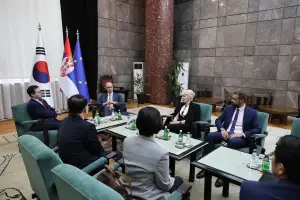 Belgrade, 5 June 2026
Deepening economic partnership between Serbia, Republic of Korea
-
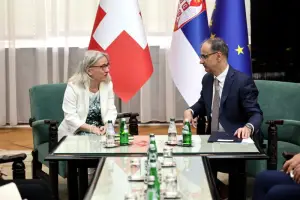 Belgrade, 5 June 2026
Additional strengthening of bilateral relations between Serbia, Switzerland
-
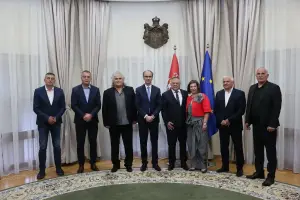 Belgrade, 4 June 2026
Support for regular, stable water supply in underdeveloped municipalities
-
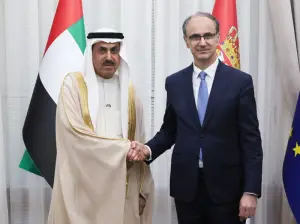 Belgrade, 4 June 2026
Successfully implemented projects with UAE confirm good bilateral relations
-
 Belgrade, 2 June 2026
Serbia committed to political empowerment of women
-
 Belgrade, 2 June 2026
Intensifying activities to meet obligations from Reform Agenda
-
 Belgrade, 2 June 2026
Macut hands resolutions to support development of traditional, artistic crafts
-
 Niš, 1 June 2026
State a partner that listens to citizens, solves their problems