
Q:
A:
Preventing new recognitions of Kosovo’s independence necessary
Belgrade,
26 July 2010
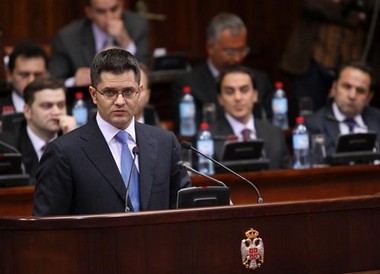
Minister of Foreign Affairs Vuk Jeremic announced today that Serbia’s diplomatic activity in the near future will be directed at preventing new recognitions of the unilaterally proclaimed independence of Kosovo-Metohija.
Author:
Fonet
Speaking at the extraordinary session of the Serbian parliament summoned at the request of the Serbian government regarding the opinion of the International Court of Justice (ICJ), which is being attended by government members and Serbian President Boris Tadic, Jeremic said that after the ICJ passed its opinion, Serbia’s position has become even more difficult because 55 countries are on the verge of recognising Kosovo’s independence, but the Serbian government is doing everything to reduce this number to a minimum.
He reiterated that the ICJ left the political decision on Kosovo Albanians’ right to secession to be debated in the UN General Assembly. Our diplomatic activity in the near future will be directed at preventing further recognitions, the Minister confirmed and added that the task of state bodies will be to win a majority in the UN General Assembly for Serbia’s resolution after which it will be clear that the ICJ has not given the right to Kosovo Albanians to secede from Serbia.
The Minister explained that in February 2008, when Kosovo one-sidedly proclaimed independence, Serbia had to choose between establishing the state of facts, or defending its constitutional order with armed forces like all sovereign states.
We opted for a third path and this is the use of legal and diplomatic means and addressing the ICJ. We decided not to sue countries that recognised Kosovo and now we see that the ICJ would have proclaimed itself incompetent in this matter, Jeremic observed.
He illustrated that such prosecution would have had legal consequences and this is why Serbian authorities decided not to do it.
Jeremic underlined that as long as the Serbian Constitution is in force, Serbia cannot desist from preserving its territorial integrity. He added that this is a very difficult moment for Serbia and that it is necessary to remain calm, but determined as well.
The Minister pointed out that Serbia still believes that the unilateral proclamation of Kosovo’s independence violates international law and that Kosovo Albanians did not have the right to secession. As for the question Serbia posed to the ICJ, he highlighted that asking the court any other question would create room for declaring Kosovo a sui generis case, ie a unique one. Today everyone’s eyes are focused on Serbia, therefore it is crucial for us to be united and, regardless of political arguments, reach a final conclusion with a unanimous stance, Jeremic concluded.
He maintained that Serbia is faced with a choice of whether to continue with a policy of strict adherence to the respect of sovereignty and territorial integrity in its struggle for Kosovo, using all legal, political and diplomatic means.
The government proposes the adoption of a declaration to affirm this policy in order to reach a peaceful, lasting and sustainable solution through talks, in line with the Serbian constitution, which will enable historic reconciliation between the Serbian and Albanian people and peace and stability in the region, the Minister declared.
Head of the Serbian legal team at the ICJ Dusan Batakovic remarked that by declaring its advisory opinion, the court did not close the door on Serbia’s new political and diplomatic activities, aimed at preserving its territorial integrity and sovereignty.
He stressed that the ICJ tried to find a way out of an uncomfortable political situation and therefore treated the issue of independence declaration as a legal instrument, disregarding the issue of the right to secession and the consequences of this act.
This led to the essential part of the question – is the unilateral declaration of independence in line with international law – being returned to the UN General Assembly, Batakovic explained.
This outcome is a legal failure for Serbia because it did not receive assistance from the ICJ in a situation where international law was breached at Serbia’s expense, Batakovic noted, adding that conducting this case at the ICJ was important for Serbia because it halted the wave of recognitions of the province’s independence.
Batakovic recalled that Serbia’s legal team presented the stance that Kosovo’s unilaterally declared independence is not in line with international law firstly because the general principle of territorial integrity prevents secession of a portion of a territory of one state without its consent, secondly because Resolution 1244 guarantees Serbia’s territorial integrity and finally because by declaring independence, the negotiation process, the goal of which was to determine the province’s status, was disrupted.
At today’s session the Parliament is debating the government’s proposal which states that the Parliament should speak out on the ICJ’s opinion on the legality of Kosovo’s unilaterally declared independence and the continuation of Serbia’s activities to protect its sovereignty and territorial integrity.
He reiterated that the ICJ left the political decision on Kosovo Albanians’ right to secession to be debated in the UN General Assembly. Our diplomatic activity in the near future will be directed at preventing further recognitions, the Minister confirmed and added that the task of state bodies will be to win a majority in the UN General Assembly for Serbia’s resolution after which it will be clear that the ICJ has not given the right to Kosovo Albanians to secede from Serbia.
The Minister explained that in February 2008, when Kosovo one-sidedly proclaimed independence, Serbia had to choose between establishing the state of facts, or defending its constitutional order with armed forces like all sovereign states.
We opted for a third path and this is the use of legal and diplomatic means and addressing the ICJ. We decided not to sue countries that recognised Kosovo and now we see that the ICJ would have proclaimed itself incompetent in this matter, Jeremic observed.
He illustrated that such prosecution would have had legal consequences and this is why Serbian authorities decided not to do it.
Jeremic underlined that as long as the Serbian Constitution is in force, Serbia cannot desist from preserving its territorial integrity. He added that this is a very difficult moment for Serbia and that it is necessary to remain calm, but determined as well.
The Minister pointed out that Serbia still believes that the unilateral proclamation of Kosovo’s independence violates international law and that Kosovo Albanians did not have the right to secession. As for the question Serbia posed to the ICJ, he highlighted that asking the court any other question would create room for declaring Kosovo a sui generis case, ie a unique one. Today everyone’s eyes are focused on Serbia, therefore it is crucial for us to be united and, regardless of political arguments, reach a final conclusion with a unanimous stance, Jeremic concluded.
He maintained that Serbia is faced with a choice of whether to continue with a policy of strict adherence to the respect of sovereignty and territorial integrity in its struggle for Kosovo, using all legal, political and diplomatic means.
The government proposes the adoption of a declaration to affirm this policy in order to reach a peaceful, lasting and sustainable solution through talks, in line with the Serbian constitution, which will enable historic reconciliation between the Serbian and Albanian people and peace and stability in the region, the Minister declared.
Head of the Serbian legal team at the ICJ Dusan Batakovic remarked that by declaring its advisory opinion, the court did not close the door on Serbia’s new political and diplomatic activities, aimed at preserving its territorial integrity and sovereignty.
He stressed that the ICJ tried to find a way out of an uncomfortable political situation and therefore treated the issue of independence declaration as a legal instrument, disregarding the issue of the right to secession and the consequences of this act.
This led to the essential part of the question – is the unilateral declaration of independence in line with international law – being returned to the UN General Assembly, Batakovic explained.
This outcome is a legal failure for Serbia because it did not receive assistance from the ICJ in a situation where international law was breached at Serbia’s expense, Batakovic noted, adding that conducting this case at the ICJ was important for Serbia because it halted the wave of recognitions of the province’s independence.
Batakovic recalled that Serbia’s legal team presented the stance that Kosovo’s unilaterally declared independence is not in line with international law firstly because the general principle of territorial integrity prevents secession of a portion of a territory of one state without its consent, secondly because Resolution 1244 guarantees Serbia’s territorial integrity and finally because by declaring independence, the negotiation process, the goal of which was to determine the province’s status, was disrupted.
At today’s session the Parliament is debating the government’s proposal which states that the Parliament should speak out on the ICJ’s opinion on the legality of Kosovo’s unilaterally declared independence and the continuation of Serbia’s activities to protect its sovereignty and territorial integrity.
-
 Belgrade, 28 August 2026
Church broken into, ransacked in Bušince village in Kosovska Kamenica
-
 Belgrade, 27 August 2026
Remembrance of suffering of Serb civilians in village of Klečka
-
 Belgrade, 30 July 2026
Continued illegal demolition of Serb-owned buildings near Lake Gazivode
-
 Belgrade, 29 July 2026
Works in Special Protective Zone of Visoki Dečani Monastery must be halted
-
 Belgrade, 23 July 2026
Priština continues with unilateral, illegal moves
-
 Belgrade/Zurich, 4 June 2026
Exhibition in Zurich on position of Serbs in Kosovo and Metohija
-
 Belgrade/Brussels, 12 May 2026
Belgrade seeking concrete steps towards establishment of Community of Serb Municipalities
-
 Belgrade/Brussels, 11 May 2026
Belgrade-Priština dialogue not dialogue on mutual recognition
-
 Belgrade, 10 April 2026
Serbian health centres closed in villages of Suvo Grlo, Banje