
Q:
A:
ICJ discussion on Kosovo-Metohija completed
Belgrade/The Hague,
11 December 2009
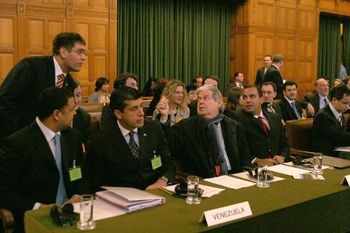
The International Court of Justice (ICJ) in The Hague today ended a public discussion that lasted for several days concerning the legality of the unilaterally proclaimed independence of Kosovo-Metohija, with the presentation of the arguments of Vietnam and Venezuela, who both supported the position of Serbia.
Author:
Fonet
The representatives of Vietnam and Venezuela said that the proclamation of independence of Kosovo goes contrary to international law and the UN Security Council Resolution 1244.
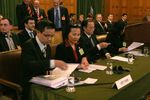
Representative of Vietnam Nguyen Thi Hoang Anh said that Resolution 1244 is binding for all UN members and the basis for a resolution to the Kosovo problem.
According to her, Resolution 1244 envisages that the resolution of the final status of Kosovo-Metohija can be found only through negotiation, with the consent of both sides, and that the UN Security Council is the only body that can decide when that process is over.
Commenting on the statements that the people of Kosovo had the right to self-determination, and therefore to a proclamation of independence, Nguyen Thi Hoang Anh said that that principle in not dominant in relation to the foundations of international law - the preservation of sovereignty and territorial integrity of a country.
Representative of Venezuela Alejandro Fleming said that the right to self-determination refers exclusively to colonies, and that Kosovo has never been a colony or an independent state.
The Albanian population in Kosovo enjoys all minority rights in Serbia and there are no grounds for proclamation of independence, Fleming said, stressing that the opinion of the former UN Secretary General Special Envoy Martti Ahtisaari that all possibilities for finding a solution to the final status of Kosovo through negotiations had been exhausted and his recommendation that Kosovo should become independent in order to boost stability in the region, can by no means be a basis for a proclamation of independence.
Fleming asked how it is possible that negotiations can cause instability, and not a decision of one side which is unsatisfied during the negotiations.
According to him, Resolution 1244 calls for a political solution and excludes the possibility of secession of Kosovo, because that would violate Serbia's sovereignty and territorial integrity.
At the end of the session, judges Abdul Koroma, Mohamed Benuna and Antonio Augusto Cansado Trinidade asked the participants in the discussion to respond to questions regarding the claims that international law does not prohibit secession, promises made by the participants in the 2007 Kosovo parliamentary elections that they would declare independence and the provisions of the 1999 Rambouillet Agreement. Written answers should be delivered by December 22.
During the nine days of the discussion, 29 delegations presented their opinions. There is no deadline for the court to give its advisory opinion on the unilateral proclamation of Kosovo's independence.
The position that Kosovo's independence is contrary to international law was defended by Serbia, China, Russia, Spain, Romania, Cyprus, Argentina, Brazil, Vietnam, Bolivia, Venezuela, Azerbeidzan and Belarus.
The opposite position was supported by representatives of Kosovo, the US, Great Britain, France, Germany, the Netherlands, Austria, Norway, the Netherlands, Finland, Bulgaria, Croatia, Albania, Jordan and Saudi Arabia.
The representative of Burundi said that Kosovo will continue to exist as an entity, regardless of the decision of the International Court of Justice.
Representative of Vietnam Nguyen Thi Hoang Anh said that Resolution 1244 is binding for all UN members and the basis for a resolution to the Kosovo problem.
According to her, Resolution 1244 envisages that the resolution of the final status of Kosovo-Metohija can be found only through negotiation, with the consent of both sides, and that the UN Security Council is the only body that can decide when that process is over.
Commenting on the statements that the people of Kosovo had the right to self-determination, and therefore to a proclamation of independence, Nguyen Thi Hoang Anh said that that principle in not dominant in relation to the foundations of international law - the preservation of sovereignty and territorial integrity of a country.
Representative of Venezuela Alejandro Fleming said that the right to self-determination refers exclusively to colonies, and that Kosovo has never been a colony or an independent state.
The Albanian population in Kosovo enjoys all minority rights in Serbia and there are no grounds for proclamation of independence, Fleming said, stressing that the opinion of the former UN Secretary General Special Envoy Martti Ahtisaari that all possibilities for finding a solution to the final status of Kosovo through negotiations had been exhausted and his recommendation that Kosovo should become independent in order to boost stability in the region, can by no means be a basis for a proclamation of independence.
Fleming asked how it is possible that negotiations can cause instability, and not a decision of one side which is unsatisfied during the negotiations.
According to him, Resolution 1244 calls for a political solution and excludes the possibility of secession of Kosovo, because that would violate Serbia's sovereignty and territorial integrity.
At the end of the session, judges Abdul Koroma, Mohamed Benuna and Antonio Augusto Cansado Trinidade asked the participants in the discussion to respond to questions regarding the claims that international law does not prohibit secession, promises made by the participants in the 2007 Kosovo parliamentary elections that they would declare independence and the provisions of the 1999 Rambouillet Agreement. Written answers should be delivered by December 22.
During the nine days of the discussion, 29 delegations presented their opinions. There is no deadline for the court to give its advisory opinion on the unilateral proclamation of Kosovo's independence.
The position that Kosovo's independence is contrary to international law was defended by Serbia, China, Russia, Spain, Romania, Cyprus, Argentina, Brazil, Vietnam, Bolivia, Venezuela, Azerbeidzan and Belarus.
The opposite position was supported by representatives of Kosovo, the US, Great Britain, France, Germany, the Netherlands, Austria, Norway, the Netherlands, Finland, Bulgaria, Croatia, Albania, Jordan and Saudi Arabia.
The representative of Burundi said that Kosovo will continue to exist as an entity, regardless of the decision of the International Court of Justice.
-
 Belgrade, 28 August 2026
Church broken into, ransacked in Bušince village in Kosovska Kamenica
-
 Belgrade, 27 August 2026
Remembrance of suffering of Serb civilians in village of Klečka
-
 Belgrade, 30 July 2026
Continued illegal demolition of Serb-owned buildings near Lake Gazivode
-
 Belgrade, 29 July 2026
Works in Special Protective Zone of Visoki Dečani Monastery must be halted
-
 Belgrade, 23 July 2026
Priština continues with unilateral, illegal moves
-
 Belgrade/Zurich, 4 June 2026
Exhibition in Zurich on position of Serbs in Kosovo and Metohija
-
 Belgrade/Brussels, 12 May 2026
Belgrade seeking concrete steps towards establishment of Community of Serb Municipalities
-
 Belgrade/Brussels, 11 May 2026
Belgrade-Priština dialogue not dialogue on mutual recognition
-
 Belgrade, 10 April 2026
Serbian health centres closed in villages of Suvo Grlo, Banje