Q:
A:
Serbia struggles to defend territorial integrity peacefully
Belgrade/New York,
15 October 2009
Serbian Foreign Minister Vuk Jeremic said this evening at a UN Security Council session in New York that Serbia will never recognise Kosovo’s unilateral declaration of independence and that the entire Serbian nation is united in this stance.
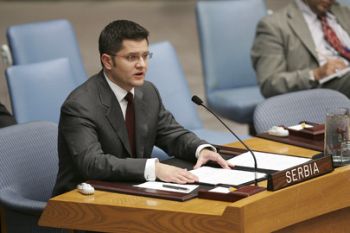
Vuk Jeremic
Author:
un.org
Speaking at the Security Council session, at which UN Secretary General Ban Ki-moon’s latest report on Kosovo is being discussed, Jeremic said that living conditions for the Serb population in the province continue to be very difficult.
The Minister referred to the Secretary General’s report which mentions that very few Serbs have returned to Kosovo, a mere 31 out of the 200,000 who were forced to leave their homes.
Kosovo’s unilateral declaration of independence is a challenge which we must deal with together, in the interests of peace and stability and to uphold international law, said Jeremic, adding that the Kosovo issue is an important test for the international community because it poses the question of unilateralism vs. consensus.
Serbia’s principled stance on the future status of the southern Serbian province remains unaltered. Serbia will never recognise the unilaterally declared independence of Kosovo. This continues to be our policy and our moral and legal obligation. This is our democratic duty because our nation is united concerning this fundamental question, stressed Jeremic. The sense of solidarity we have received from governments around the world encourages us to be firm in our peaceful efforts to find a solution for the Kosovo issue which will be acceptable to all sides, said Jeremic.
Jeremic said that he regrets the fact that the Kosovo authorities have not shown any interest in accepting a status neutral framework for resolving the several unresolved practical issues in the province, adding that their refusal to do so has harmed the interests of the people of Kosovo.
He said that Serbia strongly believes that disagreements concerning the status issue should not affect the process of improving living conditions for the people of the province.
He said that the UN Secretary General’s report praises Belgrade’s policy of making constructive efforts to resolve the various issues. He said that almost all Serbs have returned to their jobs in the Kosovo police force, owing to the efforts made by Belgrade, adding that this has improved the security situation, particularly in Serb enclaves. Speaking about the work being done by the International Court of Justice (ICJ), before which the question of the legality of Kosovo’s unilateral declaration of independence will be debated in December, Jeremic said that the ICJ should be free of the political pressure which could be exerted if more countries are urged to recognise Kosovo.
He said that the UN’s civilian mission remains an unavoidable factor in Kosovo and added that it is very important that the UN Security Council continues to support the presence of UNMIK as an important pillar of peace and stability.
He also spoke about the issue of the justice system in the province. He said that judges and prosecutors should be appointed in proportion to the ethnic make-up of the population,
The Minister recalled that the Protocol on Cooperation, signed by the Serbian police and EULEX, is status-neutral and relies entirely on Resolution 1244.
Jeremic praised the cooperation of EULEX prosecutors and the Serbian war crimes prosecution in connection with the cases of human organ trafficking in the so-called "Yellow House" and notorious KLA controlled prisons, like the one in the village of Klecka, in the municipality of Lipljan.
Jeremic stressed that Serbia opposes Kosovo police taking over security of the Gazimestan monument from KFOR.
The Minister invited the world organisation to prevent the destruction of Serbian cultural heritage in the province, in particular pointing to the difficult situation of monasteries and churches belonging to the Serbian Orthodox Church.
He gave the example of the robbery of a medieval complex in the mountains above Prizren and added that the ethnic Albanian authorities are refusing to reconsider an outrageous decision to concrete over the remains of the Serbian church in the centre of Djakovica, which has been destroyed twice.
This is the third time I am presenting this issue before the UN. Is it possible that the international community is helpless to prevent it? Is there a will to prevent this cultural cleansing, asked the Minister.
Regarding the local elections that the Kosovo authorities have announced for November 15, Jeremic said that these elections have no legitimacy as the local authorities decided to disobey the status-neutral principle under the UN Resolution 1244.
According to Jeremic, the OSCE will not monitor them, and the UN will not evaluate them, hence it is impossible for Serbia to support these elections.
He said that today, in the 21st century, no state can achieve success through isolation, and stressed that Serbia is fighting for its territorial integrity by peaceful means, while ensuring its European future.
The central strategic priority of Serbia is EU membership, and Belgrade is ready to solve all problems at the negotiating table, not on the battlefield, concluded the Foreign Minister.
The Minister referred to the Secretary General’s report which mentions that very few Serbs have returned to Kosovo, a mere 31 out of the 200,000 who were forced to leave their homes.
Kosovo’s unilateral declaration of independence is a challenge which we must deal with together, in the interests of peace and stability and to uphold international law, said Jeremic, adding that the Kosovo issue is an important test for the international community because it poses the question of unilateralism vs. consensus.
Serbia’s principled stance on the future status of the southern Serbian province remains unaltered. Serbia will never recognise the unilaterally declared independence of Kosovo. This continues to be our policy and our moral and legal obligation. This is our democratic duty because our nation is united concerning this fundamental question, stressed Jeremic. The sense of solidarity we have received from governments around the world encourages us to be firm in our peaceful efforts to find a solution for the Kosovo issue which will be acceptable to all sides, said Jeremic.
Jeremic said that he regrets the fact that the Kosovo authorities have not shown any interest in accepting a status neutral framework for resolving the several unresolved practical issues in the province, adding that their refusal to do so has harmed the interests of the people of Kosovo.
He said that Serbia strongly believes that disagreements concerning the status issue should not affect the process of improving living conditions for the people of the province.
He said that the UN Secretary General’s report praises Belgrade’s policy of making constructive efforts to resolve the various issues. He said that almost all Serbs have returned to their jobs in the Kosovo police force, owing to the efforts made by Belgrade, adding that this has improved the security situation, particularly in Serb enclaves. Speaking about the work being done by the International Court of Justice (ICJ), before which the question of the legality of Kosovo’s unilateral declaration of independence will be debated in December, Jeremic said that the ICJ should be free of the political pressure which could be exerted if more countries are urged to recognise Kosovo.
He said that the UN’s civilian mission remains an unavoidable factor in Kosovo and added that it is very important that the UN Security Council continues to support the presence of UNMIK as an important pillar of peace and stability.
He also spoke about the issue of the justice system in the province. He said that judges and prosecutors should be appointed in proportion to the ethnic make-up of the population,
The Minister recalled that the Protocol on Cooperation, signed by the Serbian police and EULEX, is status-neutral and relies entirely on Resolution 1244.
Jeremic praised the cooperation of EULEX prosecutors and the Serbian war crimes prosecution in connection with the cases of human organ trafficking in the so-called "Yellow House" and notorious KLA controlled prisons, like the one in the village of Klecka, in the municipality of Lipljan.
Jeremic stressed that Serbia opposes Kosovo police taking over security of the Gazimestan monument from KFOR.
The Minister invited the world organisation to prevent the destruction of Serbian cultural heritage in the province, in particular pointing to the difficult situation of monasteries and churches belonging to the Serbian Orthodox Church.
He gave the example of the robbery of a medieval complex in the mountains above Prizren and added that the ethnic Albanian authorities are refusing to reconsider an outrageous decision to concrete over the remains of the Serbian church in the centre of Djakovica, which has been destroyed twice.
This is the third time I am presenting this issue before the UN. Is it possible that the international community is helpless to prevent it? Is there a will to prevent this cultural cleansing, asked the Minister.
Regarding the local elections that the Kosovo authorities have announced for November 15, Jeremic said that these elections have no legitimacy as the local authorities decided to disobey the status-neutral principle under the UN Resolution 1244.
According to Jeremic, the OSCE will not monitor them, and the UN will not evaluate them, hence it is impossible for Serbia to support these elections.
He said that today, in the 21st century, no state can achieve success through isolation, and stressed that Serbia is fighting for its territorial integrity by peaceful means, while ensuring its European future.
The central strategic priority of Serbia is EU membership, and Belgrade is ready to solve all problems at the negotiating table, not on the battlefield, concluded the Foreign Minister.
-
 Belgrade, 28 August 2026
Church broken into, ransacked in Bušince village in Kosovska Kamenica
-
 Belgrade, 27 August 2026
Remembrance of suffering of Serb civilians in village of Klečka
-
 Belgrade, 30 July 2026
Continued illegal demolition of Serb-owned buildings near Lake Gazivode
-
 Belgrade, 29 July 2026
Works in Special Protective Zone of Visoki Dečani Monastery must be halted
-
 Belgrade, 23 July 2026
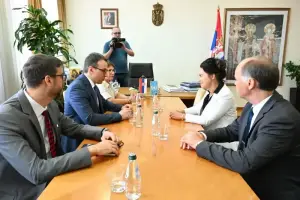
Priština continues with unilateral, illegal moves
-
 Belgrade/Zurich, 4 June 2026
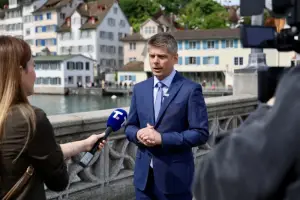
Exhibition in Zurich on position of Serbs in Kosovo and Metohija
-
 Belgrade/Brussels, 12 May 2026
Belgrade seeking concrete steps towards establishment of Community of Serb Municipalities
-
 Belgrade/Brussels, 11 May 2026
Belgrade-Priština dialogue not dialogue on mutual recognition
-
 Belgrade, 10 April 2026
Serbian health centres closed in villages of Suvo Grlo, Banje