Q:
A:
Kosovo Serbs cannot participate in local elections
Belgrade,
27 July 2009
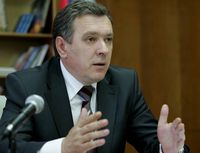
Serbian Minister for Kosovo-Metohija Goran Bogdanovic stated that conditions are not right for Kosovo Serbs to take part in the November local elections in Kosovo. He said that the Serbian government cannot demand that Kosovo Serbs pay their electricity bills as long as the problem of electricity supplies to Serb areas is not resolved.
Author:
Fonet
In an interview to FoNet news agency, Bogdanovic stressed that the Serbian government’s working group in charge of the matter has made an offer to the Kosovo electricity company (KEK) which could settle the supply problems.
The government wishes to resolve the issue but it cannot do so alone. It must work together with the international community and KEK, explained Bogdanovic. He stressed that Belgrade is ready to donate electricity to Serbs and other non-Albanians in Kosovo.
He said that it is clear that Serbs in Kosovo must pay their electricity bills and they will do so, added Bogdanovic.
Speaking about the November local elections, Bogdanovic said that it is good that the Serbian President and the government formed their opinion that Serbs should not participate in these elections in time.
Bogdanovic stressed that the conditions are not right for Serbs to participate in the elections because the elections are being held according to the plan of the former UN special envoy to Kosovo Martti Ahtisaari, which was rejected by Serbia.
Serbs are still not legally protected and do not have the number of local self-governments we demanded during the process of decentralization, said Bogdanovic, adding that decentralization is taking place without the agreement of local self-governments and Belgrade.
Bogdanovic said that decentralisation in Kosovo is necessary and that Serbs would take part in the local elections if the process were to be conducted under the auspices of a status-neutral international organisation and not under the patronage of Pieter Feith's office or the Kosovo government.
He said that the Council of Europe, the EU, the UN and UNMIK could be status-neutral patrons and that Serbia is ready to renew talks with international representatives in order to reach a solution to the decentralisation issue that is acceptable to the Serb community.
We are also ready to talk with EULEX, regardless of the fact it has demonstrated a bias on numerous occasions, he said, adding that their mistakes should be pointed out to them.
He confirmed that negotiations with EULEX on the return to work of Serbian judges are underway, primarily for the northern part of Kosovska Mitrovica.
However, no solution has been reached yet since the conditions have not been defined. It is also unclear which laws they would apply and which court would have second-instance powers, he said.
There are many issues that we must solve quickly. We want to solve the legal vacuum in the north of Kosovo as soon as possible, but not to the detriment of the Serb community, said Bogdanovic, adding that we will not to work according to the laws of the so-called state of Kosovo.
He also said exact data on the number of internally displaced persons (IDPs) from Kosovo should be determined as soon as possible.
The government wishes to resolve the issue but it cannot do so alone. It must work together with the international community and KEK, explained Bogdanovic. He stressed that Belgrade is ready to donate electricity to Serbs and other non-Albanians in Kosovo.
He said that it is clear that Serbs in Kosovo must pay their electricity bills and they will do so, added Bogdanovic.
Speaking about the November local elections, Bogdanovic said that it is good that the Serbian President and the government formed their opinion that Serbs should not participate in these elections in time.
Bogdanovic stressed that the conditions are not right for Serbs to participate in the elections because the elections are being held according to the plan of the former UN special envoy to Kosovo Martti Ahtisaari, which was rejected by Serbia.
Serbs are still not legally protected and do not have the number of local self-governments we demanded during the process of decentralization, said Bogdanovic, adding that decentralization is taking place without the agreement of local self-governments and Belgrade.
Bogdanovic said that decentralisation in Kosovo is necessary and that Serbs would take part in the local elections if the process were to be conducted under the auspices of a status-neutral international organisation and not under the patronage of Pieter Feith's office or the Kosovo government.
He said that the Council of Europe, the EU, the UN and UNMIK could be status-neutral patrons and that Serbia is ready to renew talks with international representatives in order to reach a solution to the decentralisation issue that is acceptable to the Serb community.
We are also ready to talk with EULEX, regardless of the fact it has demonstrated a bias on numerous occasions, he said, adding that their mistakes should be pointed out to them.
He confirmed that negotiations with EULEX on the return to work of Serbian judges are underway, primarily for the northern part of Kosovska Mitrovica.
However, no solution has been reached yet since the conditions have not been defined. It is also unclear which laws they would apply and which court would have second-instance powers, he said.
There are many issues that we must solve quickly. We want to solve the legal vacuum in the north of Kosovo as soon as possible, but not to the detriment of the Serb community, said Bogdanovic, adding that we will not to work according to the laws of the so-called state of Kosovo.
He also said exact data on the number of internally displaced persons (IDPs) from Kosovo should be determined as soon as possible.
-
 Belgrade, 28 August 2026
Church broken into, ransacked in Bušince village in Kosovska Kamenica
-
 Belgrade, 27 August 2026
Remembrance of suffering of Serb civilians in village of Klečka
-
 Belgrade, 30 July 2026
Continued illegal demolition of Serb-owned buildings near Lake Gazivode
-
 Belgrade, 29 July 2026
Works in Special Protective Zone of Visoki Dečani Monastery must be halted
-
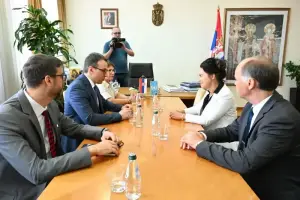 Belgrade, 23 July 2026
Priština continues with unilateral, illegal moves
-
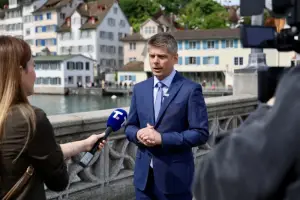 Belgrade/Zurich, 4 June 2026
Exhibition in Zurich on position of Serbs in Kosovo and Metohija
-
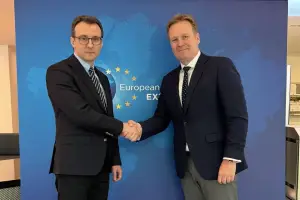 Belgrade/Brussels, 12 May 2026
Belgrade seeking concrete steps towards establishment of Community of Serb Municipalities
-
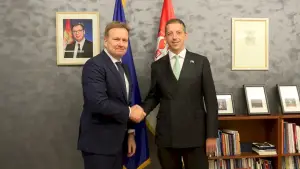 Belgrade/Brussels, 11 May 2026
Belgrade-Priština dialogue not dialogue on mutual recognition
-
 Belgrade, 10 April 2026
Serbian health centres closed in villages of Suvo Grlo, Banje