Q:
A:
Serbia will never renounce Kosovo- Metohija
Belgrade,
16 February 2009
Serbian Minister for Kosovo-Metohija Goran Bogdanovic said that Serbia will never renounce its battle for Kosovo-Metohija.
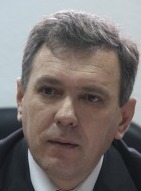
Goran Bogdanovic
Author:
Tanjug
Commenting one year after the unilateral secession of Kosovo, Bogdanovic told Tanjug that Kosovo is an integral part of Serbia and that the unilateral decision of Pristina to proclaim independence is contrary to UN Security Council Resolution 1244 and international law.
That illegal act has complicated relations in the region, Europe and worldwide and did not contribute to stability but created additional concerns amongst Kosovo Serbs and other non-Albanians, he said.
In the past year, Serbia has been doing everything to annul that unilaterally proclaimed independence, mostly within the UN Security Council and has achieved great successes in that context, he said.
Namely, the achievements are Serbia’s initiatives for the assessment of the legality of that act before the International Court of Justice (ICJ) in The Hague and for the deployment of the EULEX mission under conditions agreed between Belgrade and the UN were accepted, he stated.
Bogdanovic pointed out that Kosovo’s unilateral independence created tension in the province and stressed that Serbia will use legal and diplomatic means to preserve Kosovo-Metohija.
The idea that Serbia should recognize its province’s independence is unacceptable, he underlined.
According to Bogdanovic, there is a security and legal vacuum in the province, especially in parts inhabited by Serbs.
He noted that since EULEX’s deployment on December 9, 2008 the mission has not yet implemented its jurisdiction from UNMIK.
We are doing everything to establish a dialogue with the international community and to ensure that the six point plan is implemented, the Minister stressed.
Serbia is a democratic country that protects its legitimate rights, he said, noting that we do not want conflict, fear and struggle.
The negotiations on the six points should change Kosovo’s cruel reality, not make the lives of the people living there worse, he said.
This will be a long and difficult but necessary process, the Minister stressed.
The Serbian government is also investing funds in social and economic matters in the province, the Minister said, announcing investments in infrastructure.
The Ministry has prepared a strategy of sustainable survival and repatriation to the province, whose aim is to help people start companies and get their property back, he said, noting that there are over 200,000 displaced people.
He also commented that Serbia’s initiative before the ICJ is not “to buy time” but to stabilise the situation.
Commenting on the pogrom of March 17, 2004, Bogdanovic said that the saddest thing is that those responsible for the pogrom were not punished when 5,000 people were exiled from their homes.
Speaking on the activities of the War Crimes Prosecution in Belgrade that is trying to process crimes by the Kosovo Liberation Army (KLA), he said that we expect help from the European judiciary and international courts.
Serbia will present evidence and those who are guilty must be found and punished so that such crimes never happen again, he concluded.
That illegal act has complicated relations in the region, Europe and worldwide and did not contribute to stability but created additional concerns amongst Kosovo Serbs and other non-Albanians, he said.
In the past year, Serbia has been doing everything to annul that unilaterally proclaimed independence, mostly within the UN Security Council and has achieved great successes in that context, he said.
Namely, the achievements are Serbia’s initiatives for the assessment of the legality of that act before the International Court of Justice (ICJ) in The Hague and for the deployment of the EULEX mission under conditions agreed between Belgrade and the UN were accepted, he stated.
Bogdanovic pointed out that Kosovo’s unilateral independence created tension in the province and stressed that Serbia will use legal and diplomatic means to preserve Kosovo-Metohija.
The idea that Serbia should recognize its province’s independence is unacceptable, he underlined.
According to Bogdanovic, there is a security and legal vacuum in the province, especially in parts inhabited by Serbs.
He noted that since EULEX’s deployment on December 9, 2008 the mission has not yet implemented its jurisdiction from UNMIK.
We are doing everything to establish a dialogue with the international community and to ensure that the six point plan is implemented, the Minister stressed.
Serbia is a democratic country that protects its legitimate rights, he said, noting that we do not want conflict, fear and struggle.
The negotiations on the six points should change Kosovo’s cruel reality, not make the lives of the people living there worse, he said.
This will be a long and difficult but necessary process, the Minister stressed.
The Serbian government is also investing funds in social and economic matters in the province, the Minister said, announcing investments in infrastructure.
The Ministry has prepared a strategy of sustainable survival and repatriation to the province, whose aim is to help people start companies and get their property back, he said, noting that there are over 200,000 displaced people.
He also commented that Serbia’s initiative before the ICJ is not “to buy time” but to stabilise the situation.
Commenting on the pogrom of March 17, 2004, Bogdanovic said that the saddest thing is that those responsible for the pogrom were not punished when 5,000 people were exiled from their homes.
Speaking on the activities of the War Crimes Prosecution in Belgrade that is trying to process crimes by the Kosovo Liberation Army (KLA), he said that we expect help from the European judiciary and international courts.
Serbia will present evidence and those who are guilty must be found and punished so that such crimes never happen again, he concluded.
-
 Belgrade, 28 August 2026
Church broken into, ransacked in Bušince village in Kosovska Kamenica
-
 Belgrade, 27 August 2026
Remembrance of suffering of Serb civilians in village of Klečka
-
 Belgrade, 30 July 2026
Continued illegal demolition of Serb-owned buildings near Lake Gazivode
-
 Belgrade, 29 July 2026
Works in Special Protective Zone of Visoki Dečani Monastery must be halted
-
 Belgrade, 23 July 2026
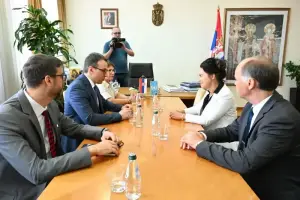
Priština continues with unilateral, illegal moves
-
 Belgrade/Zurich, 4 June 2026
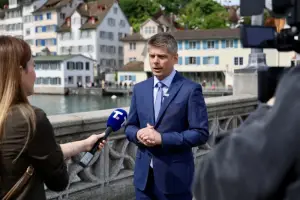
Exhibition in Zurich on position of Serbs in Kosovo and Metohija
-
 Belgrade/Brussels, 12 May 2026
Belgrade seeking concrete steps towards establishment of Community of Serb Municipalities
-
 Belgrade/Brussels, 11 May 2026
Belgrade-Priština dialogue not dialogue on mutual recognition
-
 Belgrade, 10 April 2026
Serbian health centres closed in villages of Suvo Grlo, Banje