Q:
A:
Vote against Serbia’s resolution could lead to an end of UN system as we know it
Belgrade/New York,
23 September 2008
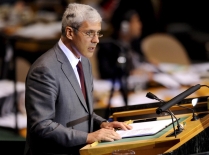
Serbian President Boris Tadic addressed before the 63rd session of the UN General Assembly today seeking from the principal judicial organ of the UN, the International Court of Justice (ICJ), to render an advisory opinion on whether the unilateral declaration of independence by the provisional institutions of self-government of Kosovo is in accordance with international law.
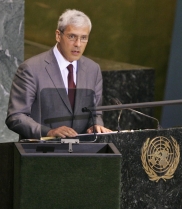
Boris Tadic
Author:
Fonet
Tadic said that we believe that sending the Kosovo question to the ICJ would prevent this crisis from serving as a deeply problematic precedent in any part of the globe where secessionist ambitions are harboured.
We also believe that an ICJ advisory opinion would provide politically neutral, yet judicially authoritative guidance, to many countries still deliberating on how to approach Kosovo’s unilateral declaration of independence in line with international law.
Addressing the UN members, Tadic said that their vote in support of this resolution would serve to reaffirm another key international principle at stake: the right of any member state of the UN to pose a simple, elementary question—on a matter it considers vitally important—to the competent court.
To vote against is in effect to vote to deny the right of any country—now or in the future—to seek judicial recourse through the UN system.
To vote against means to accept that nothing could be done when secessionists in whichever part of the world proclaim the uniqueness of their cause, and claim exception to the universal scope of international law.
Such an attitude could lead to the end of the UN system as we know it.
The sacrosanct character of the foundational doctrine of sovereign equality, and its accompanying binding obligation to respect each other’s sovereignty and territorial integrity, constitutes the very nature of the enduring legitimacy of the UN.
I speak of the unilateral, illegal and illegitimate declaration of independence by the ethnic Albanian authorities of our southern province of Kosovo and Metohija—a territory that, for the Serbian people, stands at the crucible of our identity. It is the essential link between our proud national past and our proud European future. It is what ties the living tradition of Serbia to itself today.
The attempt at secession took place on February 17, 2008, in direct violation of the UN Charter, the Helsinki Final Act, and Security Council resolution 1244 (1999).
Kosovo’s ethnic Albanian leaders chose to take this unilateral step after walking away from the negotiating table.
They believed that if they walked away, the path to securing independence would open up before them. They believed it, because that’s what they were told. And they believed it because an artificial deadline on the talks was affirmed from the outside after which, if no compromise solution was reached, Kosovo’s independence would be imposed.
Under such circumstances, a negotiated solution was never a realistic option. With a fixed deadline and a default position that fulfilled their maximalist demands, what incentive did Kosovo’s ethnic Albanians have to negotiate with Serbia in good faith? All they had to do was to pretend to engage in a process pre-determined to fail, and wait out the clock.
The incentives for compromise were far outweighed by the incentives for maximalism. The result was the rejection of Serbia’s reasonable offer of almost unrestricted self-government—the broadest possible autonomy one can imagine.
We also believe that an ICJ advisory opinion would provide politically neutral, yet judicially authoritative guidance, to many countries still deliberating on how to approach Kosovo’s unilateral declaration of independence in line with international law.
Addressing the UN members, Tadic said that their vote in support of this resolution would serve to reaffirm another key international principle at stake: the right of any member state of the UN to pose a simple, elementary question—on a matter it considers vitally important—to the competent court.
To vote against is in effect to vote to deny the right of any country—now or in the future—to seek judicial recourse through the UN system.
To vote against means to accept that nothing could be done when secessionists in whichever part of the world proclaim the uniqueness of their cause, and claim exception to the universal scope of international law.
Such an attitude could lead to the end of the UN system as we know it.
The sacrosanct character of the foundational doctrine of sovereign equality, and its accompanying binding obligation to respect each other’s sovereignty and territorial integrity, constitutes the very nature of the enduring legitimacy of the UN.
I speak of the unilateral, illegal and illegitimate declaration of independence by the ethnic Albanian authorities of our southern province of Kosovo and Metohija—a territory that, for the Serbian people, stands at the crucible of our identity. It is the essential link between our proud national past and our proud European future. It is what ties the living tradition of Serbia to itself today.
The attempt at secession took place on February 17, 2008, in direct violation of the UN Charter, the Helsinki Final Act, and Security Council resolution 1244 (1999).
Kosovo’s ethnic Albanian leaders chose to take this unilateral step after walking away from the negotiating table.
They believed that if they walked away, the path to securing independence would open up before them. They believed it, because that’s what they were told. And they believed it because an artificial deadline on the talks was affirmed from the outside after which, if no compromise solution was reached, Kosovo’s independence would be imposed.
Under such circumstances, a negotiated solution was never a realistic option. With a fixed deadline and a default position that fulfilled their maximalist demands, what incentive did Kosovo’s ethnic Albanians have to negotiate with Serbia in good faith? All they had to do was to pretend to engage in a process pre-determined to fail, and wait out the clock.
The incentives for compromise were far outweighed by the incentives for maximalism. The result was the rejection of Serbia’s reasonable offer of almost unrestricted self-government—the broadest possible autonomy one can imagine.
Author:
Fonet
Kosovo’s unilateral declaration of independence—or unilateral declaration of independence—amounts to an attempt at partitioning a member State of the UN against its will, and with disregard for the firm opposition of the Security Council, in order to appease a volatile and threatening ethnic minority.
As a result, the very nature of the international system has been called into question.
We all know that there are dozens of Kosovos throughout the world, just waiting for secession to be legitimized, to be rendered an acceptable norm. Many existing conflicts could escalate, frozen conflicts could reignite, and new ones could be instigated.
We have heard the argument that Kosovo is sui generis—that it is a unique case. But the truth is, this comes down to saying that Kosovo is an exception to international law—that Kosovo should stand beyond the rules that govern the behaviour of the international community.
The Republic of Serbia rejects this claim, believing that no one should permit himself the right to declare such exceptions, especially in defiance of the Security Council’s position.
We face a defining moment. We must stand together, in steadfastness and determination, against a fundamental violation of international law.
Serbia responded to Kosovo’s unilateral declaration of independence with utmost responsibility and restraint. Despite political turmoil, our country continued to work hard to contribute to maintaining regional stability.
From the very onset of this grave crisis, Serbia has ruled out the use of force. And we have not exercised other unilateral options, such as the imposition of economic sanctions, against our breakaway province.
Instead, we have opted for a peaceful and diplomatic approach—the result of which is that a vast majority of UN member States have refrained from recognizing Kosovo’s unilateral declaration of independence. They have continued to abide by their UN Charter obligations to respect the sovereignty and territorial integrity of my country.
Serbia proposes a non-confrontational way to respond to the threat posed to its territorial integrity. We have chosen to use the law.
While rejecting violence and unilateralism categorically, we are equally emphatic in demanding that justice be delivered through the proper legal means at the disposal of any member State of the UN.
To that end, the Republic of Serbia has submitted a resolution to be considered before this Session of the General Assembly.
While the ICJ deliberates on the legality of unilateral declaration of independence, Serbia will remain a good-faith partner in the status-neutral administration of our southern province.
In order for Europe’s presence in Kosovo to be fully anchored within an acceptable, legitimate framework, it is vital that its mandate be approved by the Security Council.
We will work with the member States and the Secretariat to ensure that we achieve consensus in the near future on the international civil presence in our southern province.
I want to emphasise to you that the central strategic priority of the Republic of Serbia is rapid accession to the EU.
We have demonstrated our unequivocal commitment time and again. We will continue to do so because it is our duty—our legal, political and moral duty—to the victims, to ourselves, and most of all, to the generations to come.
My country’s absolute dedication to join the EU is shared by all the countries of the Western Balkans. By choosing—as democracies—to belong to something that is greater than the sum of its parts, the Balkanization of the Balkans can be reversed.
Such a vision can only be built on the firm foundation of the universal principles of sovereign equality, solidarity and international law within the framework of the UN, the President concluded.
As a result, the very nature of the international system has been called into question.
We all know that there are dozens of Kosovos throughout the world, just waiting for secession to be legitimized, to be rendered an acceptable norm. Many existing conflicts could escalate, frozen conflicts could reignite, and new ones could be instigated.
We have heard the argument that Kosovo is sui generis—that it is a unique case. But the truth is, this comes down to saying that Kosovo is an exception to international law—that Kosovo should stand beyond the rules that govern the behaviour of the international community.
The Republic of Serbia rejects this claim, believing that no one should permit himself the right to declare such exceptions, especially in defiance of the Security Council’s position.
We face a defining moment. We must stand together, in steadfastness and determination, against a fundamental violation of international law.
Serbia responded to Kosovo’s unilateral declaration of independence with utmost responsibility and restraint. Despite political turmoil, our country continued to work hard to contribute to maintaining regional stability.
From the very onset of this grave crisis, Serbia has ruled out the use of force. And we have not exercised other unilateral options, such as the imposition of economic sanctions, against our breakaway province.
Instead, we have opted for a peaceful and diplomatic approach—the result of which is that a vast majority of UN member States have refrained from recognizing Kosovo’s unilateral declaration of independence. They have continued to abide by their UN Charter obligations to respect the sovereignty and territorial integrity of my country.
Serbia proposes a non-confrontational way to respond to the threat posed to its territorial integrity. We have chosen to use the law.
While rejecting violence and unilateralism categorically, we are equally emphatic in demanding that justice be delivered through the proper legal means at the disposal of any member State of the UN.
To that end, the Republic of Serbia has submitted a resolution to be considered before this Session of the General Assembly.
While the ICJ deliberates on the legality of unilateral declaration of independence, Serbia will remain a good-faith partner in the status-neutral administration of our southern province.
In order for Europe’s presence in Kosovo to be fully anchored within an acceptable, legitimate framework, it is vital that its mandate be approved by the Security Council.
We will work with the member States and the Secretariat to ensure that we achieve consensus in the near future on the international civil presence in our southern province.
I want to emphasise to you that the central strategic priority of the Republic of Serbia is rapid accession to the EU.
We have demonstrated our unequivocal commitment time and again. We will continue to do so because it is our duty—our legal, political and moral duty—to the victims, to ourselves, and most of all, to the generations to come.
My country’s absolute dedication to join the EU is shared by all the countries of the Western Balkans. By choosing—as democracies—to belong to something that is greater than the sum of its parts, the Balkanization of the Balkans can be reversed.
Such a vision can only be built on the firm foundation of the universal principles of sovereign equality, solidarity and international law within the framework of the UN, the President concluded.
-
 Belgrade, 28 August 2026
Church broken into, ransacked in Bušince village in Kosovska Kamenica
-
 Belgrade, 27 August 2026
Remembrance of suffering of Serb civilians in village of Klečka
-
 Belgrade, 30 July 2026
Continued illegal demolition of Serb-owned buildings near Lake Gazivode
-
 Belgrade, 29 July 2026
Works in Special Protective Zone of Visoki Dečani Monastery must be halted
-
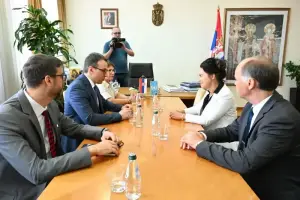 Belgrade, 23 July 2026
Priština continues with unilateral, illegal moves
-
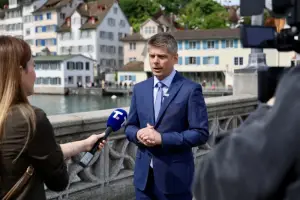 Belgrade/Zurich, 4 June 2026
Exhibition in Zurich on position of Serbs in Kosovo and Metohija
-
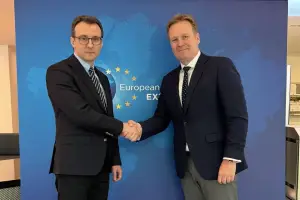 Belgrade/Brussels, 12 May 2026
Belgrade seeking concrete steps towards establishment of Community of Serb Municipalities
-
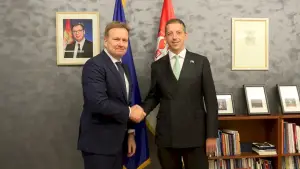 Belgrade/Brussels, 11 May 2026
Belgrade-Priština dialogue not dialogue on mutual recognition
-
 Belgrade, 10 April 2026
Serbian health centres closed in villages of Suvo Grlo, Banje