Q:
A:
Serbia determined to respect international law
Belgrade/Salzburg,
28 July 2008
Serbian Prime Minister Mirko Cvetkovic stated yesterday in Salzburg, on the fringes of an informal meeting of prime ministers from south-eastern Europe, that by arresting Radovan Karadzic the Serbian government proved it is determined to respect international law.
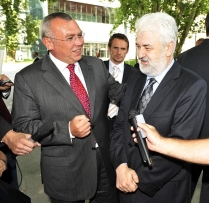
Alfred Gusenbauer, left, and Mirko Cvetkovic
Author:
Fonet/AP
Cvetkovic told the press that Karadzic’s arrest is proof of the Serbian government’s willingness to cooperate with the Hague Tribunal.
I believe that cooperation with The Hague is necessary because it shows that we acknowledge and respect international law, and the same approach will be used in our struggle for Kosovo. International law is our country’s key instrument in the struggle, noted the Prime Minister.
He stressed that the same approach to international law will be applied towards all other fugitives indicted by the Hague Tribunal and added that this is no longer an issue of political willingness, but simply a technical one.
I have called upon the persons wanted by the Tribunal to surrender. I am certain that now we have proved there is willingness in Serbia, no one can say that we can, but simply do not want to locate other fugitives like we did Karadzic, said Cvetkovic.
According to him, Karadzic was the most wanted person and if he is proof of Serbia’s readiness to cooperate, then it is futile to ask what Serbia would do with other indictees still at large.
He explained that Serbia arrested Karadzic because it believes in international law. However, it expects the EU to gives green light to the Stabilisation and Association Agreement so that it may soon come into force.
At a joint press conference following the meeting, Cvetkovic said that the new Serbian government will go towards Europe as that is a guarantee of a better life and progress.
The Prime Minister also noted that Serbia will be the pillar of stability in the region and will respect international law, adding that this refers both to The Hague and Serbia’s territorial sovereignty.
Asked whether the decision to send ambassadors back to EU countries means an alteration of the policy towards Kosovo, Cvetkovic said that Belgrade will not recognise the independence of Kosovo-Metohija.
The decision on the return of ambassadors was made to facilitate our contact with organisations whose members we aspire to become. We may increase the number, but not before the UN General Assembly is held and the decision is made which would make the issue of Kosovo a legal and not a political one, specified Cvetkovic.
In a statement to the Tanjug news agency yesterday, prior to the beginning of an informal meeting of prime ministers from south-eastern Europe, he said that the meeting is an excellent opportunity for him to get to know his colleagues in the region.
Cvetkovic said that he suggested a joint lunch at which all participants can state their stances, that is, joint avocation of regional stability and mutual cooperation.
He said that before the meeting he also talked with Austrian Chancellor Alfred Gusenbauer and acquainted him with the new government’s stances, its programmes and the directions it will take.
At the fringes of the meeting, Cvetkovic also met with Prime Minister of Bosnia-Herzegovina Nikola Spric. They both concluded that there is room and a need for closer cooperation between the two countries.
I believe that cooperation with The Hague is necessary because it shows that we acknowledge and respect international law, and the same approach will be used in our struggle for Kosovo. International law is our country’s key instrument in the struggle, noted the Prime Minister.
He stressed that the same approach to international law will be applied towards all other fugitives indicted by the Hague Tribunal and added that this is no longer an issue of political willingness, but simply a technical one.
I have called upon the persons wanted by the Tribunal to surrender. I am certain that now we have proved there is willingness in Serbia, no one can say that we can, but simply do not want to locate other fugitives like we did Karadzic, said Cvetkovic.
According to him, Karadzic was the most wanted person and if he is proof of Serbia’s readiness to cooperate, then it is futile to ask what Serbia would do with other indictees still at large.
He explained that Serbia arrested Karadzic because it believes in international law. However, it expects the EU to gives green light to the Stabilisation and Association Agreement so that it may soon come into force.
At a joint press conference following the meeting, Cvetkovic said that the new Serbian government will go towards Europe as that is a guarantee of a better life and progress.
The Prime Minister also noted that Serbia will be the pillar of stability in the region and will respect international law, adding that this refers both to The Hague and Serbia’s territorial sovereignty.
Asked whether the decision to send ambassadors back to EU countries means an alteration of the policy towards Kosovo, Cvetkovic said that Belgrade will not recognise the independence of Kosovo-Metohija.
The decision on the return of ambassadors was made to facilitate our contact with organisations whose members we aspire to become. We may increase the number, but not before the UN General Assembly is held and the decision is made which would make the issue of Kosovo a legal and not a political one, specified Cvetkovic.
In a statement to the Tanjug news agency yesterday, prior to the beginning of an informal meeting of prime ministers from south-eastern Europe, he said that the meeting is an excellent opportunity for him to get to know his colleagues in the region.
Cvetkovic said that he suggested a joint lunch at which all participants can state their stances, that is, joint avocation of regional stability and mutual cooperation.
He said that before the meeting he also talked with Austrian Chancellor Alfred Gusenbauer and acquainted him with the new government’s stances, its programmes and the directions it will take.
At the fringes of the meeting, Cvetkovic also met with Prime Minister of Bosnia-Herzegovina Nikola Spric. They both concluded that there is room and a need for closer cooperation between the two countries.
-
 Belgrade, 5 June 2026
Government dedicated to further improving higher education system
-
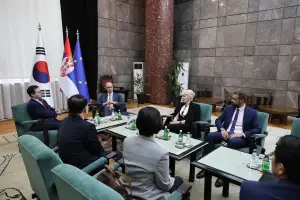 Belgrade, 5 June 2026
Deepening economic partnership between Serbia, Republic of Korea
-
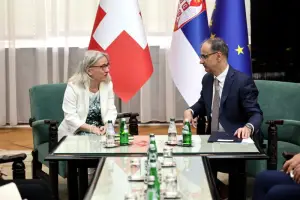 Belgrade, 5 June 2026
Additional strengthening of bilateral relations between Serbia, Switzerland
-
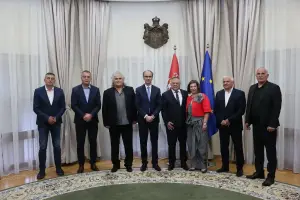 Belgrade, 4 June 2026
Support for regular, stable water supply in underdeveloped municipalities
-
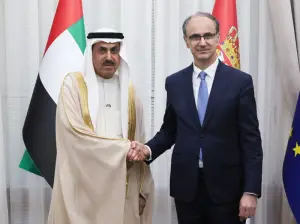 Belgrade, 4 June 2026
Successfully implemented projects with UAE confirm good bilateral relations
-
 Belgrade, 2 June 2026
Serbia committed to political empowerment of women
-
 Belgrade, 2 June 2026
Intensifying activities to meet obligations from Reform Agenda
-
 Belgrade, 2 June 2026
Macut hands resolutions to support development of traditional, artistic crafts
-
 Niš, 1 June 2026
State a partner that listens to citizens, solves their problems