
Q:
A:
Search for missing persons in Kosovo-Metohija hindered
Belgrade,
7 July 2008
President of the Serbian government’s Commission for missing persons Veljko Odalovic said that this body is doing everything to find the missing persons in the region, but that process has been hindered lately in Kosovo-Metohija due to newly-emerged circumstances.
Speaking at a roundtable meeting organised by the Belgrade-based Coordination of Serbian associations of families of missing persons from the territory of the former Yugoslavia, Odalovic said that Kosovo-Metohija’s unilateral proclamation of independence and actions of international and Kosovo institutions formally do not mean anything for Serbia, however, they create problems in the field.
He said that the Commission has so far managed to maintain the continuity of activities through a working group run by the UN and 1,300 missing persons’ cases have been solved in that way so far.
However, now we are worried by the attitude of the international community and its mission in Kosovo, because if they transfer this task to institutions of the fake state of Kosovo, it will be very difficult for us to establish cooperation with them, Odalovic explained.
Speaking about cooperation with former Yugoslav republics, Odalovic said that contacts have been established recently with the Montenegrin commission for the missing.
In Bosnia and Herzegovina, we still have not managed to establish full cooperation. We have excellent coordination with the Commission of Republika Srpska, and in Croatia, although we signed bilateral agreements, we are worried by the slowness of exhumations and opening of graves whose locations are known, Odalovic said.
Odalovic said that Zagreb knows locations containing 500 buried bodies, and a particular problem is the large number of bodies that have been found, but are still unidentified.
He said that Pristina knows the locations of 400 bodies, Bosnia and Herzegovina of 600 bodies, but a large number of them are waiting for identification.
That is a serious problem since many families have given blood samples, but they still have not received any results concerning identification, Odalovic explained.
He referred to another two moments that are obstructing this process, instead of leading to stabilisation in the region, and they are the acquittals of Naser Oric and Ramus Haradinaj by the International Criminal Tribunal for the former Yugoslavia (ICTY), and statements of former ICTY Chief Prosecutor Carla del Ponte on trafficking in human organs and her claims that a large number of missing Serbs ended up in Albania.
Odalovic believes that a further investigation during Carla Del Ponte’s mandate would have led to the top of the Kosovo Liberation Army and representatives of the UNMIK administration in Kosovo, but that was too tall an order even for her.
That appalled the entire public and the families of the missing, but in all that, the good thing was that the Parliamentary Assembly of the Council of Europe appointed a rapporteur for this problem, Odalovic said.
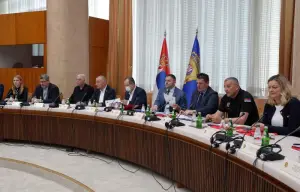
The roundtable "Search for the missing persons and the rights of their families” brought together associations from Bosnia and Herzegovina, Republika Srpska, Montenegro and the International Committee of the Red Cross.
He said that the Commission has so far managed to maintain the continuity of activities through a working group run by the UN and 1,300 missing persons’ cases have been solved in that way so far.
However, now we are worried by the attitude of the international community and its mission in Kosovo, because if they transfer this task to institutions of the fake state of Kosovo, it will be very difficult for us to establish cooperation with them, Odalovic explained.
Speaking about cooperation with former Yugoslav republics, Odalovic said that contacts have been established recently with the Montenegrin commission for the missing.
In Bosnia and Herzegovina, we still have not managed to establish full cooperation. We have excellent coordination with the Commission of Republika Srpska, and in Croatia, although we signed bilateral agreements, we are worried by the slowness of exhumations and opening of graves whose locations are known, Odalovic said.
Odalovic said that Zagreb knows locations containing 500 buried bodies, and a particular problem is the large number of bodies that have been found, but are still unidentified.
He said that Pristina knows the locations of 400 bodies, Bosnia and Herzegovina of 600 bodies, but a large number of them are waiting for identification.
That is a serious problem since many families have given blood samples, but they still have not received any results concerning identification, Odalovic explained.
He referred to another two moments that are obstructing this process, instead of leading to stabilisation in the region, and they are the acquittals of Naser Oric and Ramus Haradinaj by the International Criminal Tribunal for the former Yugoslavia (ICTY), and statements of former ICTY Chief Prosecutor Carla del Ponte on trafficking in human organs and her claims that a large number of missing Serbs ended up in Albania.
Odalovic believes that a further investigation during Carla Del Ponte’s mandate would have led to the top of the Kosovo Liberation Army and representatives of the UNMIK administration in Kosovo, but that was too tall an order even for her.
That appalled the entire public and the families of the missing, but in all that, the good thing was that the Parliamentary Assembly of the Council of Europe appointed a rapporteur for this problem, Odalovic said.
The roundtable "Search for the missing persons and the rights of their families” brought together associations from Bosnia and Herzegovina, Republika Srpska, Montenegro and the International Committee of the Red Cross.
-
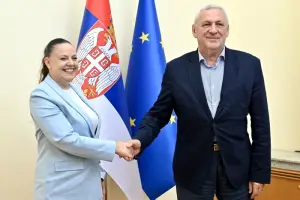 Belgrade, 5 June 2026
Cooperation with North Macedonia in field of innovation
-
 Belgrade/Baku, 5 June 2026
Serbia takes over hosting of World Environment Day 2027
-
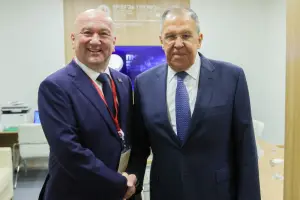 Belgrade/Saint Petersburg, 4 June 2026
Readiness to improve cooperation with Russia in areas of mutual interest
-
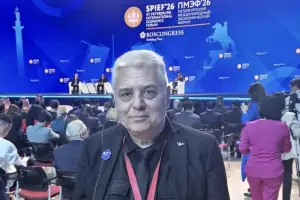 Belgrade/Saint Petersburg, 4 June 2026
Strengthening Serbia’s position in contemporary digital environment
-
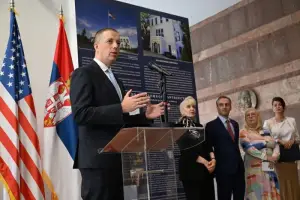 Belgrade, 4 June 2026
Serbia, US building partnership aimed at future, shared prosperity
-
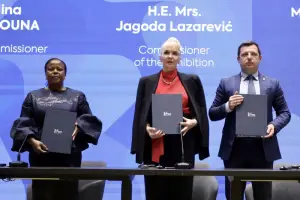 Belgrade, 3 June 2026
Contract on Gabon’s participation in Expo 2027 signed
-
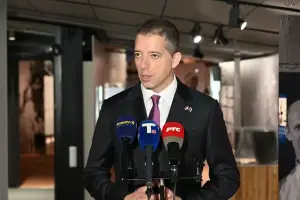 Belgrade/Helsinki, 3 June 2026
Serbia stands for peace, cooperation, respect for international law
-
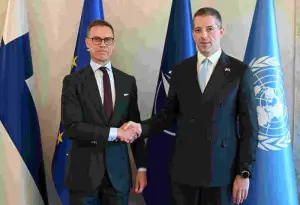 Belgrade/Helsinki, 2 June 2026
Great potential for strengthening economic ties with Finland
-
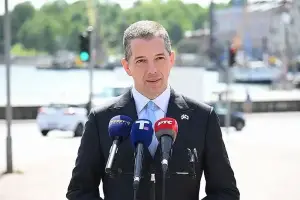 Belgrade/Helsinki, 2 June 2026
Finland confirms strong support for Serbia’s European future
-
 Belgrade, 1 June 2026
Coordination of services to reduce risks from extreme weather events