
Q:
A:
Regional meeting on chemical weapons begins in Belgrade
Belgrade,
3 June 2008
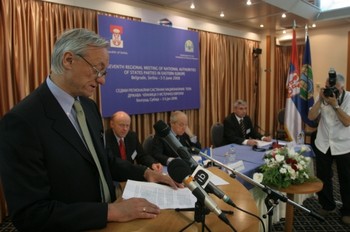
State Secretary of Foreign Affairs Radojko Bogojevic opened today in Belgrade the 7th regional meeting of national bodies for member states of the Organisation for the Prohibition of Chemical Weapons (OPCW) from South-eastern Europe.
Author:
Tanjug
Bogojevic stressed that Serbia is striving to efficiently implement the Convention on the Prohibition of Chemical Weapons, and that by adopting the necessary laws and regulations it has created a legal framework for its implementation.
According to him, Belgrade’s stance is that apart from the multilateral approach, OPCW members should also focus on full exploitation of regional capacities and know-how.
Together with other Western Balkan countries, Serbia began the process of regional cooperation with the aim of implementing the convention, said Bogojevic and recalled that at meetings, held in Sarajevo and Podgorica, countries from the region showed they are determined to increase cooperation, particularly when it comes to the import/export and transport of chemicals included in the convention.
He stressed that the next four years will be crucial to the future of this document and said that additional efforts must be employed to make sure that the convention is signed by all UN members.
OPCW General Director Rogelio Pfirter noted that 11 countries have not signed the convention and voiced hope that this will soon be done by Lebanon, Iraq, Dominican Republic and Somalia.
Pfirter explained that it is not enough to create a legal framework for the implementation of the convention, but that it is necessary to fulfil measures envisaged in this document on a daily basis.
Participants of the 7th regional meeting will tomorrow visit a training centre in Krusevac.
Since 1997, the Convention on the Prohibition of Chemical Weapons has been ratified by 184 countries, and among those who have not done so yet are the Bahamas, the Dominican Republic, Israel and Myanmar. The document has not been signed by Angola, North Korea, Egypt, Iraq, Lebanon, Somalia and Syria.
According to him, Belgrade’s stance is that apart from the multilateral approach, OPCW members should also focus on full exploitation of regional capacities and know-how.
Together with other Western Balkan countries, Serbia began the process of regional cooperation with the aim of implementing the convention, said Bogojevic and recalled that at meetings, held in Sarajevo and Podgorica, countries from the region showed they are determined to increase cooperation, particularly when it comes to the import/export and transport of chemicals included in the convention.
He stressed that the next four years will be crucial to the future of this document and said that additional efforts must be employed to make sure that the convention is signed by all UN members.
OPCW General Director Rogelio Pfirter noted that 11 countries have not signed the convention and voiced hope that this will soon be done by Lebanon, Iraq, Dominican Republic and Somalia.
Pfirter explained that it is not enough to create a legal framework for the implementation of the convention, but that it is necessary to fulfil measures envisaged in this document on a daily basis.
Participants of the 7th regional meeting will tomorrow visit a training centre in Krusevac.
Since 1997, the Convention on the Prohibition of Chemical Weapons has been ratified by 184 countries, and among those who have not done so yet are the Bahamas, the Dominican Republic, Israel and Myanmar. The document has not been signed by Angola, North Korea, Egypt, Iraq, Lebanon, Somalia and Syria.
-
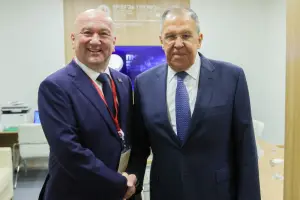 Belgrade/Saint Petersburg, 4 June 2026
Readiness to improve cooperation with Russia in areas of mutual interest
-
 Belgrade/Saint Petersburg, 4 June 2026
Strengthening Serbia’s position in contemporary digital environment
-
 Belgrade, 4 June 2026
Serbia, US building partnership aimed at future, shared prosperity
-
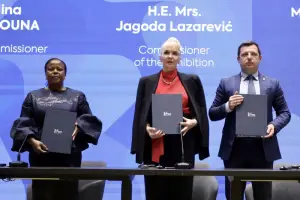 Belgrade, 3 June 2026
Contract on Gabon’s participation in Expo 2027 signed
-
 Belgrade/Helsinki, 3 June 2026
Serbia stands for peace, cooperation, respect for international law
-
 Belgrade/Helsinki, 2 June 2026
Great potential for strengthening economic ties with Finland
-
 Belgrade/Helsinki, 2 June 2026
Finland confirms strong support for Serbia’s European future
-
 Belgrade, 1 June 2026
Coordination of services to reduce risks from extreme weather events
-
 Belgrade, 31 May 2026
Ceremonial academy held to mark Ministry of the Interior Day, Police Day
-
 Belgrade/Bratislava, 30 May 2026
High level of partnership, trust between Serbia, Slovakia