Q:
A:
Loncar points to respect of children’s rights in Kosovo-Metohija
Belgrade/Geneva,
27 May 2008
Serbian Minister of Education Zoran Loncar presented in Geneva the initial report on the implementation of the Convention on the Rights of the Child in Serbia from 1992 to 2005 in which he particularly emphasised the problem of implementing the Convention in Kosovo-Metohija.
In his speech at the 48th session of the UN Committee on the Rights of the Child in Geneva, Loncar stressed that Serbian authorities are unable to implement the Convention in the province and supervise its implementation.
I must emphasise that the overall situation regarding human rights in Kosovo-Metohija is unsatisfactory and particularly disturbing because of the disrespect of basic human rights of members of non-Albanian communities, primarily Serbs and the Roma, said Loncar.
He said that on the basis of detailed information on the implementation of all relevant articles of the Convention in the province, as a constituting part of Serbia, the UN Committee on the Rights of the Child may contribute to the improvement of the rights of children.
According to him, improvement of the extremely difficult position of children from the Serbian and other non-Albanian communities in Kosovo-Metohija is crucial.
He recalled that the report on the implementation of the Convention refers to a complex period in Serbia’s history, but that regardless of the changes in the state’s leadership, Serbia has ensured a mechanism to protect human and minority rights and implement international agreements relating to them.
This primarily refers to the adoption of the Constitution of Serbia as an independent state in 2006, which guarantees a broad spectrum of human and minority rights, said Loncar and added that the country is ready to ensure a high level of these rights and cooperate with competent international bodies.
According to him, Serbia is particularly committed to the respect of the rights of the child and its laws include solutions and mechanisms for action which are in children’s best interest.
Loncar named several laws with respect to this – the Family law, the Law on the basis of the education system and the Law on underage perpetrators of crime and their legal protection.
He said that the Serbian government is ready to set up a system of coordinated activities at state level in the remit of protection and promotion of children’s rights and added that on May 16, 2002, the government founded the Council for the Rights of the Child.
According to him, the Council acts through various measures such as harmonisation of government policies in areas related to children and the young and monitoring the protection of the rights of the child.
The basis for all activities and measures is the National Action Plan for children, initialled and prepared by the Council for the Rights of the Child. The government adopted it in February 2004, added the Minister.
The plan is founded on four basic principles of the Convention – the right to life, survival and development, child’s best interests, protection against discrimination and the right to participation.
I must emphasise that the overall situation regarding human rights in Kosovo-Metohija is unsatisfactory and particularly disturbing because of the disrespect of basic human rights of members of non-Albanian communities, primarily Serbs and the Roma, said Loncar.
He said that on the basis of detailed information on the implementation of all relevant articles of the Convention in the province, as a constituting part of Serbia, the UN Committee on the Rights of the Child may contribute to the improvement of the rights of children.
According to him, improvement of the extremely difficult position of children from the Serbian and other non-Albanian communities in Kosovo-Metohija is crucial.
He recalled that the report on the implementation of the Convention refers to a complex period in Serbia’s history, but that regardless of the changes in the state’s leadership, Serbia has ensured a mechanism to protect human and minority rights and implement international agreements relating to them.
This primarily refers to the adoption of the Constitution of Serbia as an independent state in 2006, which guarantees a broad spectrum of human and minority rights, said Loncar and added that the country is ready to ensure a high level of these rights and cooperate with competent international bodies.
According to him, Serbia is particularly committed to the respect of the rights of the child and its laws include solutions and mechanisms for action which are in children’s best interest.
Loncar named several laws with respect to this – the Family law, the Law on the basis of the education system and the Law on underage perpetrators of crime and their legal protection.
He said that the Serbian government is ready to set up a system of coordinated activities at state level in the remit of protection and promotion of children’s rights and added that on May 16, 2002, the government founded the Council for the Rights of the Child.
According to him, the Council acts through various measures such as harmonisation of government policies in areas related to children and the young and monitoring the protection of the rights of the child.
The basis for all activities and measures is the National Action Plan for children, initialled and prepared by the Council for the Rights of the Child. The government adopted it in February 2004, added the Minister.
The plan is founded on four basic principles of the Convention – the right to life, survival and development, child’s best interests, protection against discrimination and the right to participation.
-
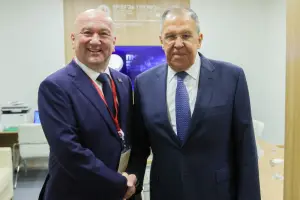 Belgrade/Saint Petersburg, 4 June 2026
Readiness to improve cooperation with Russia in areas of mutual interest
-
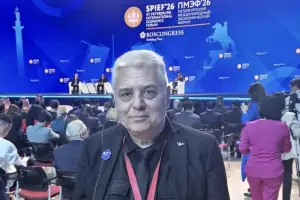 Belgrade/Saint Petersburg, 4 June 2026
Strengthening Serbia’s position in contemporary digital environment
-
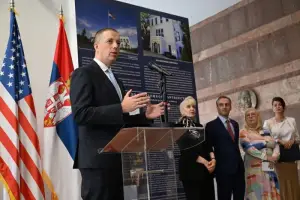 Belgrade, 4 June 2026
Serbia, US building partnership aimed at future, shared prosperity
-
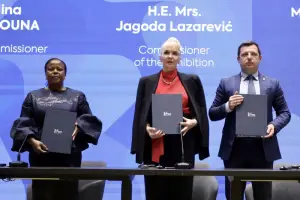 Belgrade, 3 June 2026
Contract on Gabon’s participation in Expo 2027 signed
-
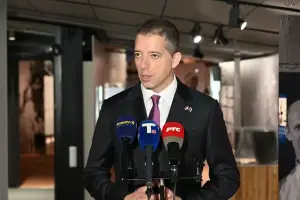 Belgrade/Helsinki, 3 June 2026
Serbia stands for peace, cooperation, respect for international law
-
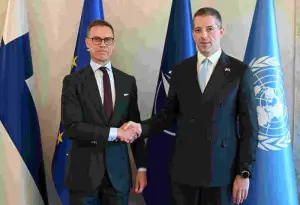 Belgrade/Helsinki, 2 June 2026
Great potential for strengthening economic ties with Finland
-
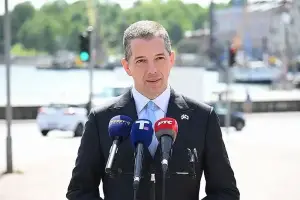 Belgrade/Helsinki, 2 June 2026
Finland confirms strong support for Serbia’s European future
-
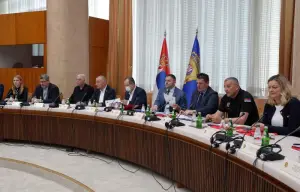 Belgrade, 1 June 2026
Coordination of services to reduce risks from extreme weather events
-
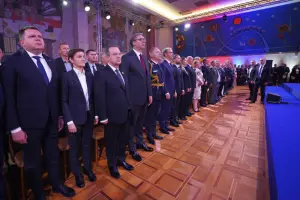 Belgrade, 31 May 2026
Ceremonial academy held to mark Ministry of the Interior Day, Police Day
-
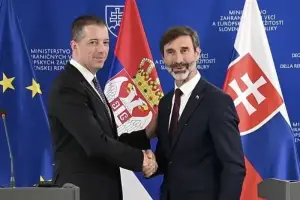 Belgrade/Bratislava, 30 May 2026
High level of partnership, trust between Serbia, Slovakia