Q:
A:
Serbia, Croatia must lead the region to EU membership
Belgrade/Zagreb,
27 May 2008
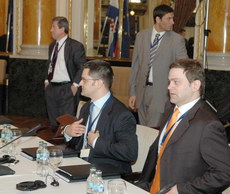
Serbian Minister of Foreign Affairs Vuk Jeremic stated today at a ministerial meeting of the Adriatic-Ionian Initiative in Zagreb that Serbia and Croatia must lead the region towards EU membership.
Author:
Fonet
In his speech at the meeting, Jeremic recalled that this has not always been the case.
I believe that Serbia and Croatia have a clear responsibility to jointly lead the region towards its European future. However, it has not always been so. Remember Vukovar and the tragic events that took place there. Remember the ethnic cleansing of more than a quarter million Serbs during the operation Storm in 1995, said Jeremic, adding that those were dark times which must never come again.
According to him, while not having forgotten past ordeals, Serbia and Croatia chose to concentrate on the future in which, together with other Western Balkan states, they will come together in the EU.
The Minister stressed that courage and vision are needed for something like that and that the results achieved are encouraging, because bilateral relations have greatly improved over the course of the past several years.
However, Croatia then decided to acknowledge the unilateral, illegal and illegitimate declaration of independence by Kosovo, which is an obvious breach of the UN Charter and the Helsinki Final Act, said Jeremic and added that thus the safety of the region has been brought into question.
As a way of surpassing the current state, Jeremic suggested going back to the principles of compromise, concession and consensus, as well as that the states in the region behave in accordance with the standards of the international system built on the basis of the UN Charter.
He stressed that Serbia will continue using all its political and diplomatic means to prevent Kosovo from becoming a part of the community of sovereign states and being granted the highest status of international legitimacy.
When the implications of this solution become obvious, I think that a new window of possibilities will open and pave the way to the beginning of true negotiations on Kosovo’s future status – negotiations that will last until a compromise is reached, added the Minister.
He noted that Serbia is determined to attain a historic compromise with Kosovo Albanians which will strengthen all democratic achievements and direct the entire region towards the EU.
In his speech, Jeremic emphasised the significance of cooperation within the Adriatic-Ionian Initiative in numerous fields such as traffic, tourism, culture, education and environmental protection, as well as the fight against forest fires, organised crime and grey economy.
He also endorsed the creation of the initiative’s Standing Secretariat and the mechanism for inter-university cooperation – UniAdrion.
Jeremic had bilateral talks with his Croatian counterpart Gordan Jandrokovic and other participants of the ministerial conference of the Adriatic-Ionian Initiative as well as with Serb representatives in Croatia.
After meeting with Jandrokovic, Jeremic told Tanjug that they discussed regional cooperation as well as cooperation between Serbia and Croatia.
They especially emphasised the importance of a Serbian consulate in Knin and entry of Serbian capital into Croatia.
There are some still open issues between Serbia and Croatia, and our capacity to work on their resolution has been diminished after Croatia recognised Kosovo, but we agreed to cooperate on issues of joint interest, said Jeremic.
According to him, Croatian capital in Serbia receives identical treatment as other investors, and therefore Serbia expects Serbian capital to be equally treated in Croatia.
The digits speak best, Jeremic said noting that Croatia is one of the most prosperous markets in the region.
Therefore, Serbian companies are interested in participating in the Croatian market in the same way Croatian capital is present in the Serbian market, noting that Croatian capital is welcome in Serbia.
In talks with Jandrokovic, Serb representatives, Croatian Deputy Prime Minister Slobodan Uzelac and president of the Serbian National Council Milorad Pupovac, Jeremic said that the two governments should cooperate on the problem of returnees. Jeremic suggested the opening of a Serbian consulate in Knin in a joint effort between the Serbian and Croatian authorities to speed up the returnees.
Speaking on the process before the International Court of Justice (ICJ) in The Hague, Jeremic recalled that the position of the Serbian legal team is that this court lacks jurisdiction as at that time the Federal Republic of Yugoslavia (FRY) was not a UN member, which was established in a ruling by the ICJ when FRY sued NATO countries for 1999 aggression.
I believe that Serbia and Croatia have a clear responsibility to jointly lead the region towards its European future. However, it has not always been so. Remember Vukovar and the tragic events that took place there. Remember the ethnic cleansing of more than a quarter million Serbs during the operation Storm in 1995, said Jeremic, adding that those were dark times which must never come again.
According to him, while not having forgotten past ordeals, Serbia and Croatia chose to concentrate on the future in which, together with other Western Balkan states, they will come together in the EU.
The Minister stressed that courage and vision are needed for something like that and that the results achieved are encouraging, because bilateral relations have greatly improved over the course of the past several years.
However, Croatia then decided to acknowledge the unilateral, illegal and illegitimate declaration of independence by Kosovo, which is an obvious breach of the UN Charter and the Helsinki Final Act, said Jeremic and added that thus the safety of the region has been brought into question.
As a way of surpassing the current state, Jeremic suggested going back to the principles of compromise, concession and consensus, as well as that the states in the region behave in accordance with the standards of the international system built on the basis of the UN Charter.
He stressed that Serbia will continue using all its political and diplomatic means to prevent Kosovo from becoming a part of the community of sovereign states and being granted the highest status of international legitimacy.
When the implications of this solution become obvious, I think that a new window of possibilities will open and pave the way to the beginning of true negotiations on Kosovo’s future status – negotiations that will last until a compromise is reached, added the Minister.
He noted that Serbia is determined to attain a historic compromise with Kosovo Albanians which will strengthen all democratic achievements and direct the entire region towards the EU.
In his speech, Jeremic emphasised the significance of cooperation within the Adriatic-Ionian Initiative in numerous fields such as traffic, tourism, culture, education and environmental protection, as well as the fight against forest fires, organised crime and grey economy.
He also endorsed the creation of the initiative’s Standing Secretariat and the mechanism for inter-university cooperation – UniAdrion.
Jeremic had bilateral talks with his Croatian counterpart Gordan Jandrokovic and other participants of the ministerial conference of the Adriatic-Ionian Initiative as well as with Serb representatives in Croatia.
After meeting with Jandrokovic, Jeremic told Tanjug that they discussed regional cooperation as well as cooperation between Serbia and Croatia.
They especially emphasised the importance of a Serbian consulate in Knin and entry of Serbian capital into Croatia.
There are some still open issues between Serbia and Croatia, and our capacity to work on their resolution has been diminished after Croatia recognised Kosovo, but we agreed to cooperate on issues of joint interest, said Jeremic.
According to him, Croatian capital in Serbia receives identical treatment as other investors, and therefore Serbia expects Serbian capital to be equally treated in Croatia.
The digits speak best, Jeremic said noting that Croatia is one of the most prosperous markets in the region.
Therefore, Serbian companies are interested in participating in the Croatian market in the same way Croatian capital is present in the Serbian market, noting that Croatian capital is welcome in Serbia.
In talks with Jandrokovic, Serb representatives, Croatian Deputy Prime Minister Slobodan Uzelac and president of the Serbian National Council Milorad Pupovac, Jeremic said that the two governments should cooperate on the problem of returnees. Jeremic suggested the opening of a Serbian consulate in Knin in a joint effort between the Serbian and Croatian authorities to speed up the returnees.
Speaking on the process before the International Court of Justice (ICJ) in The Hague, Jeremic recalled that the position of the Serbian legal team is that this court lacks jurisdiction as at that time the Federal Republic of Yugoslavia (FRY) was not a UN member, which was established in a ruling by the ICJ when FRY sued NATO countries for 1999 aggression.
-
 Belgrade/Saint Petersburg, 4 June 2026
Readiness to improve cooperation with Russia in areas of mutual interest
-
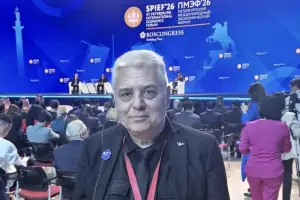 Belgrade/Saint Petersburg, 4 June 2026
Strengthening Serbia’s position in contemporary digital environment
-
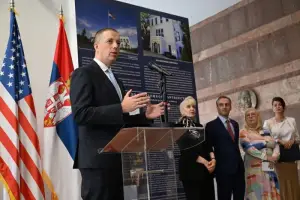 Belgrade, 4 June 2026
Serbia, US building partnership aimed at future, shared prosperity
-
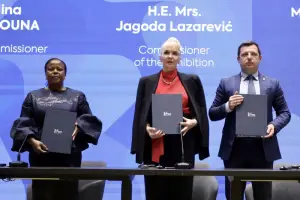 Belgrade, 3 June 2026
Contract on Gabon’s participation in Expo 2027 signed
-
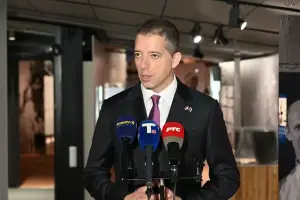 Belgrade/Helsinki, 3 June 2026
Serbia stands for peace, cooperation, respect for international law
-
 Belgrade/Helsinki, 2 June 2026
Great potential for strengthening economic ties with Finland
-
 Belgrade/Helsinki, 2 June 2026
Finland confirms strong support for Serbia’s European future
-
 Belgrade, 1 June 2026
Coordination of services to reduce risks from extreme weather events
-
 Belgrade, 31 May 2026
Ceremonial academy held to mark Ministry of the Interior Day, Police Day
-
 Belgrade/Bratislava, 30 May 2026
High level of partnership, trust between Serbia, Slovakia