
Q:
A:
Serbia signs multilateral agreement on implementation of Espoo Convention
Bucharest/Belgrade,
20 May 2008
Serbian Minister of Environmental Protection Sasa Dragin signed today in Bucharest a multilateral agreement between southeastern European countries on the implementation of the Espoo Convention on Environmental Impact Assessment (EIA).
The agreement was signed within the framework of a conference of countries which are signatory to the Espoo Convention on Environmental Impact Assessment in a Transboundary Context. Representatives of 45 countries are taking part in the conference.
In a statement to the news agency Beta, Dragin said that the multilateral agreement is an important instrument for promoting sustainable growth and strengthening regional cooperation in environmental protection in sub-border and border zones.
He said that the agreement is a framework for cooperation between southeastern European countries in the area of prevention of pollution in transborder zones, and defines procedures and methods for informing neighbouring countries in case of environmental risks.
The Multilateral agreement was signed by Serbia, Montenegro, Bosnia and Herzegovina, Greece, Croatia, Macedonia, Albania, Bulgaria and Romania.
Dragin said that he reached an agreement in Bucharest with Romanian Minister of Environmental Protection Atilla Korodi on boosting cooperation and said that he will sign a bilateral memorandum tomorrow that envisages cooperation with sub-border and border zones in preventing possible accidents.
The minister said that Serbia proposed, and Romania accepted, that they work together on establishing joint regulation measures for monitoring environment conditions in border areas and making interventions in case of accidents.
The above-mentioned convention was adopted in 1991 in the Finnish town of Espoo, and was officially accepted in 1997 when it was ratified by 16 countries. By late 2007, the convention was ratified by 42 countries, including Serbia, which ratified it in December 2007.
In a statement to the news agency Beta, Dragin said that the multilateral agreement is an important instrument for promoting sustainable growth and strengthening regional cooperation in environmental protection in sub-border and border zones.
He said that the agreement is a framework for cooperation between southeastern European countries in the area of prevention of pollution in transborder zones, and defines procedures and methods for informing neighbouring countries in case of environmental risks.
The Multilateral agreement was signed by Serbia, Montenegro, Bosnia and Herzegovina, Greece, Croatia, Macedonia, Albania, Bulgaria and Romania.
Dragin said that he reached an agreement in Bucharest with Romanian Minister of Environmental Protection Atilla Korodi on boosting cooperation and said that he will sign a bilateral memorandum tomorrow that envisages cooperation with sub-border and border zones in preventing possible accidents.
The minister said that Serbia proposed, and Romania accepted, that they work together on establishing joint regulation measures for monitoring environment conditions in border areas and making interventions in case of accidents.
The above-mentioned convention was adopted in 1991 in the Finnish town of Espoo, and was officially accepted in 1997 when it was ratified by 16 countries. By late 2007, the convention was ratified by 42 countries, including Serbia, which ratified it in December 2007.
-
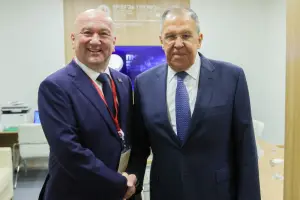 Belgrade/Saint Petersburg, 4 June 2026
Readiness to improve cooperation with Russia in areas of mutual interest
-
 Belgrade/Saint Petersburg, 4 June 2026
Strengthening Serbia’s position in contemporary digital environment
-
 Belgrade, 4 June 2026
Serbia, US building partnership aimed at future, shared prosperity
-
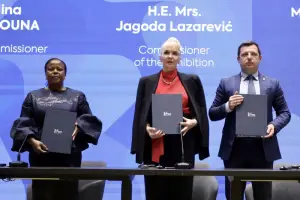 Belgrade, 3 June 2026
Contract on Gabon’s participation in Expo 2027 signed
-
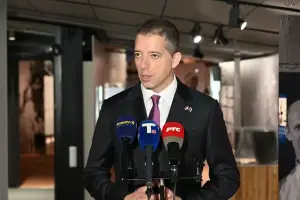 Belgrade/Helsinki, 3 June 2026
Serbia stands for peace, cooperation, respect for international law
-
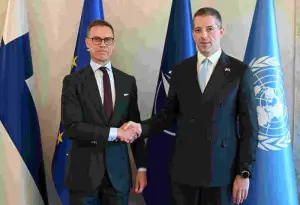 Belgrade/Helsinki, 2 June 2026
Great potential for strengthening economic ties with Finland
-
 Belgrade/Helsinki, 2 June 2026
Finland confirms strong support for Serbia’s European future
-
 Belgrade, 1 June 2026
Coordination of services to reduce risks from extreme weather events
-
 Belgrade, 31 May 2026
Ceremonial academy held to mark Ministry of the Interior Day, Police Day
-
 Belgrade/Bratislava, 30 May 2026
High level of partnership, trust between Serbia, Slovakia