
Q:
A:
Serbia’s candidacy for EU possible by year's end
Belgrade,
13 May 2008
Director of the EU Integration Office Tanja Miscevic said today that Serbia could get candidacy for EU membership by the end of the year, which will provide it with funds worth several hundred million euros.
Miscevic told the Beta news agency that ratification of the Stabilisation and Association Agreement (SAA) will not be a precondition for candidacy, but added that the document will have to be ratified by Serbian parliament.
Once the new government sends the bill on ratification of the SAA to the newly-established parliament, the government should state in one of its next sessions that it wants to apply for candidate status, Miscevic explained.
She said those documents stating Serbia’s reasons for applying for membership should be prepared as well as a document showing that parliament supports the country's EU candidacy, which would be sent to the Secretariat of the EU Council of Ministers.
Miscevic explained that after that, the Council of Ministers authorises the European Commission to formulate a wide-spanning questionnaire for the Serbian government.
She pointed out that the Serbian government then replies to the questionnaire and the European Commission then gives recommendations to give the country candidate status, after which the date for starting membership negotiations is set.
Miscevic said that between the phase of getting candidate status and the opening of negotiations on membership is the phase of checking Serbian legislation, or the “screening process”.
The European Commission organises an examination of acquis communautaire, and provides information about the content and significance of laws in 35 negotiation chapters, said Miscevic.
According to Miscevic, in that second phase Serbia will be able to say whether or not it will include certain EU standards in legislation at the time of joining the EU, but to ask for additional time (a transition period) for their introduction.
She said that when Serbia acquires candidate status, it will be able to utilise IPA funds in all five components; currently the funds are available only in the first two components – institution building and regional cooperation.
Miscevic said that achieving candidate status will provide access to other components, including infrastructure and rural development, and recalled that Serbia now receives between €190 million to €200 million from the EU.
She stressed that a country with candidate status receives three times more funds, and in some cases even up to ten times more.
Once the new government sends the bill on ratification of the SAA to the newly-established parliament, the government should state in one of its next sessions that it wants to apply for candidate status, Miscevic explained.
She said those documents stating Serbia’s reasons for applying for membership should be prepared as well as a document showing that parliament supports the country's EU candidacy, which would be sent to the Secretariat of the EU Council of Ministers.
Miscevic explained that after that, the Council of Ministers authorises the European Commission to formulate a wide-spanning questionnaire for the Serbian government.
She pointed out that the Serbian government then replies to the questionnaire and the European Commission then gives recommendations to give the country candidate status, after which the date for starting membership negotiations is set.
Miscevic said that between the phase of getting candidate status and the opening of negotiations on membership is the phase of checking Serbian legislation, or the “screening process”.
The European Commission organises an examination of acquis communautaire, and provides information about the content and significance of laws in 35 negotiation chapters, said Miscevic.
According to Miscevic, in that second phase Serbia will be able to say whether or not it will include certain EU standards in legislation at the time of joining the EU, but to ask for additional time (a transition period) for their introduction.
She said that when Serbia acquires candidate status, it will be able to utilise IPA funds in all five components; currently the funds are available only in the first two components – institution building and regional cooperation.
Miscevic said that achieving candidate status will provide access to other components, including infrastructure and rural development, and recalled that Serbia now receives between €190 million to €200 million from the EU.
She stressed that a country with candidate status receives three times more funds, and in some cases even up to ten times more.
-
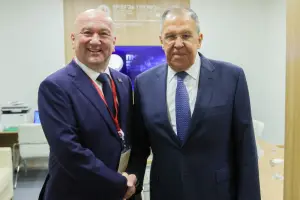 Belgrade/Saint Petersburg, 4 June 2026
Readiness to improve cooperation with Russia in areas of mutual interest
-
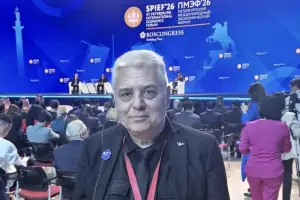 Belgrade/Saint Petersburg, 4 June 2026
Strengthening Serbia’s position in contemporary digital environment
-
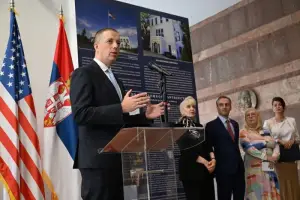 Belgrade, 4 June 2026
Serbia, US building partnership aimed at future, shared prosperity
-
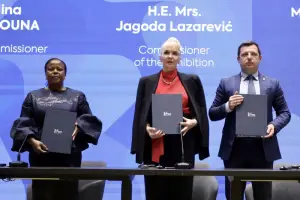 Belgrade, 3 June 2026
Contract on Gabon’s participation in Expo 2027 signed
-
 Belgrade/Helsinki, 3 June 2026
Serbia stands for peace, cooperation, respect for international law
-
 Belgrade/Helsinki, 2 June 2026
Great potential for strengthening economic ties with Finland
-
 Belgrade/Helsinki, 2 June 2026
Finland confirms strong support for Serbia’s European future
-
 Belgrade, 1 June 2026
Coordination of services to reduce risks from extreme weather events
-
 Belgrade, 31 May 2026
Ceremonial academy held to mark Ministry of the Interior Day, Police Day
-
 Belgrade/Bratislava, 30 May 2026
High level of partnership, trust between Serbia, Slovakia