
Q:
A:
Improving local self-government priority in EU integration process
Belgrade,
9 May 2008
Director of the EU Integration Office Tanja Miscevic said today that building the administrative capacities of local self-governments is one of the most important tasks in the process of Serbia’s European integration.
Speaking at a panel discussion titled, “The role of local self-government in the process of joining the EU”, she stressed that a large part of the legal norms, which Serbia is beginning to harmonise with EU regulations, regard local administration and citizens who are closest to the institution of local self-government.
She said that there are large differences between certain municipalities in Serbia in the level of development, and one of the reasons for slower local development is inadequate development of administrative capacities.
According to her, for local administration to be able to respond to great needs and requirements by the citizens, its staff must be trained as they are in the EU, where town twinning projects can be very beneficial.
The EU supports the twinning projects and its member states are very interested in supporting municipalities and regions in non-member countries, said Miscevic.
She said that as part of these projects, local administration servants get visas free of charge and under a fast-track procedure.
The panel is part of the fair of civil society organisations organised by the Agency for cooperation with NGOs and European harmonisation from May 7 to 9.
She said that there are large differences between certain municipalities in Serbia in the level of development, and one of the reasons for slower local development is inadequate development of administrative capacities.
According to her, for local administration to be able to respond to great needs and requirements by the citizens, its staff must be trained as they are in the EU, where town twinning projects can be very beneficial.
The EU supports the twinning projects and its member states are very interested in supporting municipalities and regions in non-member countries, said Miscevic.
She said that as part of these projects, local administration servants get visas free of charge and under a fast-track procedure.
The panel is part of the fair of civil society organisations organised by the Agency for cooperation with NGOs and European harmonisation from May 7 to 9.
-
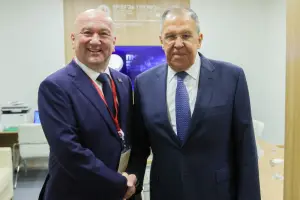 Belgrade/Saint Petersburg, 4 June 2026
Readiness to improve cooperation with Russia in areas of mutual interest
-
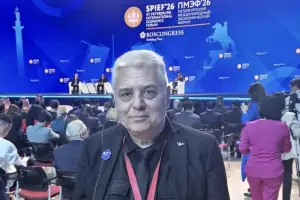 Belgrade/Saint Petersburg, 4 June 2026
Strengthening Serbia’s position in contemporary digital environment
-
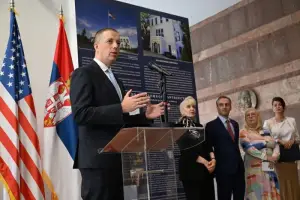 Belgrade, 4 June 2026
Serbia, US building partnership aimed at future, shared prosperity
-
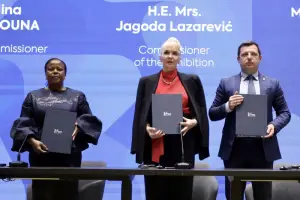 Belgrade, 3 June 2026
Contract on Gabon’s participation in Expo 2027 signed
-
 Belgrade/Helsinki, 3 June 2026
Serbia stands for peace, cooperation, respect for international law
-
 Belgrade/Helsinki, 2 June 2026
Great potential for strengthening economic ties with Finland
-
 Belgrade/Helsinki, 2 June 2026
Finland confirms strong support for Serbia’s European future
-
 Belgrade, 1 June 2026
Coordination of services to reduce risks from extreme weather events
-
 Belgrade, 31 May 2026
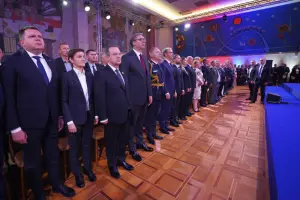
Ceremonial academy held to mark Ministry of the Interior Day, Police Day
-
 Belgrade/Bratislava, 30 May 2026
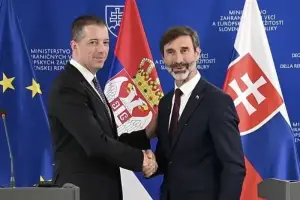
High level of partnership, trust between Serbia, Slovakia