
Q:
A:
Investment in education a precondition for country’s development
Belgrade,
18 April 2008
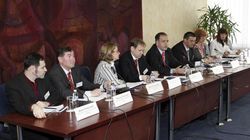
Serbian Minister of Education Zoran Loncar said today that investing in education is one of the preconditions for the country’s economic development and does not represent expenditure, but an investment in the future.
Author:
Fonet
In a closing conference on programme to reform secondary vocational education – CARDS 2, Loncar said that one of the basic preconditions for economic development is to create new experts and train them for their future positions.
The Minister said that Serbia’s cooperation with the EU on this programme confirms that Serbia is part of Europe and stressed that education in Serbia will be an integral part of the uniform European educational space much earlier than other areas of life.
According to him, Serbia needs contemporary education easily applicable in practice; therefore investments in education will be an important task of the future government.
Loncar recalled that one of the priorities in education reform after 2001 has been to create new investments, modernise the curriculum, introduce new profiles, vocations and legal changes and to draft strategies for the development of education.
Through the European Agency for Reconstruction, the EU has set aside around €6 million for the second stage of the CARDS programme.
During this stage, eight experimental vocations have been introduced in 22 schools.
New programmes are the result of demands in the labour market which require new knowledge and skills and the improvement of the current ones.
The Ministry’s newly-founded Innovation Fund directly included secondary schools, universities, chambers of commerce, unions, local authorities and NGOs to support the CARDS programme.
During its realisation, the EU has invested in the procurement of equipment and computers, and announced that it will keep endorsing the reform of secondary education through IPA funds.
The EU has so far extended around €20 million for the reform of secondary vocational education through programmes CARDS 2003 and CARDS 2005.
The Minister said that Serbia’s cooperation with the EU on this programme confirms that Serbia is part of Europe and stressed that education in Serbia will be an integral part of the uniform European educational space much earlier than other areas of life.
According to him, Serbia needs contemporary education easily applicable in practice; therefore investments in education will be an important task of the future government.
Loncar recalled that one of the priorities in education reform after 2001 has been to create new investments, modernise the curriculum, introduce new profiles, vocations and legal changes and to draft strategies for the development of education.
Through the European Agency for Reconstruction, the EU has set aside around €6 million for the second stage of the CARDS programme.
During this stage, eight experimental vocations have been introduced in 22 schools.
New programmes are the result of demands in the labour market which require new knowledge and skills and the improvement of the current ones.
The Ministry’s newly-founded Innovation Fund directly included secondary schools, universities, chambers of commerce, unions, local authorities and NGOs to support the CARDS programme.
During its realisation, the EU has invested in the procurement of equipment and computers, and announced that it will keep endorsing the reform of secondary education through IPA funds.
The EU has so far extended around €20 million for the reform of secondary vocational education through programmes CARDS 2003 and CARDS 2005.
-
 Belgrade, 3 June 2026
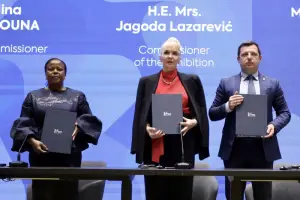
Contract on Gabon’s participation in Expo 2027 signed
-
 Belgrade/Helsinki, 3 June 2026
Serbia stands for peace, cooperation, respect for international law
-
 Belgrade/Helsinki, 2 June 2026
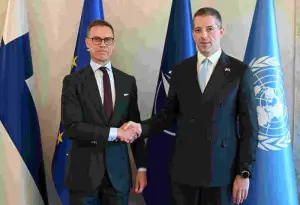
Great potential for strengthening economic ties with Finland
-
 Belgrade/Helsinki, 2 June 2026
Finland confirms strong support for Serbia’s European future
-
 Belgrade, 1 June 2026
Coordination of services to reduce risks from extreme weather events
-
 Belgrade, 31 May 2026
Ceremonial academy held to mark Ministry of the Interior Day, Police Day
-
 Belgrade/Bratislava, 30 May 2026
High level of partnership, trust between Serbia, Slovakia
-
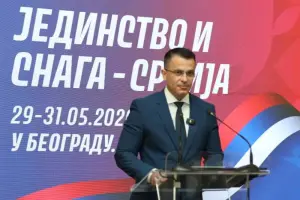 Belgrade, 30 May 2026
Vidovdan Assembly “Unity and Strength – Serbia” opens
-
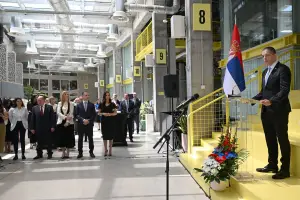 Belgrade, 29 May 2026
Serbia significantly strengthened its international position
-
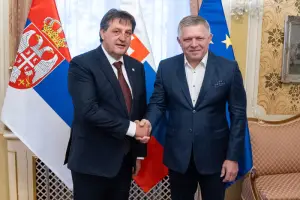 Belgrade/Bratislava, 29 May 2026
Serbia, Slovakia dedicated to strengthening cooperation in defence sector