
Q:
A:
Education policy must be harmonised with other priorities in society
Belgrade,
17 April 2008
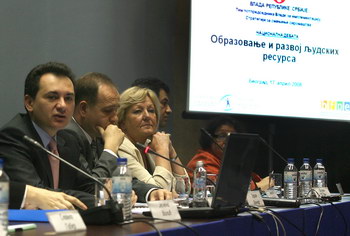
Serbian Deputy Prime Minister Bozidar Djelic said that Serbia is the only European country in which the number of people with higher education has dropped in the past 15 years and that almost half of its population has only elementary education, or none at all.
Author:
Tanjug
Speaking at a national debate "Education and Human Resource Development in Serbia" held in the Sava Centre, Djelic highlighted that only 7% of the population has university education, 22% of Serbian citizens over 15 years of age have incomplete elementary education, while 24% have elementary education only.
The situation is especially poor in rural areas and Roma settlements. Almost 20% of rural and one half of Roma children are never enrolled at schools. In Serbia, there are more than 1,000 schools with less than 100 pupils.
He said that the level of education in society, knowledge of foreign languages and people’s readiness to accept new ideas are important for the arrival of new investors to Serbia.
That is why it is necessary to define a development framework for education and harmonise the education policy with other priorities of society.
Minister of Education Zoran Loncar said that an overall social consensus on the development of education in Serbia should be reached, and highlighted that education must not be left to the mercy of political developments and election results.
Loncar stressed that one of the priorities of the new Serbian government should be the adoption of a national education strategy.
Every year less and less students enrol in secondary schools in Serbia, around 10,000 students to be precise; therefore they should be additionally encouraged to continue with secondary education.
The debate was organised by the Deputy Prime Minister’s team for implementation of the Poverty Reduction Strategy and the Belgrade Fund for Political Excellence.
All development strategies in Serbia see the improvement of education as a key priority for the country’s economic and social development.
At the same time, the importance of human resources and education in developing documents of EU member states is increasing.
The third national debate should raise the key issues related to the development of human resources in Serbia, problems in the educational system, as well as measures to improve education through strategic documents.
This is the third gathering within a wider programme of public debates, whose goal is to initiate national discussions on Serbia’s key development priorities and future directions of its social and economic development. Previously held debates were themed “Population, Population Policy and Development” (October 2, 2007) and “Strategic Guidelines for Rural Development in Serbia” (February 26, 2008).
The situation is especially poor in rural areas and Roma settlements. Almost 20% of rural and one half of Roma children are never enrolled at schools. In Serbia, there are more than 1,000 schools with less than 100 pupils.
He said that the level of education in society, knowledge of foreign languages and people’s readiness to accept new ideas are important for the arrival of new investors to Serbia.
That is why it is necessary to define a development framework for education and harmonise the education policy with other priorities of society.
Minister of Education Zoran Loncar said that an overall social consensus on the development of education in Serbia should be reached, and highlighted that education must not be left to the mercy of political developments and election results.
Loncar stressed that one of the priorities of the new Serbian government should be the adoption of a national education strategy.
Every year less and less students enrol in secondary schools in Serbia, around 10,000 students to be precise; therefore they should be additionally encouraged to continue with secondary education.
The debate was organised by the Deputy Prime Minister’s team for implementation of the Poverty Reduction Strategy and the Belgrade Fund for Political Excellence.
All development strategies in Serbia see the improvement of education as a key priority for the country’s economic and social development.
At the same time, the importance of human resources and education in developing documents of EU member states is increasing.
The third national debate should raise the key issues related to the development of human resources in Serbia, problems in the educational system, as well as measures to improve education through strategic documents.
This is the third gathering within a wider programme of public debates, whose goal is to initiate national discussions on Serbia’s key development priorities and future directions of its social and economic development. Previously held debates were themed “Population, Population Policy and Development” (October 2, 2007) and “Strategic Guidelines for Rural Development in Serbia” (February 26, 2008).
-
 Belgrade, 3 June 2026
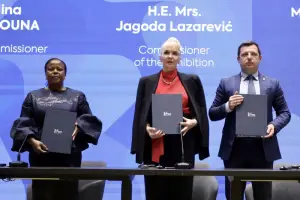
Contract on Gabon’s participation in Expo 2027 signed
-
 Belgrade/Helsinki, 3 June 2026
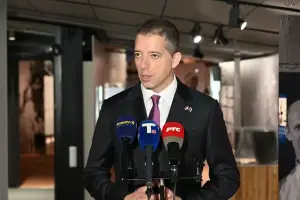
Serbia stands for peace, cooperation, respect for international law
-
 Belgrade/Helsinki, 2 June 2026
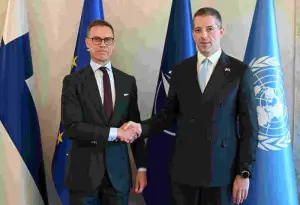
Great potential for strengthening economic ties with Finland
-
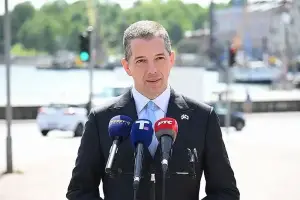 Belgrade/Helsinki, 2 June 2026
Finland confirms strong support for Serbia’s European future
-
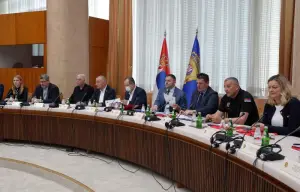 Belgrade, 1 June 2026
Coordination of services to reduce risks from extreme weather events
-
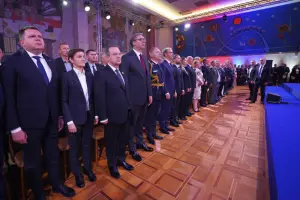 Belgrade, 31 May 2026
Ceremonial academy held to mark Ministry of the Interior Day, Police Day
-
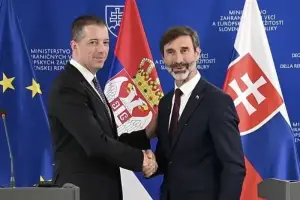 Belgrade/Bratislava, 30 May 2026
High level of partnership, trust between Serbia, Slovakia
-
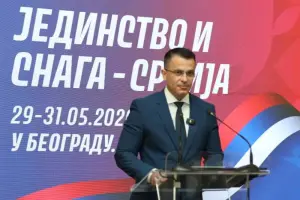 Belgrade, 30 May 2026
Vidovdan Assembly “Unity and Strength – Serbia” opens
-
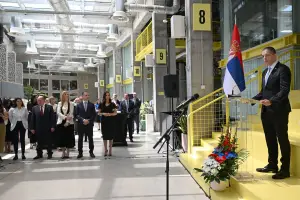 Belgrade, 29 May 2026
Serbia significantly strengthened its international position
-
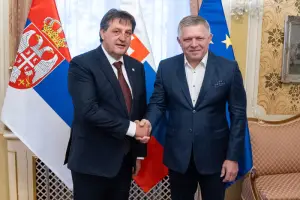 Belgrade/Bratislava, 29 May 2026
Serbia, Slovakia dedicated to strengthening cooperation in defence sector