
Q:
A:
Not too late to find compromise solution for Kosovo-Metohija
Belgrade/Washington,
15 April 2008
Serbian Deputy Prime Minister Bozidar Djelic said late yesterday in Washington that Serbia believes that it is not late to find a compromise solution for Kosovo-Metohija through multilateral talks that would be led by the US.
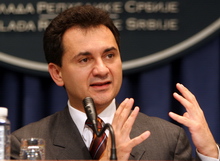
At a lecture at the department for foreign policy studies of the Johns Hopkins University, Djelic said that the one-sided and unbalanced policy of the Washington administration is the main culprit for Kosovo’s independence, which Belgrade will never accept. The US pressured many European countries to unwillingly recognise the unilateral proclamation of independence by Pristina.
He said that parliamentary elections scheduled for May 11 are the greatest challenge for Serbia since the fall of Slobodan Milosevic and they have wider, regional implications.
Speaking about Kosovo-Metohija, Djelic believes that putting equal pressure on Belgrade and Pristina would lead to a solution which would not isolate the province economically and socially, unlike the one being offered and which Belgrade opposes.
Serbia found itself in a tight spot between a strategic interest – EU membership and the fact that it looks upon its sovereignty and territorial integrity differently than some leading EU member states.
Djelic reiterated his readiness to sign the Stabilisation and Association Agreement on behalf of the Serbian government at the end of April, but said that he doubts that the Netherlands will desist from asking Serbia to first hand over Ratko Mladic to the International Criminal Tribunal for the Former Yugoslavia (ICTY) and then sign the SAA.
Our goal is to become an EU member between 2012 and 2014. Since we still have not signed the SAA, that might seem a little bit too ambitious, but I am sure that is feasible, Djelic said.
He said that the recent acquittal of former Kosovo Liberation Army commander Ramus Haradinaj by the ICTY has undermined the integrity of international justice.
No one can convince us that that trial was fair and free, the Serbian Deputy Prime Minister said, which however does not mean that Serbia will ignore its international obligations in the future.
At the lecture Djelic also spoke about the economic situation in Serbia and announced continuing economic growth, controlled inflation and creating space for the arrival of new investors in the most important sectors, such as agriculture, infrastructural projects, energy and telecommunications.
He said that parliamentary elections scheduled for May 11 are the greatest challenge for Serbia since the fall of Slobodan Milosevic and they have wider, regional implications.
Speaking about Kosovo-Metohija, Djelic believes that putting equal pressure on Belgrade and Pristina would lead to a solution which would not isolate the province economically and socially, unlike the one being offered and which Belgrade opposes.
Serbia found itself in a tight spot between a strategic interest – EU membership and the fact that it looks upon its sovereignty and territorial integrity differently than some leading EU member states.
Djelic reiterated his readiness to sign the Stabilisation and Association Agreement on behalf of the Serbian government at the end of April, but said that he doubts that the Netherlands will desist from asking Serbia to first hand over Ratko Mladic to the International Criminal Tribunal for the Former Yugoslavia (ICTY) and then sign the SAA.
Our goal is to become an EU member between 2012 and 2014. Since we still have not signed the SAA, that might seem a little bit too ambitious, but I am sure that is feasible, Djelic said.
He said that the recent acquittal of former Kosovo Liberation Army commander Ramus Haradinaj by the ICTY has undermined the integrity of international justice.
No one can convince us that that trial was fair and free, the Serbian Deputy Prime Minister said, which however does not mean that Serbia will ignore its international obligations in the future.
At the lecture Djelic also spoke about the economic situation in Serbia and announced continuing economic growth, controlled inflation and creating space for the arrival of new investors in the most important sectors, such as agriculture, infrastructural projects, energy and telecommunications.
-
 Belgrade, 22 July 2026
New opportunities for expanding economic cooperation between Serbia, China
-
 Belgrade, 20 July 2026
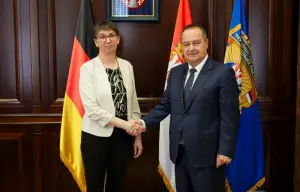
Cooperation in field of interior affairs important segment of relations with Germany
-
 Belgrade, 16 July 2026
Expo 2027 opportunity to further strengthen international partnerships
-
 Belgrade/Bratislava, 16 July 2026
Serbia, Slovakia continue to strengthen political, economic cooperation
-
 Belgrade, 14 July 2026
Serbia bilaterally resolves problems arising from EES implementation
-
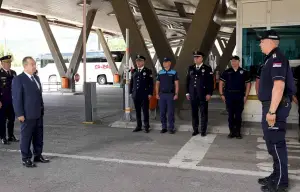 Gradina/Kalotina, 9 July 2026
Improving border cooperation between Serbia, Bulgaria
-
 Belgrade, 7 July 2026
Further strengthening economic cooperation between Serbia, Italy
-
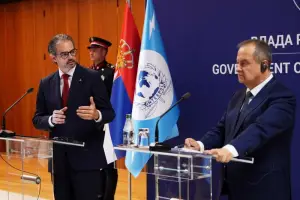 Belgrade, 6 July 2026
Serbia serious, responsible partner in fight against crime
-
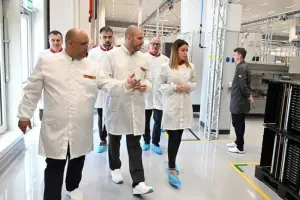 Kać, 3 July 2026
Additional foreign investment confirms confidence in Serbia
-
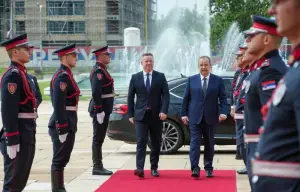 Belgrade, 3 July 2026
Serbia, Hungary reliable partners in maintaining security