
Q:
A:
Serbian cultural heritage in Kosovo seriously threatened
Paris/Belgrade,
7 April 2008
Serbian Minister of Foreign Affairs Vuk Jeremic said today in Paris that Serbian cultural heritage in Kosovo-Metohija is seriously threatened and expressed gratitude to UNESCO for efforts to safeguard Serbian cultural monuments.
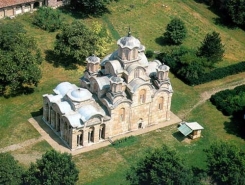
The UNESCO World Heritage List also includes the monastery of Gracanica in Kosovo-Metohija
Speaking at a session of UNESCO’s executive board in Paris, Jeremic said that attempts to destroy what others built a long time ago, with the idea that this would help promote an imagined version of history favoured by some, must be severely condemned.
He said that such attempts must clearly be identified for what they are – acts of fanaticism, revolting acts of cultural cleansing. He added that this is the dark and ugly reality in Kosovo which is sullying democracy in the West Balkans.
Not a single nation can build a joint future on the ashes of a vanished heritage, said the Minister, adding that protecting and safeguarding the cultural achievements of humanity is a great task for all of us, because our heritage is the foundation of our identity, the basis of our development, a means of reconciliation and instrumental to peace.
According to Jeremic, during the past eight years Albanian extremists in Kosovo-Metohija destroyed more than 150 churches and monasteries, of which many dated back to the 14th century, and during the March 2004 violence alone 35 buildings were burnt down.
Hundreds of other buildings of religious significance are threatened, and this is acknowledged by UNESCO and its World Heritage Centre, said Jeremic. He added that Serbia highly appreciates the understanding shown by UNESCO regarding this issue.
Jeremic expressed gratitude to Director General of UNESCO Koïchiro Matsuura, as well as to Italy, Greece, the Czech Republic and the Council of Europe for efforts to preserve Serbian cultural heritage in Kosovo.
He said that Serbia supports structural reforms by UNESCO and particularly values the programmes for eliminating illiteracy and promoting gender equality, as well as the strategy for strengthening scientific capacities at national and regional levels.
The Minister emphasised the close cooperation between Serbia and UNESCO on the programme for sustainable water quality management and confirmed that the Serbian Academy for Sciences and Arts is willing to host the international conference on climate change to be held in 2009.
He said that such attempts must clearly be identified for what they are – acts of fanaticism, revolting acts of cultural cleansing. He added that this is the dark and ugly reality in Kosovo which is sullying democracy in the West Balkans.
Not a single nation can build a joint future on the ashes of a vanished heritage, said the Minister, adding that protecting and safeguarding the cultural achievements of humanity is a great task for all of us, because our heritage is the foundation of our identity, the basis of our development, a means of reconciliation and instrumental to peace.
According to Jeremic, during the past eight years Albanian extremists in Kosovo-Metohija destroyed more than 150 churches and monasteries, of which many dated back to the 14th century, and during the March 2004 violence alone 35 buildings were burnt down.
Hundreds of other buildings of religious significance are threatened, and this is acknowledged by UNESCO and its World Heritage Centre, said Jeremic. He added that Serbia highly appreciates the understanding shown by UNESCO regarding this issue.
Jeremic expressed gratitude to Director General of UNESCO Koïchiro Matsuura, as well as to Italy, Greece, the Czech Republic and the Council of Europe for efforts to preserve Serbian cultural heritage in Kosovo.
He said that Serbia supports structural reforms by UNESCO and particularly values the programmes for eliminating illiteracy and promoting gender equality, as well as the strategy for strengthening scientific capacities at national and regional levels.
The Minister emphasised the close cooperation between Serbia and UNESCO on the programme for sustainable water quality management and confirmed that the Serbian Academy for Sciences and Arts is willing to host the international conference on climate change to be held in 2009.
-
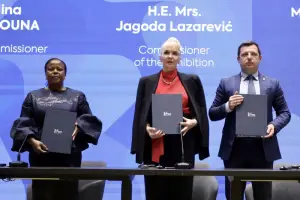 Belgrade, 3 June 2026
Contract on Gabon’s participation in Expo 2027 signed
-
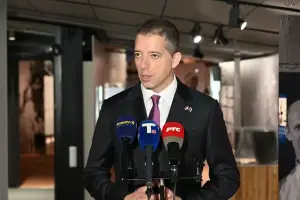 Belgrade/Helsinki, 3 June 2026
Serbia stands for peace, cooperation, respect for international law
-
 Belgrade/Helsinki, 2 June 2026
Great potential for strengthening economic ties with Finland
-
 Belgrade/Helsinki, 2 June 2026
Finland confirms strong support for Serbia’s European future
-
 Belgrade, 1 June 2026
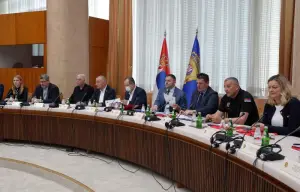
Coordination of services to reduce risks from extreme weather events
-
 Belgrade, 31 May 2026
Ceremonial academy held to mark Ministry of the Interior Day, Police Day
-
 Belgrade/Bratislava, 30 May 2026
High level of partnership, trust between Serbia, Slovakia
-
 Belgrade, 30 May 2026
Vidovdan Assembly “Unity and Strength – Serbia” opens
-
 Belgrade, 29 May 2026
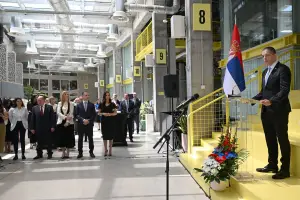
Serbia significantly strengthened its international position
-
 Belgrade/Bratislava, 29 May 2026
Serbia, Slovakia dedicated to strengthening cooperation in defence sector