Q:
A:
Serbia will demand ICJ to speak out on Kosovo
Belgrade,
7 April 2008
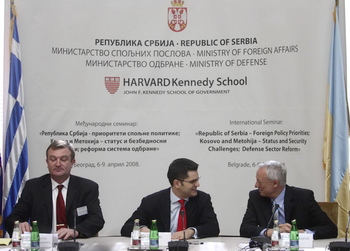
Serbian Minister of Foreign Affairs Vuk Jeremic announced today that at the UN General Assembly in September Serbia will demand that the International Court of Justice (ICJ) speaks out on whether the unilateral declaration of independence was proclaimed in accordance with international law.
Author:
Fonet
Following an international seminar on foreign policy, Jeremic told the press at the Serbian Government Palace that Serbia believes it will have the majority of UN countries on its side regarding this matter and that the very fact that it is preparing for such a step will dissuade many states from recognising Kosovo.
He explained that Serbia’s short-term foreign policy goal is to limit the number of states recognising the province’s unilaterally declared independence, and the long-term goal is to ensure peace and stability in the region, as well as EU integration.
Those who endorsed Kosovo’s independence realised that they cannot push that through the UN Security Council and then tried with a wave of recognition to create a situation in which an independent Kosovo would become a strategic reality, noted the Minister.
With that aim strong pressure was exerted, and the creators of such policy are now annoyed because Serbian diplomacy is achieving results they did not expect and the number of countries which recognised the unilaterally declared independence of the southern Serbian province remains limited and insignificant, he explained.
At the UN General Assembly in September, we will institutionalise the majority of countries that did not recognise the independence which will put us in a better position to continue with our diplomatic struggle, said Jeremic and added that afterwards, when it becomes clear that Kosovo will remain in a legal and political vacuum, it will be obvious that a compromise solution to this problem is necessary and that implies a return to the negotiating table.
According to Jeremic, despite big international pressure, the wave of recognition of Kosovo’s independence was prevented, which shows that the best solution is that all stakeholders return to negotiations as soon as possible.
Serbia supports that international forces remain in Kosovo as they are now and in the present political mandate, the Minister pointed out and warned that Serbs in Kosovo must not become hostages of international relations and that it is therefore important that international forces in the province remain status-neutral.
Jeremic stressed that Serbia will never acknowledge the unilaterally proclaimed independence and that it will continue to fight by diplomacy, whereas the decision of some neighbouring countries to do so will negatively affect Serbia’s relations with them.
He recalled that the Balkans is the last of European regions that is not included in the European integration process and therefore it is very important to make the border issue less important through EU integration.
According to Jeremic, for Serbia it is crucially important to continue its EU path as only through the strengthening of its economic, institutional and other potentials will it have the strength to defend its sovereignty in Kosovo.
Serbia is now a democratic state that has strengthened its economy and judicial system and reformed its army. We are successful in transition despite the serious difficulties we are facing, Jeremic concluded.
The international seminar "Republic of Serbia - Priorities of Foreign Policy; Kosovo-Metohija - Status and Security Challenges; Defence System Reform" is being organised by the Serbian Ministry of Defence and Ministry of Foreign Affairs in cooperation with Harvard University.
Participating in the two-day conference will be representatives of a number of countries from Central Asia and the Balkans.
He explained that Serbia’s short-term foreign policy goal is to limit the number of states recognising the province’s unilaterally declared independence, and the long-term goal is to ensure peace and stability in the region, as well as EU integration.
Those who endorsed Kosovo’s independence realised that they cannot push that through the UN Security Council and then tried with a wave of recognition to create a situation in which an independent Kosovo would become a strategic reality, noted the Minister.
With that aim strong pressure was exerted, and the creators of such policy are now annoyed because Serbian diplomacy is achieving results they did not expect and the number of countries which recognised the unilaterally declared independence of the southern Serbian province remains limited and insignificant, he explained.
At the UN General Assembly in September, we will institutionalise the majority of countries that did not recognise the independence which will put us in a better position to continue with our diplomatic struggle, said Jeremic and added that afterwards, when it becomes clear that Kosovo will remain in a legal and political vacuum, it will be obvious that a compromise solution to this problem is necessary and that implies a return to the negotiating table.
According to Jeremic, despite big international pressure, the wave of recognition of Kosovo’s independence was prevented, which shows that the best solution is that all stakeholders return to negotiations as soon as possible.
Serbia supports that international forces remain in Kosovo as they are now and in the present political mandate, the Minister pointed out and warned that Serbs in Kosovo must not become hostages of international relations and that it is therefore important that international forces in the province remain status-neutral.
Jeremic stressed that Serbia will never acknowledge the unilaterally proclaimed independence and that it will continue to fight by diplomacy, whereas the decision of some neighbouring countries to do so will negatively affect Serbia’s relations with them.
He recalled that the Balkans is the last of European regions that is not included in the European integration process and therefore it is very important to make the border issue less important through EU integration.
According to Jeremic, for Serbia it is crucially important to continue its EU path as only through the strengthening of its economic, institutional and other potentials will it have the strength to defend its sovereignty in Kosovo.
Serbia is now a democratic state that has strengthened its economy and judicial system and reformed its army. We are successful in transition despite the serious difficulties we are facing, Jeremic concluded.
The international seminar "Republic of Serbia - Priorities of Foreign Policy; Kosovo-Metohija - Status and Security Challenges; Defence System Reform" is being organised by the Serbian Ministry of Defence and Ministry of Foreign Affairs in cooperation with Harvard University.
Participating in the two-day conference will be representatives of a number of countries from Central Asia and the Balkans.
-
 Belgrade, 3 June 2026
Contract on Gabon’s participation in Expo 2027 signed
-
 Belgrade/Helsinki, 3 June 2026
Serbia stands for peace, cooperation, respect for international law
-
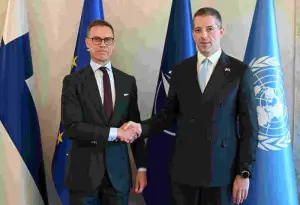 Belgrade/Helsinki, 2 June 2026
Great potential for strengthening economic ties with Finland
-
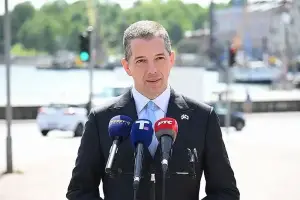 Belgrade/Helsinki, 2 June 2026
Finland confirms strong support for Serbia’s European future
-
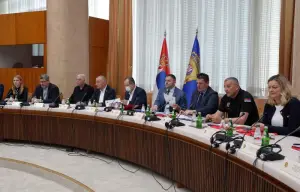 Belgrade, 1 June 2026
Coordination of services to reduce risks from extreme weather events
-
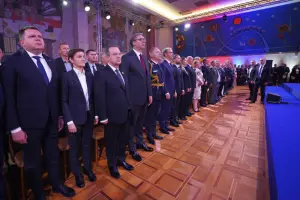 Belgrade, 31 May 2026
Ceremonial academy held to mark Ministry of the Interior Day, Police Day
-
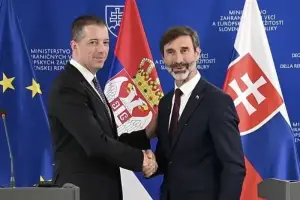 Belgrade/Bratislava, 30 May 2026
High level of partnership, trust between Serbia, Slovakia
-
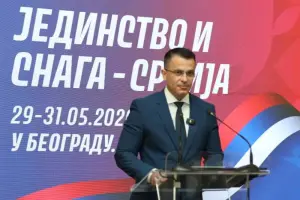 Belgrade, 30 May 2026
Vidovdan Assembly “Unity and Strength – Serbia” opens
-
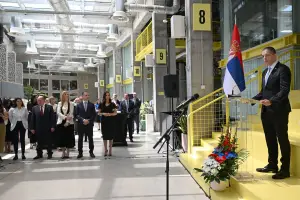 Belgrade, 29 May 2026
Serbia significantly strengthened its international position
-
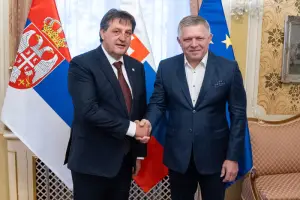 Belgrade/Bratislava, 29 May 2026
Serbia, Slovakia dedicated to strengthening cooperation in defence sector