
Q:
A:
Social care must be decentralised
Belgrade,
19 March 2008
State Secretary at the Serbian Ministry of Labour and Social Policy Liljana Lucic said today that it is necessary to decentralise social care services as soon as possible in order to improve them.
Speaking at a roundtable discussion titled “Models for Decentralisation of Social Care Services in Serbia”, Lucic said that decentralisation will make social care services available to everyone in an efficient, economical and rational manner.
She stressed that the process of decentralisation is long, but must be carried out in order to build administrative and financial mechanisms which will enable local self-governments to independently develop social services, and also to be interconnected when this is required.
According to Lucic, at present in Serbia the state is mainly responsible for providing basic social protection and nearly 90% of the total funds for social care come from the budget, while the role of NGOs is negligible.
She pointed to the fact that according to the current Law on social protection and insurance, on a national level funds are being provided for child care and social help in the form of monetary compensations for poor families and households, home care as well as accommodation and foster care.
She said that local communities are establishing and financing the right to one-off financial assistance, home help, accommodation in social care institutions and temporary stays in homeless shelters.
The roundtable discussion was organised by the Ministry of Labour and Social Policy in cooperation with the Council of Europe, Standing Conference of Cities and Municipalities, DFID and OPM.
She stressed that the process of decentralisation is long, but must be carried out in order to build administrative and financial mechanisms which will enable local self-governments to independently develop social services, and also to be interconnected when this is required.
According to Lucic, at present in Serbia the state is mainly responsible for providing basic social protection and nearly 90% of the total funds for social care come from the budget, while the role of NGOs is negligible.
She pointed to the fact that according to the current Law on social protection and insurance, on a national level funds are being provided for child care and social help in the form of monetary compensations for poor families and households, home care as well as accommodation and foster care.
She said that local communities are establishing and financing the right to one-off financial assistance, home help, accommodation in social care institutions and temporary stays in homeless shelters.
The roundtable discussion was organised by the Ministry of Labour and Social Policy in cooperation with the Council of Europe, Standing Conference of Cities and Municipalities, DFID and OPM.
-
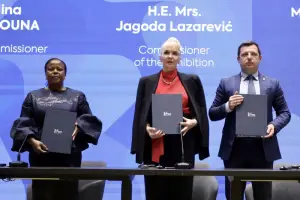 Belgrade, 3 June 2026
Contract on Gabon’s participation in Expo 2027 signed
-
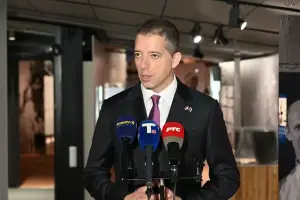 Belgrade/Helsinki, 3 June 2026
Serbia stands for peace, cooperation, respect for international law
-
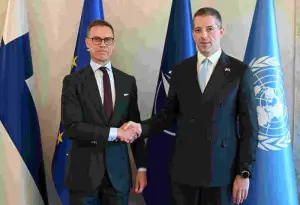 Belgrade/Helsinki, 2 June 2026
Great potential for strengthening economic ties with Finland
-
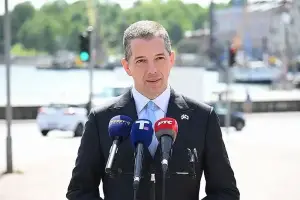 Belgrade/Helsinki, 2 June 2026
Finland confirms strong support for Serbia’s European future
-
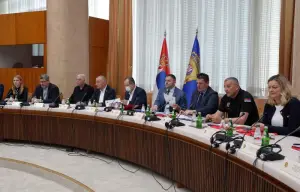 Belgrade, 1 June 2026
Coordination of services to reduce risks from extreme weather events
-
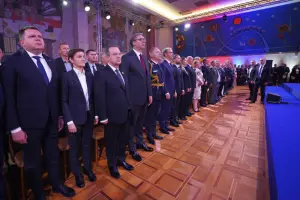 Belgrade, 31 May 2026
Ceremonial academy held to mark Ministry of the Interior Day, Police Day
-
 Belgrade/Bratislava, 30 May 2026
High level of partnership, trust between Serbia, Slovakia
-
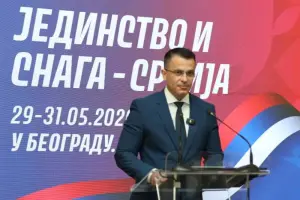 Belgrade, 30 May 2026
Vidovdan Assembly “Unity and Strength – Serbia” opens
-
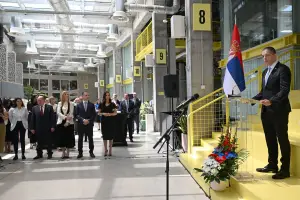 Belgrade, 29 May 2026
Serbia significantly strengthened its international position
-
 Belgrade/Bratislava, 29 May 2026
Serbia, Slovakia dedicated to strengthening cooperation in defence sector