
Q:
A:
Export promotion priority for economic policy
Tara,
14 March 2008
Serbian Deputy Prime Minister Bozidar Djelic said that promoting exports and reducing foreign trade deficit are priorities of Serbia’s economic policy.
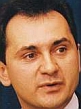
Bozidar Djelic
Djelic noted that the wood processing industry is a rare example of an industry that generates a foreign trade surplus when end products are considered whereas it generates a huge total trade deficit due to the large amounts of raw materials imported.
He said that the problems this industry is facing are a large number of small producers and a lack of professional specialisation.
The Serbian government has taken additional measures to stimulate export following a summit of exporters and a series of sectoral meetings with representatives of exporters.
Djelic said that conditions have been created for securing export deals and loans with business banks and in turn for reducing the cost of loans.
According to him, efforts are being made in order to reduce the census for acquiring the status of prestigious exporter from 70% to 50% of products in 2009 as well as to reduce the census for using customs alleviations for the import of equipment that is not produced in the country from €500,000 to €200,000.
He announced that the government will speed up the process of issuing all licences from several weeks to a few days and that a draft strategy on export promotion will be made public, and also available on the government website, in early April.
The Summit of Entrepreneurs and the Serbian government, scheduled for April 16, will also discuss ways to promote exports.
Djelic also delivered a lecture on the EU and sustainable development at the secondary school for tourism and catering in Cajetina and said that sustainable development is an economic opportunity for Serbia, and tourism one of the three branches of the economy with the greatest potential.
According to him, last year Serbia’s revenues from tourism amounted to €1 billion, whereas the plan is to increase revenue tenfold in the next four years.
Djelic told the students at the school in Cajetina that they are very fortunate to be working in this branch of the economy.
The Project to draft Serbia’s sustainable development strategy has been underway since 2005 and is being implemented by the Serbian government, the UNDP and the Swedish International Development Agency, with the aim of creating Serbia’s sustainable development framework.
“Sustainable Progress” is the framework of Serbia’s national strategy for sustainable and economic development, and the entire campaign is based on three pillars “Economic Progress”, “Social Progress” and “Environmental Progress”.
Also present at the lecture in the Cajetina school was Advisor for Sustainable Development to the Deputy Prime Minister Zoran Cvijanovic.
Following the lecture, Djelic said that although Serbia has a technical government, the stability of salaries and pensions will be guaranteed, and projects that have already been implemented will continue.
He said that the problems this industry is facing are a large number of small producers and a lack of professional specialisation.
The Serbian government has taken additional measures to stimulate export following a summit of exporters and a series of sectoral meetings with representatives of exporters.
Djelic said that conditions have been created for securing export deals and loans with business banks and in turn for reducing the cost of loans.
According to him, efforts are being made in order to reduce the census for acquiring the status of prestigious exporter from 70% to 50% of products in 2009 as well as to reduce the census for using customs alleviations for the import of equipment that is not produced in the country from €500,000 to €200,000.
He announced that the government will speed up the process of issuing all licences from several weeks to a few days and that a draft strategy on export promotion will be made public, and also available on the government website, in early April.
The Summit of Entrepreneurs and the Serbian government, scheduled for April 16, will also discuss ways to promote exports.
Djelic also delivered a lecture on the EU and sustainable development at the secondary school for tourism and catering in Cajetina and said that sustainable development is an economic opportunity for Serbia, and tourism one of the three branches of the economy with the greatest potential.
According to him, last year Serbia’s revenues from tourism amounted to €1 billion, whereas the plan is to increase revenue tenfold in the next four years.
Djelic told the students at the school in Cajetina that they are very fortunate to be working in this branch of the economy.
The Project to draft Serbia’s sustainable development strategy has been underway since 2005 and is being implemented by the Serbian government, the UNDP and the Swedish International Development Agency, with the aim of creating Serbia’s sustainable development framework.
“Sustainable Progress” is the framework of Serbia’s national strategy for sustainable and economic development, and the entire campaign is based on three pillars “Economic Progress”, “Social Progress” and “Environmental Progress”.
Also present at the lecture in the Cajetina school was Advisor for Sustainable Development to the Deputy Prime Minister Zoran Cvijanovic.
Following the lecture, Djelic said that although Serbia has a technical government, the stability of salaries and pensions will be guaranteed, and projects that have already been implemented will continue.
-
 Belgrade, 22 July 2026
New opportunities for expanding economic cooperation between Serbia, China
-
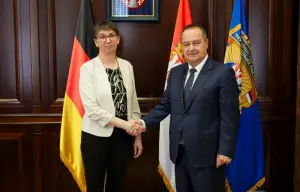 Belgrade, 20 July 2026
Cooperation in field of interior affairs important segment of relations with Germany
-
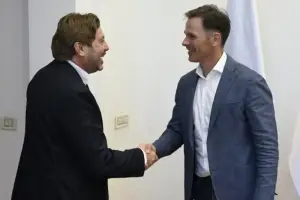 Belgrade, 16 July 2026
Expo 2027 opportunity to further strengthen international partnerships
-
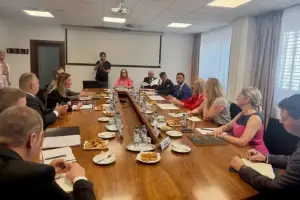 Belgrade/Bratislava, 16 July 2026
Serbia, Slovakia continue to strengthen political, economic cooperation
-
 Belgrade, 14 July 2026
Serbia bilaterally resolves problems arising from EES implementation
-
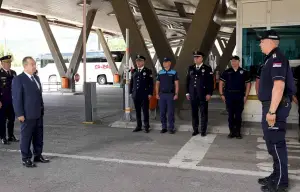 Gradina/Kalotina, 9 July 2026
Improving border cooperation between Serbia, Bulgaria
-
 Belgrade, 7 July 2026
Further strengthening economic cooperation between Serbia, Italy
-
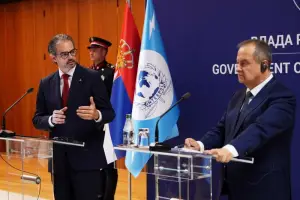 Belgrade, 6 July 2026
Serbia serious, responsible partner in fight against crime
-
 Kać, 3 July 2026
Additional foreign investment confirms confidence in Serbia
-
 Belgrade, 3 July 2026
Serbia, Hungary reliable partners in maintaining security