
Q:
A:
Law on confiscation of property obtained through criminal conduct a powerful tool against crime
Belgrade,
6 March 2008
Serbian Minister of Justice Dusan Petrovic said today that the adoption of the law on confiscation of property obtained through criminal conduct will provide Serbia with a powerful tool in the fight against corruption and organised crime.
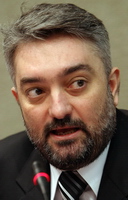
Author:
Fonet
Opening the public debate on the draft version of this law, Petrovic said that the arrival of the draft law on the parliament's agenda depends on political stability and the Serbian parliament.
He said that such a legal solution is not new in criminal-legal practice since it is already applied in many countries and explained that this law is revolutionary since it creates a legal basis that will prevent profiting from crime. Petrovic said that during the criminal proceedings for such crimes, suspicious property can be frozen, which means that the suspects will not have that property at their disposal to finance their defence.
Serbian public prosecutor Slobodan Radovanovic said that the law on the confiscation of property whose origin cannot be verified will help the prosecution to attain its ultimate goal and that is to suppress crime.
Perpetrators of criminal acts draw their power from the property acquired through crime, said Radovanovic and added that the law will help eradicate crime and corruption because the sources of their financing will be cut off.
Expert on criminal and procedural right and a member of the working group for drafting the above mentioned law Goran Ilic said that the law envisages the seizure of property whose legal origin cannot be determined. The property will be confiscated from the owner, their heirs or persons to whom it was transferred, added Ilic.
Head of the OSCE to Serbia Hans Ola Urstad said that in order to successfully fight organised crime and corruption, it is necessary to eliminate the main motive for engaging in criminal acts, and that is financial gain.
Urstad voiced hope that the draft law will soon be adopted in Serbian parliament and added that the OSCE supports the reform of a large number of laws in Serbia since that would help make Serbia the safest possible place for investors and businesses.
The Draft law was composed by an expert working group, formed by the Ministry of Justice.
He said that such a legal solution is not new in criminal-legal practice since it is already applied in many countries and explained that this law is revolutionary since it creates a legal basis that will prevent profiting from crime. Petrovic said that during the criminal proceedings for such crimes, suspicious property can be frozen, which means that the suspects will not have that property at their disposal to finance their defence.
Serbian public prosecutor Slobodan Radovanovic said that the law on the confiscation of property whose origin cannot be verified will help the prosecution to attain its ultimate goal and that is to suppress crime.
Perpetrators of criminal acts draw their power from the property acquired through crime, said Radovanovic and added that the law will help eradicate crime and corruption because the sources of their financing will be cut off.
Expert on criminal and procedural right and a member of the working group for drafting the above mentioned law Goran Ilic said that the law envisages the seizure of property whose legal origin cannot be determined. The property will be confiscated from the owner, their heirs or persons to whom it was transferred, added Ilic.
Head of the OSCE to Serbia Hans Ola Urstad said that in order to successfully fight organised crime and corruption, it is necessary to eliminate the main motive for engaging in criminal acts, and that is financial gain.
Urstad voiced hope that the draft law will soon be adopted in Serbian parliament and added that the OSCE supports the reform of a large number of laws in Serbia since that would help make Serbia the safest possible place for investors and businesses.
The Draft law was composed by an expert working group, formed by the Ministry of Justice.
-
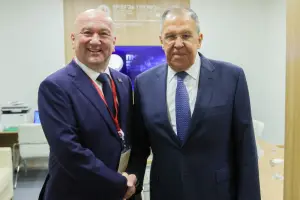 Belgrade/Saint Petersburg, 4 June 2026
Readiness to improve cooperation with Russia in areas of mutual interest
-
 Belgrade/Saint Petersburg, 4 June 2026
Strengthening Serbia’s position in contemporary digital environment
-
 Belgrade, 4 June 2026
Serbia, US building partnership aimed at future, shared prosperity
-
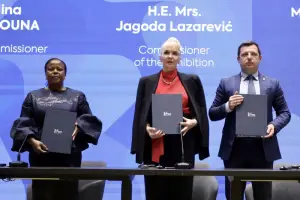 Belgrade, 3 June 2026
Contract on Gabon’s participation in Expo 2027 signed
-
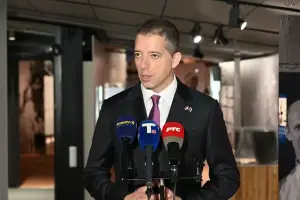 Belgrade/Helsinki, 3 June 2026
Serbia stands for peace, cooperation, respect for international law
-
 Belgrade/Helsinki, 2 June 2026
Great potential for strengthening economic ties with Finland
-
 Belgrade/Helsinki, 2 June 2026
Finland confirms strong support for Serbia’s European future
-
 Belgrade, 1 June 2026
Coordination of services to reduce risks from extreme weather events
-
 Belgrade, 31 May 2026
Ceremonial academy held to mark Ministry of the Interior Day, Police Day
-
 Belgrade/Bratislava, 30 May 2026
High level of partnership, trust between Serbia, Slovakia