
Q:
A:
Real estate market in Serbia attractive for foreign investors
Belgrade,
3 March 2008
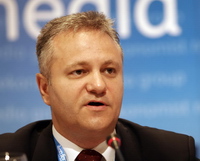
Serbian Minister of Economy and Regional Development Mladjan Dinkic stated today that if Serbia continues towards the EU, foreign investments in the country will increase and may even exceed €5 billion a year.
Author:
Fonet
At the third annual conference “Real Estate Market in Southeast Europe”, organised by the Economist Group, Dinkic stressed that Serbia has been recording a high economic growth rate for four years already and that bank savings have multiplied.
I expect the real estate market in Serbia to be very much alive, as we have initiated irreversible reform processes, which I believe will draw more investments into Serbia, said the Minister.
The Serbian government is trying to encourage housing construction through some institutions, such as the National Corporation for Housing Loan Insurance, the Minister explained and added that €814 million in loans are currently insured through that corporation.
The next phase will be securing those loans, i.e. issuing of mortgage bonds in order to acquire new capital for investing in the real estate market.
He said that macro economic stability is important for the development of the real estate market in Serbia, since it is a basis for forecasting further development in that sector of the economy.
Serbia's GDP per capita currently stands at $5,640, Dinkic said and added that potential demand in the real estate sector is partially a reflection of domestic savings which currently stands at €5.3 billion.
Dinkic also said that Serbia did not feel the direct consequences of the mortgage crisis in the US because the market is underdeveloped, but that they have indirect consequences because there is a lack of free capital for financing projects to the same amount as was the case when there was no crisis in the US.
Data on real estate prices show that the crisis in the US has not affected Serbia which shows that the domestic real estate market is attractive and that if the present trend continues this sector will see strong growth in the upcoming period.
According to Dinkic, the real estate market in Serbia, particularly in Belgrade and Novi Sad is especially attractive and will see a real economic boom if current trends continue.
Dinkic explained that last year in Belgrade alone nearly 7000 flats were built, and the demand in the city is estimated at 100,000 new flats, which will definitely attract new foreign investors.
However, the government’s aim is to develop Serbia uniformly. On account of this smaller cities are being helped with their presentations at real estate fairs abroad, said the Minister and added that he expects that smaller cities will also become more attractive to investors.
Speaking about privatisation processes which may interest investors in this sector, he announced that the auction sale of Genex has been scheduled for March 31, and added that company Progres, Hotel Slavija and sugar plant Secerane Beograd will soon be privatised as well.
According to Dinkic, the tender for a strategic partner for the hotel complex on Stara Planina Mt should be held in March as well, while privatisation of spas will ensue. Hotel Merkur in Vrnjacka Banja will be privatized first followed by hotels in Banja Koviljaca, concluded Dinkic.
I expect the real estate market in Serbia to be very much alive, as we have initiated irreversible reform processes, which I believe will draw more investments into Serbia, said the Minister.
The Serbian government is trying to encourage housing construction through some institutions, such as the National Corporation for Housing Loan Insurance, the Minister explained and added that €814 million in loans are currently insured through that corporation.
The next phase will be securing those loans, i.e. issuing of mortgage bonds in order to acquire new capital for investing in the real estate market.
He said that macro economic stability is important for the development of the real estate market in Serbia, since it is a basis for forecasting further development in that sector of the economy.
Serbia's GDP per capita currently stands at $5,640, Dinkic said and added that potential demand in the real estate sector is partially a reflection of domestic savings which currently stands at €5.3 billion.
Dinkic also said that Serbia did not feel the direct consequences of the mortgage crisis in the US because the market is underdeveloped, but that they have indirect consequences because there is a lack of free capital for financing projects to the same amount as was the case when there was no crisis in the US.
Data on real estate prices show that the crisis in the US has not affected Serbia which shows that the domestic real estate market is attractive and that if the present trend continues this sector will see strong growth in the upcoming period.
According to Dinkic, the real estate market in Serbia, particularly in Belgrade and Novi Sad is especially attractive and will see a real economic boom if current trends continue.
Dinkic explained that last year in Belgrade alone nearly 7000 flats were built, and the demand in the city is estimated at 100,000 new flats, which will definitely attract new foreign investors.
However, the government’s aim is to develop Serbia uniformly. On account of this smaller cities are being helped with their presentations at real estate fairs abroad, said the Minister and added that he expects that smaller cities will also become more attractive to investors.
Speaking about privatisation processes which may interest investors in this sector, he announced that the auction sale of Genex has been scheduled for March 31, and added that company Progres, Hotel Slavija and sugar plant Secerane Beograd will soon be privatised as well.
According to Dinkic, the tender for a strategic partner for the hotel complex on Stara Planina Mt should be held in March as well, while privatisation of spas will ensue. Hotel Merkur in Vrnjacka Banja will be privatized first followed by hotels in Banja Koviljaca, concluded Dinkic.
-
 Belgrade/Saint Petersburg, 4 June 2026
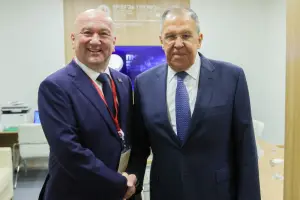
Readiness to improve cooperation with Russia in areas of mutual interest
-
 Belgrade/Saint Petersburg, 4 June 2026
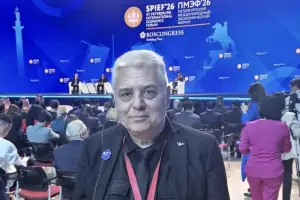
Strengthening Serbia’s position in contemporary digital environment
-
 Belgrade, 4 June 2026
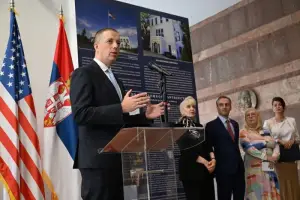
Serbia, US building partnership aimed at future, shared prosperity
-
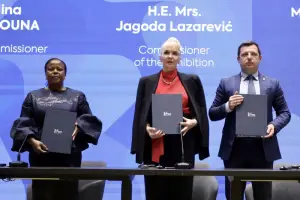 Belgrade, 3 June 2026
Contract on Gabon’s participation in Expo 2027 signed
-
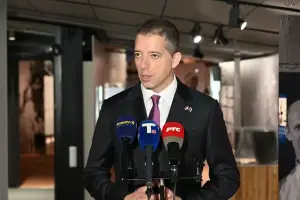 Belgrade/Helsinki, 3 June 2026
Serbia stands for peace, cooperation, respect for international law
-
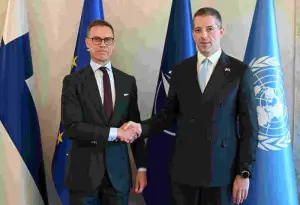 Belgrade/Helsinki, 2 June 2026
Great potential for strengthening economic ties with Finland
-
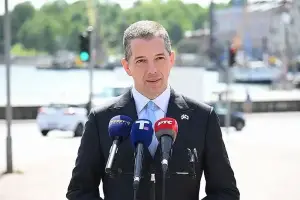 Belgrade/Helsinki, 2 June 2026
Finland confirms strong support for Serbia’s European future
-
 Belgrade, 1 June 2026
Coordination of services to reduce risks from extreme weather events
-
 Belgrade, 31 May 2026
Ceremonial academy held to mark Ministry of the Interior Day, Police Day
-
 Belgrade/Bratislava, 30 May 2026
High level of partnership, trust between Serbia, Slovakia