Q:
A:
Prior opinion of government not a precondition for convening parliament session
Belgrade,
7 February 2008
Advisor to the Serbian Prime Minister Branislav Ristivojevic sent a letter to Serbian parliament Speaker Oliver Dulic in which he states that no provision of any legal regulation currently in force stipulates that the convening of parliament session is determined by the prior opinion of the government.

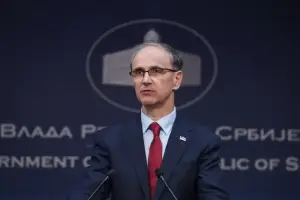
File photo of Branislav Ristivojevic
Author:
Tanjug
The statement issued by the Prime Minister's Cabinet contains the full content of the letter:
"Honourable Mr Dulic,
The Serbian Constitution is unambiguous. An extraordinary session of Serbian parliament can be convened by at least one-third of parliament members, and the agenda of the extraordinary session is determined by the parliament members who convene the session (Article 106, paragraph 3 of the Constitution). The right to convene an extraordinary session is a right guaranteed to parliament members by the Constitution. The role of the parliament Speaker is only of a technical nature. He is not authorised to convene an extraordinary session – since parliament members have already done that − nor can he influence the agenda of the extraordinary session. His duty as parliament Speaker is to determine the time when parliament will meet after the extraordinary session has been convened.
Therefore, it is clear from the Constitution and the Serbian parliament’s Standing Orders that an extraordinary parliament session was summoned on February 5, 2008, in order to discuss parliament’s proposal that the EU’s illegal mission to Kosovo-Metohija is the harshest violation of Resolution 1244, the UN Charter and the Serbian Constitution. Serbian parliament members acted in full compliance with the Constitution and the Serbian parliament Standing Orders, but the Serbian parliament Speaker did not perform his constitutional duty to act according to the Standing Orders and schedule the session.
Serbian parliament can begin and end a session without the government’s stance on general acts which are on the parliament’s agenda, that is, in this particular instance, without the government’s stance on the proposal which is on the agenda of parliament’s extraordinary session. The Serbian parliament Standing Orders clearly prescribe that parliament is authorised to discuss proposals of general acts even if the government fails to submit its stance on the proposal (Article 139, item 5 and Article 160, item 3 of the Serbian parliament Standing Orders).
Finally, it is quite clear that no provision exits in any regulation which envisages that the Serbian government’s stance is required before a parliament session is summoned", reads the letter.
"Honourable Mr Dulic,
The Serbian Constitution is unambiguous. An extraordinary session of Serbian parliament can be convened by at least one-third of parliament members, and the agenda of the extraordinary session is determined by the parliament members who convene the session (Article 106, paragraph 3 of the Constitution). The right to convene an extraordinary session is a right guaranteed to parliament members by the Constitution. The role of the parliament Speaker is only of a technical nature. He is not authorised to convene an extraordinary session – since parliament members have already done that − nor can he influence the agenda of the extraordinary session. His duty as parliament Speaker is to determine the time when parliament will meet after the extraordinary session has been convened.
Therefore, it is clear from the Constitution and the Serbian parliament’s Standing Orders that an extraordinary parliament session was summoned on February 5, 2008, in order to discuss parliament’s proposal that the EU’s illegal mission to Kosovo-Metohija is the harshest violation of Resolution 1244, the UN Charter and the Serbian Constitution. Serbian parliament members acted in full compliance with the Constitution and the Serbian parliament Standing Orders, but the Serbian parliament Speaker did not perform his constitutional duty to act according to the Standing Orders and schedule the session.
Serbian parliament can begin and end a session without the government’s stance on general acts which are on the parliament’s agenda, that is, in this particular instance, without the government’s stance on the proposal which is on the agenda of parliament’s extraordinary session. The Serbian parliament Standing Orders clearly prescribe that parliament is authorised to discuss proposals of general acts even if the government fails to submit its stance on the proposal (Article 139, item 5 and Article 160, item 3 of the Serbian parliament Standing Orders).
Finally, it is quite clear that no provision exits in any regulation which envisages that the Serbian government’s stance is required before a parliament session is summoned", reads the letter.

-
 Belgrade, 5 June 2026
Government dedicated to further improving higher education system
-
 Belgrade, 5 June 2026
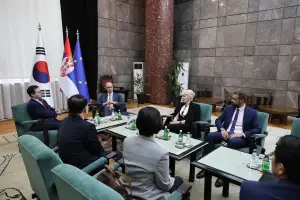
Deepening economic partnership between Serbia, Republic of Korea
-
 Belgrade, 5 June 2026
Additional strengthening of bilateral relations between Serbia, Switzerland
-
 Belgrade, 4 June 2026
Support for regular, stable water supply in underdeveloped municipalities
-
 Belgrade, 4 June 2026
Successfully implemented projects with UAE confirm good bilateral relations
-
 Belgrade, 2 June 2026
Serbia committed to political empowerment of women
-
 Belgrade, 2 June 2026
Intensifying activities to meet obligations from Reform Agenda
-
 Belgrade, 2 June 2026
Macut hands resolutions to support development of traditional, artistic crafts
-
 Niš, 1 June 2026
State a partner that listens to citizens, solves their problems